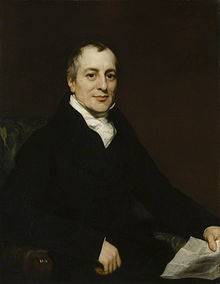
David Ricardo
Economist and former Member of Parliament of the United KingdomWikipedia
53
MENTIONS
36
EPISODES
36
PODCASTS
Search complete. 53 mentions across 36 episodes found for "David Ricardo".
Oct 28, 2026

Richard WolffGUEST
He's a great teacher.
Richard WolffGUEST
I learned a lot from Adam Smith and David Ricardo and John Maynard Keynes, too.
Richard WolffGUEST
To have learned from Marx doesn't mean you're a slavish repetition that's childish or a caricature, but to avoid reading Marx, is downright stupid.
Richard WolffGUEST
It makes no sense at all.

Madeline PorsellaHOST
It's like all these vague, like jumping off things that assume that you know what's coming.
Mabel TaylorHOST
Well, something I was reflecting on, the passage that struck me that I mentioned to you before was, she writes, silver moonlight bathed the driveway as Mariah Edgeworth's carriage trundled toward David Ricardo's mansion on a dark evening in late 1821.
Mabel TaylorHOST
And as I asked Madeline, how does she know that there was silver moonlight? How does she know that
Mabel TaylorHOST
the carriage
41 MINS LATER
Madeline PorsellaHOST
Yeah.
Mabel TaylorHOST
Well, I'm thinking
Madeline PorsellaHOST
about the David Ricardo stuff.
Mabel TaylorHOST
Yeah, that I didn't, I decided that we should not focus too much on that because even though I really enjoyed that

Ryan James BoyleGUEST
It impairs commerce in ways that we're going to have a hard time measuring, but might be feeling for quite some time to come.
Harsh VardhanHOST
I feel like this is more of a case of David versus Goliath.
Harsh VardhanHOST
When you say there has not been much pushback, what can a small country somewhere in the world do about a huge economy like the U.S.? Because they're the biggest buyers.
Harsh VardhanHOST
They are your biggest consumers.

Philip J. AndersonGUEST
Economics today only considers there to be two factors of production, labour and capital or business.
Philip J. AndersonGUEST
But if you really want to understand the real estate cycle, if you really want to understand that there can actually be a cycle, you have to go back to the original economists, that was David Ricardo and a number of others, who up until about...
Philip J. AndersonGUEST
I guess about 1880, 1890 until about the First World War, they clearly considered and knew that there were three factors of production, land, labour and capital.
Philip J. AndersonGUEST
And this is the key thing.
Philip J. AndersonGUEST
They've completely excluded that from all their economic thinking and their economic forecasts, hence production.
Philip J. AndersonGUEST
If you're reading some material and these people do not understand about location or value, they will never be able to forecast.
Philip J. AndersonGUEST
And what I do, what I noticed when I was writing my book and started reading David Ricardo and one or two others, is that those sellers of the big issue, it actually becomes an observable and forecastable behaviour of trying to find the best locations.
Philip J. AndersonGUEST
Now, after that, You can then introduce, of course, which has been a much more pronounced thing since the Second World War.

Dylan JohnHOST
It could be clothing, could be steel, if the opportunity costs of production are lower.
Dylan JohnHOST
Under the theory laid out nearly 200 years ago by British economist David Ricardo, countries could be pretty good at producing something.
Dylan JohnHOST
He used examples of English textiles and Portuguese wine.
Dylan JohnHOST
But the country that is marginally better has the comparative advantage and should specialize in that thing.

Michael HudsonGUEST
All of this was a completely different trajectory that changed radically after World War I, because while Europe and the United States were modernizing and streamlining their economies into very low-cost, competitive production.
Michael HudsonGUEST
They didn't create the same kind of an economy in foreign countries because what did Ricardo and all of the British theorists say? Well, if we're going to lower our cost of doing business, we need
Bill SimmonsADVERTISER
low-cost food,
Michael HudsonGUEST
low-cost raw materials.
57 MINS LATER
Michael HudsonGUEST
Well, when people talk about what is classical value theory all about,
Bill SimmonsADVERTISER
what
Michael HudsonGUEST
is surplus value, what is value, the whole ideal of Adam Smith, Ricardo, John Stuart Mill, Marx.
Michael HudsonGUEST
The entire discussion of classical economics was how do we bring prices in line with the actual cost value of production?

Anthony ScaramucciGUEST
They're going to make investments here.
Anthony ScaramucciGUEST
This flow of free trade is pursuant to the David Ricardo principles of free trade are going to make both of our nations more prosperous.
Anthony ScaramucciGUEST
That was the expected outcome.
Anthony ScaramucciGUEST
This is

Jeanna SmialekGUEST
John, Mark, you know, you move through history and it's a very male-dominated industry.
Jeanna SmialekGUEST
But he has this little aside that Ricardo, David Ricardo, obviously one of the most famous economists of all of history, was really good friends with this woman named Mariah Edgeworth, called Mariah at the time, called Maria today.
Jeanna SmialekGUEST
And she was probably the first woman to think about economics.
Jeanna SmialekGUEST
And that's the extent of the aside.
20 MINS LATER
Tracy AllowayHOST
Yes.
Jeanna SmialekGUEST
I think this is probably one of the more interesting chapters of her life, particularly to anyone interested in sort of the formation of economic ideas.
Jeanna SmialekGUEST
She became very good friends with both Thomas Malthus and David Ricardo during her time.
Jeanna SmialekGUEST
She used to visit London quite a lot.

AnneHOST
And I just wondered how the Fred Lee use of that word differs from the Marx use of the word and why it's important to understand what it is as well.
Kent GetsingerGUEST
So basically, the surplus approach goes back even before Adam Smith, David Ricardo and Karl Marx goes back.
Kent GetsingerGUEST
in the 17th century to William Petty, you know, working for Richard Cromwell in trying to take over Ireland and as the spoils of war, he needed to count stuff.
Kent GetsingerGUEST
That's one of these notions of, you know, circular flow have been with us for almost 400 years.

speaker_0HOST
This is a big reason economics got nicknamed the dismal science.
speaker_0HOST
In 1817, the stockbroker-turned-MP David Ricardo published On the Principles of Political Economy and Taxation.
speaker_0HOST
It contains what many economists still consider the most counter-intuitive true idea in the field – comparative advantage.
speaker_0HOST
Ricardo's numbers go like this.
speaker_0HOST
Making a unit of cloth takes the labour of 100 men a year in England and 90 in Portugal.
speaker_0HOST
Making a unit of wine takes 120 in England and only 80 in Portugal.
speaker_0HOST
Portugal is better at both, should it still trade.
speaker_0HOST
Ricardo said yes.
26 more episodes mention David Ricardo.
Create an account to see the whole feed, search across every transcript, and follow the entities you care about.