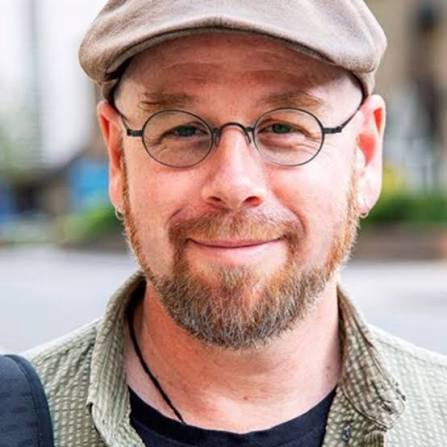
In this episode of *The Initiation*, I speak with Corey Bradshaw, ecologist, modeler, and global change scientist, about the uncomfortable realities of the ecological crisis — and what it means to face them honestly.
Corey’s path began far from academia: growing up in the Canadian wilderness with a trapper father, learning the intelligence of animals, the harshness of wild places, and the power humans have to alter the living world. Today, he uses mathematical models to understand ecosystems, extinction, population dynamics, climate trajectories, and the future of human civilization.
Together we explore why the sixth mass extinction is not just a distant scientific abstraction, how overpopulation and overconsumption are inseparably linked, why efficiency often leads to more exploitation rather than less, and why denial is such a deeply human response to ecological breakdown.
This is not an easy conversation — but it is a deeply clarifying one. Corey offers a form of grounded realism: not the fantasy that everything will be fine, and not the despair that nothing matters, but the possibility of making the future “less shitty” through honest seeing, better choices, and a renewed sense of responsibility for the living systems that sustain us.
A conversation about extinction, denial, resilience, collapse, and what it means to stay useful in a world that is already changing.
And for new listeners, Season 1 of *The Initiation* lays the foundation for this inquiry - exploring the breakdowns, breakthroughs, and inner transformation shaping humanity’s collective threshold.

 Corey BradshawGuestSebastianHost