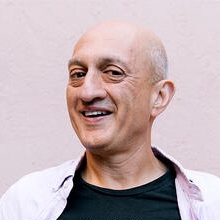
#35 William Swelbar: How Airlines Became the Ultimate OR Playground
Aug 19, 2026 · 39 min · 12 segments
Make better business decisions with data and AI—subscribe to The Decision Intelligence Lab Newsletter at…
Make better business decisions with data and AI—subscribe to The Decision Intelligence Lab Newsletter at https://decisionintelligencelab.substack.com/. Airline veteran William Swelbar joins Vijay Mehrotra and Mike Watson for a tour through nearly 50 years of airline economics(from 1978 deregulation to today's premiumization era). William Swelbar's path is one of a kind: flight attendant at North Central in 1979, local union president in Detroit within a few years, and part of a 1982 employee coalition that had all but raised the $400 million it needed in a bid to buy Republic Airlines. The conversation digs into the analytics behind the industry: why hub-and-spoke networks turn 10 routes into 230 sellable city pairs, how Pan Am's $99 cabin became an early pricing wake-up call, why "capacity is a bad drug," and how Delta and United decommoditized flying through cabin segmentation, basic economy, and credit card revenue - while the end of labor arbitrage killed the low-cost carrier era. Timestamps 0:00 - Preview 0:44 - Vijay's Caddy Master Turned Airline Veteran 5:10 - What deregulation actually changed 8:00 - The overnight flood of new entrants 9:30 - Pan Am's $99 cabin and ~120 bankruptcies 11:43 - The fall of TWA and Pan Am; American's innovations 14:23 - Network design: Hub-and-spoke vs. point-to-point 16:32 - Southwest and the Southwest Effect 19:40 - High-speed rail: too late for the US? 22:15 - Capacity is a "bad drug" 25:15 - How Delta and United segmented the cabins & won during COVID 29:05 - Airfares never covered the cost of flying 30:45 - Basic economy as a weapon against Spirit and Frontier 33:50 - The end of the value airline sector 36:55 - Wrap-up Follow the show Apple: https://podcasts.apple.com/in/podcast/the-decision-intelligence-lab/id1811085064 Spotify: https://open.spotify.com/show/0lFoAVKqJHTYSZNpeN61ou?si=0ae973aab0174b3b Connect with guest William Swelbar: https://swelbar.substack.com/ Connect with hosts \- Prof. Vijay Mehrotra (University of San Francisco): https://www.linkedin.com/in/vijay-mehrotra-ba9498/ \- Prof. Michael Watson (Northwestern University): https://www.linkedin.com/in/michael-watson-07600a1 About the podcast The Decision Intelligence Lab podcast delivers real-world insights for data professionals, business leaders, and anyone seeking to leverage data & AI for smarter decision-making & successful business outcomes. For business inquiries, email at [decisionintelligencepodcast@gmail.com](decisionintelligencepodcast@gmail.com)
Make better business decisions with data and AI—subscribe to The Decision Intelligence Lab Newsletter at…