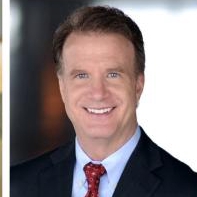
Guido PalazzoGuest
Zach CosegliaHostHui ChenHost
And I think the best place to start is actually to talk about something that we talk about a lot on this podcast, which is context.

We are deep believers in the idea that context matters, that decisions aren't made by people in a vacuum.

They're influenced by, and they in turn influence the context in which they're made.

You write, in fact, quote, "Context can be stronger than reason, stronger than values and morals, and stronger than the best intentions." Explain to us the importance of context in understanding and managing risk.

If you think about how corporate scandals are represented in the public debate, let's say on a, in a newspaper article, in a, in a book or in a Netflix documentary, it's always the same way.

It's a story of some villains at the top of an organization, and maybe some heroes who make this public, and then it leads to collapse and healing and everything.

And the assumption is that the bad stuff is happening because there are a few bad people at the top of the organization, and if we just understand their motives and their character, we understand the scandal.

But then if you look into these scandals, if you go deeper, you see that there's something wrong with that story.

At one point, roughly 100,000 salespeople were committing fraud on their own customers.

So how you, can you explain this by looking into people's character? What, what strange company would that be to attract only criminal bankers, right? Or what kind of HR department would hire with that focus on criminals? It doesn't help you to understand this.

So the real question we have to ask is, what is it that makes those 100,000 salespeople break the law? And that is not their character, that's the context they're in.

So there are forces that in a way push them into decisions that are not explainable by their character, but by their pressure, by their situation, by things that somehow distort their ability to make proper decisions.
so appreciate what you just said because a lot of times you have the context of the organization.
You have the overlap of those contexts, and it just makes things so much more complex.
And one of the things that really irritate both [laughs] Zach and me is when we hear people say something like, "Just do the right thing," as if there's some kind of universal North Star, that the right thing means the same thing to everybody.

And I think the best place to start is actually to talk about something that we talk about a lot on this podcast, which is context.

We are deep believers in the idea that context matters, that decisions aren't made by people in a vacuum.

They're influenced by, and they in turn influence the context in which they're made.

You write, in fact, quote, "Context can be stronger than reason, stronger than values and morals, and stronger than the best intentions." Explain to us the importance of context in understanding and managing risk.

If you think about how corporate scandals are represented in the public debate, let's say on a, in a newspaper article, in a, in a book or in a Netflix documentary, it's always the same way.

It's a story of some villains at the top of an organization, and maybe some heroes who make this public, and then it leads to collapse and healing and everything.

And the assumption is that the bad stuff is happening because there are a few bad people at the top of the organization, and if we just understand their motives and their character, we understand the scandal.

But then if you look into these scandals, if you go deeper, you see that there's something wrong with that story.

At one point, roughly 100,000 salespeople were committing fraud on their own customers.

So how you, can you explain this by looking into people's character? What, what strange company would that be to attract only criminal bankers, right? Or what kind of HR department would hire with that focus on criminals? It doesn't help you to understand this.

So the real question we have to ask is, what is it that makes those 100,000 salespeople break the law? And that is not their character, that's the context they're in.

So there are forces that in a way push them into decisions that are not explainable by their character, but by their pressure, by their situation, by things that somehow distort their ability to make proper decisions.
so appreciate what you just said because a lot of times you have the context of the organization.
You have the overlap of those contexts, and it just makes things so much more complex.
And one of the things that really irritate both [laughs] Zach and me is when we hear people say something like, "Just do the right thing," as if there's some kind of universal North Star, that the right thing means the same thing to everybody.
The rest of this transcript — segmented and speaker-labeled, so you land on the exact moment something was said
Search every transcript — by keyword, by phrase, or by meaning, across every show Radar indexes
Trends — what is surging across podcasts, measured against its own baseline
Alerts — when a name you follow appears in a newly indexed episode
No account is needed to search Radar.