

SHOCKING1:12
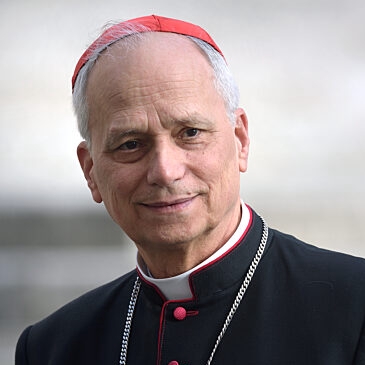
Banker, Pope, And A War
Power, faith, and profit intertwine unexpectedly.

Private Life: A New York Review Podcast
May 13, 2026 · 55 min · 26 segments
In this episode of *Private Life,* the art historian Ingrid D. Rowland joins Jarrett Earnest for an in-depth discussion about art history and *disegno*, an Italian word for “design” that was also a…
 Ingrid D. RowlandGuestJarrett EarnestHost
[classical music] Partly I'm thinking about the, the wonderful book that you wrote on, um, Vasari.
But I wonder if you could explain for people who, who don't necessarily understand the status of those drawings in the Raphael show and how we might think about them and the fact that they were saved and that we, and treasured and looked at, and how that related to the shifting status of the artist that Raphael himself kind of embodies.

It's Vasari who was born in fifteen eleven, so he's born right when Raphael's painting the Stanza della Segnatura and just taking-- basically, Raphael takes off about fifteen ten.
He was hired to do The School of Athens and what we always call the dispute about the sacrament, but it's really the triumph of theology.
And he gets the contract in fifteen oh eight as one of a team, and then by fifteen oh nine he's got it.
But right that moment is when Giorgio Vasari's born in Arezzo of a family that Vasario means potter, [chuckles] and so he's really George Potter.
And he's really evidently intelligent, so he gets a non-craftsman's education, which Raphael didn't.
And so what you see with Raphael is his effort personally to take himself out of a traditional social milieu, which is that of high-end craftsmanship, and become something else.
And the way that you become something else is that you say your inspiration is divine.
And that puts you into a category of human being that educated Italians know about from Plato, where Plato talks about the different kinds of divine inspiration you can have, and that art is one of the ways, along with poetry and philosophy, where you get an intuition of the divine world and then you manifest it in our physical world.
And so Vasari grows up with this ideal already happening, but nobody's ever thought writing about artists as if they're as important as literary figures.
[classical music] Partly I'm thinking about the, the wonderful book that you wrote on, um, Vasari.
But I wonder if you could explain for people who, who don't necessarily understand the status of those drawings in the Raphael show and how we might think about them and the fact that they were saved and that we, and treasured and looked at, and how that related to the shifting status of the artist that Raphael himself kind of embodies.
It's Vasari who was born in fifteen eleven, so he's born right when Raphael's painting the Stanza della Segnatura and just taking-- basically, Raphael takes off about fifteen ten.
He was hired to do The School of Athens and what we always call the dispute about the sacrament, but it's really the triumph of theology.
And he gets the contract in fifteen oh eight as one of a team, and then by fifteen oh nine he's got it.
But right that moment is when Giorgio Vasari's born in Arezzo of a family that Vasario means potter, [chuckles] and so he's really George Potter.
And he's really evidently intelligent, so he gets a non-craftsman's education, which Raphael didn't.
And so what you see with Raphael is his effort personally to take himself out of a traditional social milieu, which is that of high-end craftsmanship, and become something else.
And the way that you become something else is that you say your inspiration is divine.
And that puts you into a category of human being that educated Italians know about from Plato, where Plato talks about the different kinds of divine inspiration you can have, and that art is one of the ways, along with poetry and philosophy, where you get an intuition of the divine world and then you manifest it in our physical world.
And so Vasari grows up with this ideal already happening, but nobody's ever thought writing about artists as if they're as important as literary figures.
Every episode on Radar is fully transcribed, speaker-labeled, and rich with metadata. Here is a taste of this one. Try Radar for free to see the rest.
3 of 11
Banker, Pope, And A War
Power, faith, and profit intertwine unexpectedly.
Caravaggio Changes A Mind
A painting catches doubt in motion.
Renaissance Race Paradigm Flip
History overturns today’s easy assumptions.
+8 more clips · 10 min 4 sec of audio in all
7 of 15
The rest of this transcript — segmented and speaker-labeled, so you land on the exact moment something was said
All 11 clips — the highlight moments, each cut as its own audio, with a title and a speaker
All 26 segments — the transcript broken into labeled sections, every ad read marked
All 15 topics — jump to every other episode discussing the same subject
Every related episode — other shows Radar links to this one
No account is needed to search Radar.

