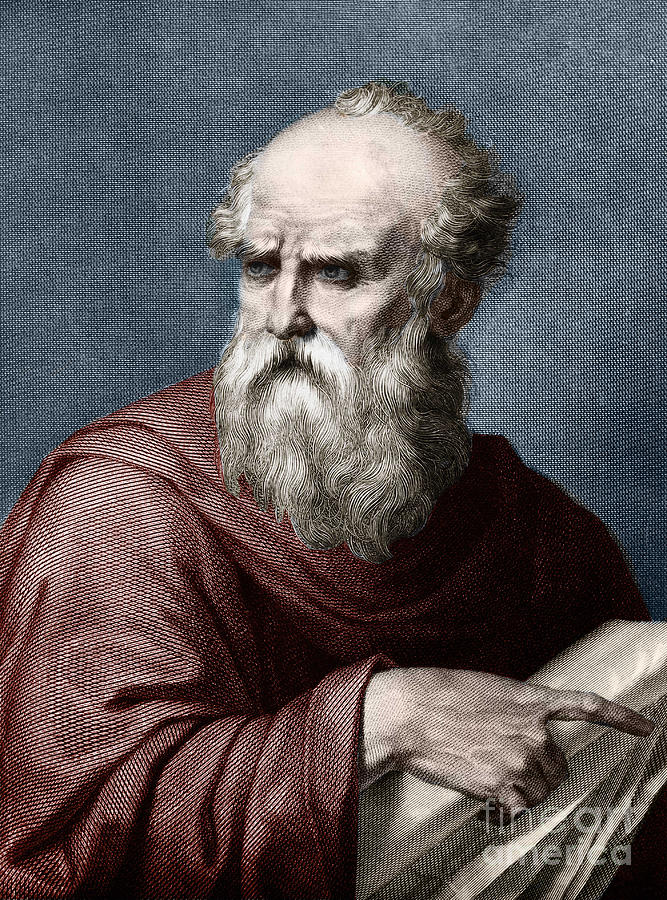
Vitruvius
Roman architect and engineerWikipedia
75
MENTIONS
25
EPISODES
25
PODCASTS
Search complete. 75 mentions across 25 episodes found for "Vitruvius".
Sep 12, 2026

Dr. WatsonVOICE_ACTOR
Yes, [laughs] quite so.
Dr. WatsonVOICE_ACTOR
I was presented with a priceless Roman ring of office, which we had found on the dead man's finger, and a magnificent copy of Vitruvius' De Architectura.
Dr. WatsonVOICE_ACTOR
On the flyleaf, in Holmes' handwriting, was the inscription, "One never knows what bit of useless tittle-tattle may save a man's life," with the chapter on the hypocaust was underlined.
Cy HarrisHOST
Gotcha that time.

Alfred ShirleyVOICE_ACTOR
[laughs] Quite so.
Alfred ShirleyVOICE_ACTOR
I was presented with a priceless Roman ring of office, which we had found on the dead man's finger, and a magnificent copy of Vitruvius' De Architectura.
Alfred ShirleyVOICE_ACTOR
On the flyleaf, in Holmes' handwriting, was the inscription, "One never knows what bit of useless tittle-tattle may save a man's life," the chapter on the hypocaust was underlined.
Cy HarrisADVERTISER
Got you that time.

Steve TurleyHOST
What's important here is that in the classical tradition, architecture was understood as a form of rhetoric.
Steve TurleyHOST
This goes all the way back to Vitruvius in the first century BC.
Steve TurleyHOST
Buildings, intentionally or unintentionally, buildings persuade.
Steve TurleyHOST
They make arguments in stone that no speech could quite match.

speaker_7NARRATOR
Real Roman cranes are brilliantly documented.
speaker_7NARRATOR
Vitruvius describes them.
speaker_7NARRATOR
Reliefs show them.
speaker_7NARRATOR
Archaeology gives us anchor holes and hardware.

WatsonVOICE_ACTOR
Quite so.
WatsonVOICE_ACTOR
I was presented with a priceless Roman ring of office, which we had found on the dead man's finger, and a magnificent copy of Vitruvius' De Architectura.
WatsonVOICE_ACTOR
On the primary thing of Holmes' handwriting was the inscription...
WatsonVOICE_ACTOR
One never knows what bit of useless tittle-tattle may save a man's life.

David WalesNARRATOR
Their list is a long one.
David WalesNARRATOR
Among them were Porgio Bracciolini, who discovered the manuscript of the Institutions of Quintilian and the writings of Vitruvius.
David WalesNARRATOR
Poliziano, the first poet of the 15th century and the translator of the works of Hippocrates and Galen.
David WalesNARRATOR
Pontanas, whose Destellis and Urania were much admired by Italian scholars.

Austin FalterGUEST
But he's got his arms out.
Austin FalterGUEST
This came from a Roman philosopher, Vitruvius, who wrote that the man is the measure of all things, that it can fit perfectly in a circle and a square.
Austin FalterGUEST
And so then Da Vinci's reading this and is like, this is sick.
Austin FalterGUEST
So he made this where you can see his arms outstretched.

speaker_2NARRATOR
By far the most famous anecdote about Archimedes involves him jumping out of a bath and running into the street naked, shouting, Eureka! after making a discovery.
speaker_2NARRATOR
The earliest version of the tale is found in De Architectura, a ten-volume book on architecture by Vitruvius.
speaker_2NARRATOR
a Roman architect and engineer who lived during the 1st century BC.
speaker_2NARRATOR
In Vitruvius' account, King Hiero wanted to make an offering to the gods at a temple and commissioned an artisan to make what is usually understood as a gold votive crown, but is more likely to have resembled a wreath.
speaker_2NARRATOR
The king measured out a quantity of gold and gave it to the craftsman, who duly presented an item of exquisite beauty to the king.
speaker_2NARRATOR
However, after hearing rumors that the artisan had defrauded the king by substituting part of the gold for an equal mass of silver, Hiero decided to investigate and asked Archimedes to find a way to test the object's purity without breaking it.
speaker_2NARRATOR
Next, he placed the king's wreath into the water and found that it displaced more water than the lump of pure gold.
speaker_2NARRATOR
Archimedes was therefore able to tell that the volume of the wreath was greater than that of the pure gold, and accordingly the metals within were less dense, proving that the wreath was indeed made from a mixture of gold and silver, not pure gold.

William McLeanHOST
One of them is pretty ancient.
William McLeanHOST
It came from Vitruvius and it's Venustas Utilitas Fermitas.
William McLeanHOST
And a better description of architecture I don't think has ever been invented.
William McLeanHOST
Come many centuries later, we get to Louis Sullivan and his famous maxim was form follows function.

Noah CharneyHOST
The more memorable version involves a bathtub.
Noah CharneyHOST
According to a story recorded by the Roman writer Vitruvius centuries later, the king of Syracuse suspected that a goldsmith had cheated him while making a ceremonial crown.
Noah CharneyHOST
Archimedes had to figure out whether the crown was pure gold without melting it down.
Noah CharneyHOST
Then, while getting into a bath one day, he noticed that the water level rose.
Noah CharneyHOST
The historical accuracy of the naked sprint is impossible to verify, but I certainly hope it happened.
Noah CharneyHOST
Because there's something wonderfully reassuring about the possibility that one of history's greatest mathematicians celebrated a scientific breakthrough exactly like a person who had just won the lottery.
Noah CharneyHOST
The surviving version of the crown story comes from Vitruvius, and he was writing roughly two centuries after Archimedes.
Noah CharneyHOST
So it's not clear if this happened or this is one of those hand-me-down telephone stories.
15 more episodes mention Vitruvius.
Create an account to see the whole feed, search across every transcript, and follow the entities you care about.