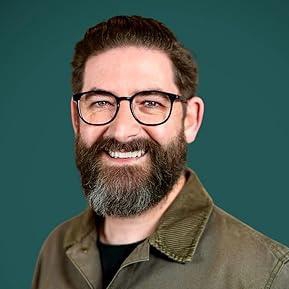
Making Disciples with Rev Dr Cris Rogers
Oct 11, 2026 · 44 min · 12 segments
295\. Discipleship and Dyslexia This week’s episode Cris explores the relationship between discipleship and dyslexia, reflecting on his own experience and asking how churches can better support…
Cris RogersHost
Now, my experience has been that within the church, I think it's much higher than that.

I think that within my staff teams over the years, it's been a higher percentage than that, and within our congregation, I would say it's, it's more than that.

So I don't know where they get the number from, but they say about 6.7 million people have dyslexia, and I constantly get the same comment from people when I say I'm dyslexic.

Now, why do I say I'm dyslexic? Is it because I'm looking for people to feel sorry for me? The answer is not at all.

I realized a number of years ago that if I didn't say that I'm dyslexic, um, it didn't give permission for others who are thinking about, "Am I dyslexic?" Or you have children who are dyslexic to say, "Hang on.

Like, we're experiencing that." And the number of times I've talked about it, I will usually get some, uh, person or two, three people at the end of a talk that might come up to me and say, "Actually, I think I might be as well.

What do I do?" So I talk about it because I just think it's really helpful for others to go, "Well, then maybe that, that, that's me." So 1.7 million people in the UK, uh, the Dyslexia Association, they, are, are dyslexic.

So, uh, number one, uh, I, you know, said it beforehand, um, if I'm trying to write something down, my brain can't keep up, and by the end of the sentence, I don't know kind of w- where I'm heading.

Um, when I read text, so if you open a book, what I don't see is a page full of words.

And then what I'm able to do is I can focus on a word So I can focus on a word at the beginning of a sentence, and what I'm able to do is probably see the word after it and the word before it, uh, but that's about it.

And what I have to do when I read is I'm basically reading each word, and as I read the next word, the next-- the word along from it is kinda starting to reveal itself.

So what we found at school was, uh, people would often say my reading was quite stunted 'cause I was reading a word then a word.

I've, I've learnt how to navigate that by reading ahead, so I will often start by, by reading ahead.
The rest of this transcript — segmented and speaker-labeled, so you land on the exact moment something was said
Search every transcript — by keyword, by phrase, or by meaning, across every show Radar indexes
Trends — what is surging across podcasts, measured against its own baseline
Alerts — when a name you follow appears in a newly indexed episode
No account is needed to search Radar.