Torah

Torah

ScriptureWikipedia

Search complete. 47432 mentions across 6582 episodes found for "Torah".

Sep 14, 2026

Yehoshua GordonHOST
3:01
What are letters of action? B'ma'aseh, the letters of the world of action, of the world of doing.
Yehoshua GordonHOST
3:09
Hein refers to T'muna shel otiyos, shel b'ktav ashuri, shel b'sefer Torah.
Yehoshua GordonHOST
3:17
There's a certain style of writing.
Yehoshua GordonHOST
3:20
It's called Ktav Ashuri.
Yehoshua GordonHOST
3:22
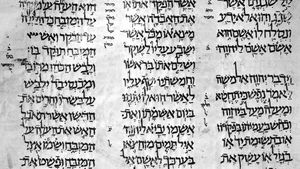
That is the style of calligraphy, of writing that is in a Torah, in tefillin, in mezuzahs.
Yehoshua GordonHOST
3:31
This is a holy, a holy style of writing.
Yehoshua GordonHOST
3:33
It's unique.
Yehoshua GordonHOST
3:34
It's called Ktav Ashuri.
AvtzonHOST
1:52
Yishmael and Esav, in contrast, did not possess this threefold merit.
AvtzonHOST
1:59
Indeed, Hashem found the Jewish people faithful to their destiny, for when He sought to give them the Torah in a desert land, they willingly followed Him into a desolate wasteland filled with howling creatures to receive it.
AvtzonHOST
2:09
Furthermore, they accepted the Torah in a threefold manner, parallel to the threefold merits of their forefathers.
AvtzonHOST
2:15
They undertook it to use their intellect and study it, thereby emulating Jacob, who was particularly devoted to Torah study.
AvtzonHOST
2:24
They undertook to fulfill any decrees emulating Avraham, who actively sought to subject humanity to Hashem's kingship.
AvtzonHOST
2:31
And they undertook to submit their entire lives to Hashem as a servant does to his master, which is what Yitzchak did, prepared to sacrifice his life to Hashem.
Manis FriedmanHOST
1:12
This other, this second letter, eisei, sanigreis, basically explains the same idea.
Manis FriedmanHOST
1:22
eisei, sanigreis, lanu, heim, demay, sediber, machshavah, the letters... that are revealed to us in thought, speech, and deed, or deed, speech, and thought, the letters of action, in other words, the written letters, is the form and the shape of the written letters as they are written in the Sefer Torah, for example.
Manis FriedmanHOST
1:58
The formal writing of the Aleph Beis.
Manis FriedmanHOST
2:08
And the letters of speech are made up of the breath and the sound.
Manis FriedmanHOST
2:46
Because there's no difference between the holy tongue, In the sound that the letters make, there is no difference between the holy tongue and the other languages.
Manis FriedmanHOST
3:05
The difference is only in their shape.
Manis FriedmanHOST
3:09
The letters of Torah are different than the letters of other languages.
Manis FriedmanHOST
3:14
As for example, the Aleph is different from the A in Latin or in English.
Shimon NeubortHOST
3:40
The chinuch gives us the reason for this commandment.
Shimon NeubortHOST
3:43
Why should it be that food only becomes impure after it has become in contact with liquid? Nachinuch explains that the Torah commonly looks at an object only after it has been fully prepared and completed.
Shimon NeubortHOST
4:00
For example, challah.
Shimon NeubortHOST
4:02
One is required to take a certain amount from the dough that one has prepared and gives it to the Kohen to eat.
Shimon NeubortHOST
5:13
Therefore, before the food has been washed, it cannot become impure.
Shimon NeubortHOST
5:18
It is not makabal tuma.
Shimon NeubortHOST
5:20
This is because the Torah does not consider it to be completely ready to eat before it has been exposed to liquid or washed.
Shimon NeubortHOST
5:28
But after it has been exposed to liquid and washed, then it is considered to be complete and prepared for use.
Mendel KaplanHOST
3:40
The Chinuch gives us the reason for this commandment.
Mendel KaplanHOST
3:43
Why should it be that food only becomes impure after it has become in contact with liquid? The Chinuch explains that the Torah commonly looks at an object only after it has been fully prepared and completed.
Mendel KaplanHOST
4:00
For example, challah.
Mendel KaplanHOST
4:02
One is required to take a certain amount from the dough that one has prepared and gives it to the Kohen to eat.
Mendel KaplanHOST
5:13
Therefore, before the food has been washed, it cannot become impure.
Mendel KaplanHOST
5:18
It is not mekabel tumah.
Mendel KaplanHOST
5:20
This is because the Torah does not consider it to be completely ready to eat before it has been exposed to liquid or washed.
Mendel KaplanHOST
5:28
But after it has been exposed to liquid and washed, then it is considered to be complete and prepared for use, and then it can become impure.
Avraham Meyer ZajacHOST
6:40
They are considered like any other fruit juice.
Avraham Meyer ZajacHOST
6:44
They themselves are always Torah.
Avraham Meyer ZajacHOST
6:46
They have nothing to do with Tumah.
Avraham Meyer ZajacHOST
6:47
They are not considered among the seven liquids.

14 MINS LATER

Avraham Meyer ZajacHOST
21:15
If it was put inside the inner space of an earthenware vessel that was Tomei, and we have learned already, and we will learn later, again, that a klicheres, an earthenware vessel, imparts Tumah not from its body but from its interior space.
Avraham Meyer ZajacHOST
21:34
If it was put into the interior space, nitmah kuloy, not only the outer part of the snow that faces the vessel is Tomei, but the entire body of snow is Tomei because the entire thing is inside the interior space of the earthenware vessel.
Avraham Meyer ZajacHOST
21:52
milk that's still inside the udders, even if he had in mind to press it out and drink it, nevertheless, this is not considered milk yet, and what he had in mind is of no meaning, and it is Torah, it cannot become Tomei yet.
Avraham Meyer ZajacHOST
22:15
However, if he had in mind milk that was inside the fourth stomach, if he had in mind to eat the curdled milk that's in the fourth stomach, that is, that there was a calf that was a suckling calf, and it had milk inside its stomach, and when the milk reaches the fourth stomach, it curdles there and becomes like a cheese, if he had in mind that after he opened up the calf's stomach, he would take out this cheese and eat it, then this is considered a food, and it is capable of receiving the Tumah of food.
speaker_0HOST
1:22
And as the Zeidi and the grandson, who would later become the Tzemach Tzedek, are talking, the Alter Rebbe is reminiscing.
speaker_0HOST
1:31
And he tells his grandson about an occasion when he heard a special Torah teaching from his teacher, the Maggid of Mezrich.
speaker_0HOST
1:43
So says the Alter Rebbe, In the year 1768, my Rebbe, the Maggid of Mizritch, was expounding on Teshuvah.
speaker_0HOST
1:54
And he quoted a verse from the Torah.
speaker_0HOST
1:56
The Torah says, which literally translates that you should return unto Hashem your God.
speaker_0HOST
2:04
You should do Teshuvah and return to Hashem.
speaker_0HOST
2:07
But the Maggid honed in on the fact that this verse uses two names of Hashem.
Mendel KaplanHOST
0:19
We briefly mentioned this, we started talking about this already.
Mendel KaplanHOST
0:22
It's the 98th mitzvah of the Torah, and we're actually going to be talking quite a bit about it for the next couple of days.
Mendel KaplanHOST
0:27
So let's start it off with the Pesukim in the Torah.
Mendel KaplanHOST
0:31
Well, first I'll do the verbiage of the Ramamiz, that we should evaluate and respond, deal with, as in issue rulings, and find out what is the proper path of action to take with regard to the laws affecting foodstuffs, edibles.
Mendel KaplanHOST
0:53
This mitzvah includes all of the ritual law that governs foodstuff, edibles, or that which is potable, that which can be drunk by human beings under normative circumstances.
Mendel KaplanHOST
1:10
the book of Leviticus, chapter 11, and the verses over there, verses 33 and 34 says, we talk about a klei cheres, we talk about a earthenware jug, and we say, if the ritual impurity falls inside it, and then it says, any time that this is a foodstuff, and water is going to come in contact with it, and we say, all of the that which is drunk, what will be drunk from this, everything which a human being will use to slake his thirst, in this keli, yitma, becomes ritually impure.
Mendel KaplanHOST
1:50
Okay.
Mendel KaplanHOST
1:51
And in other words, in these psukim, the Torah is instructing us about the mitzvah of being careful with regard to edibles, that they should not become ritually impure.
speaker_0HOST
1:17
And as the Zeidi and the grandson, who would later become the Tzemach Tzedek, are talking, the Alter Rebbe is reminiscing.
speaker_0HOST
1:26
And he tells his grandson about an occasion when he heard a special Torah teaching from his teacher, the Maggid of Mezrich.
speaker_0HOST
1:38
So says the Alter Rebbe, In the year 1768, my Rebbe, the Maggit of Mizritch, was expounding on Teshuvah.
speaker_0HOST
1:49
And he quoted a verse from the Torah.
speaker_0HOST
1:51
The Torah says, Which literally translates that you should return unto Hashem your God.
speaker_0HOST
1:59
You should do Teshuvah and return to Hashem.
speaker_0HOST
2:02
But the Maggid honed in on the fact that this verse uses two names of Hashem.
speaker_1NARRATOR
0:26
So over here, he explores the external and internal from the twenty-two letters of the Hebrew alphabet, the way they manifest in action, in speech, and in thought.
speaker_1NARRATOR
0:38
What does that mean? The letters are actioned when they're written in a safer Torah.
speaker_1NARRATOR
0:47
Those letters then develop their own entity standing outside speech or thought, the actual words are holy.
speaker_1NARRATOR
0:58
The handwriting of the Torah is very unique.
speaker_1NARRATOR
1:00
It's not the typical handwriting, if you've ever seen the Torah on its side.
speaker_1NARRATOR
1:03
It's the, it's the letters called Ashurit.
speaker_1NARRATOR
1:07
It's a unique, um, font.

6,572 more episodes mention Torah.

Create an account to see the whole feed, search across every transcript, and follow the entities you care about.

We value your privacy

We use cookies to understand how you use our platform and to improve your experience. Click “Accept All” to consent, or “Decline non-essential” to opt out of non-essential cookies. Read our Privacy Policy.