Sep 10, 2026 · 28 min · 8 segments
What does AI reveal about what it means to be human? In the final episode of our 4-part series on AI, Fr. Peter Wojcik and Marco Oropeza explore consciousness, human connection, and where God fits…
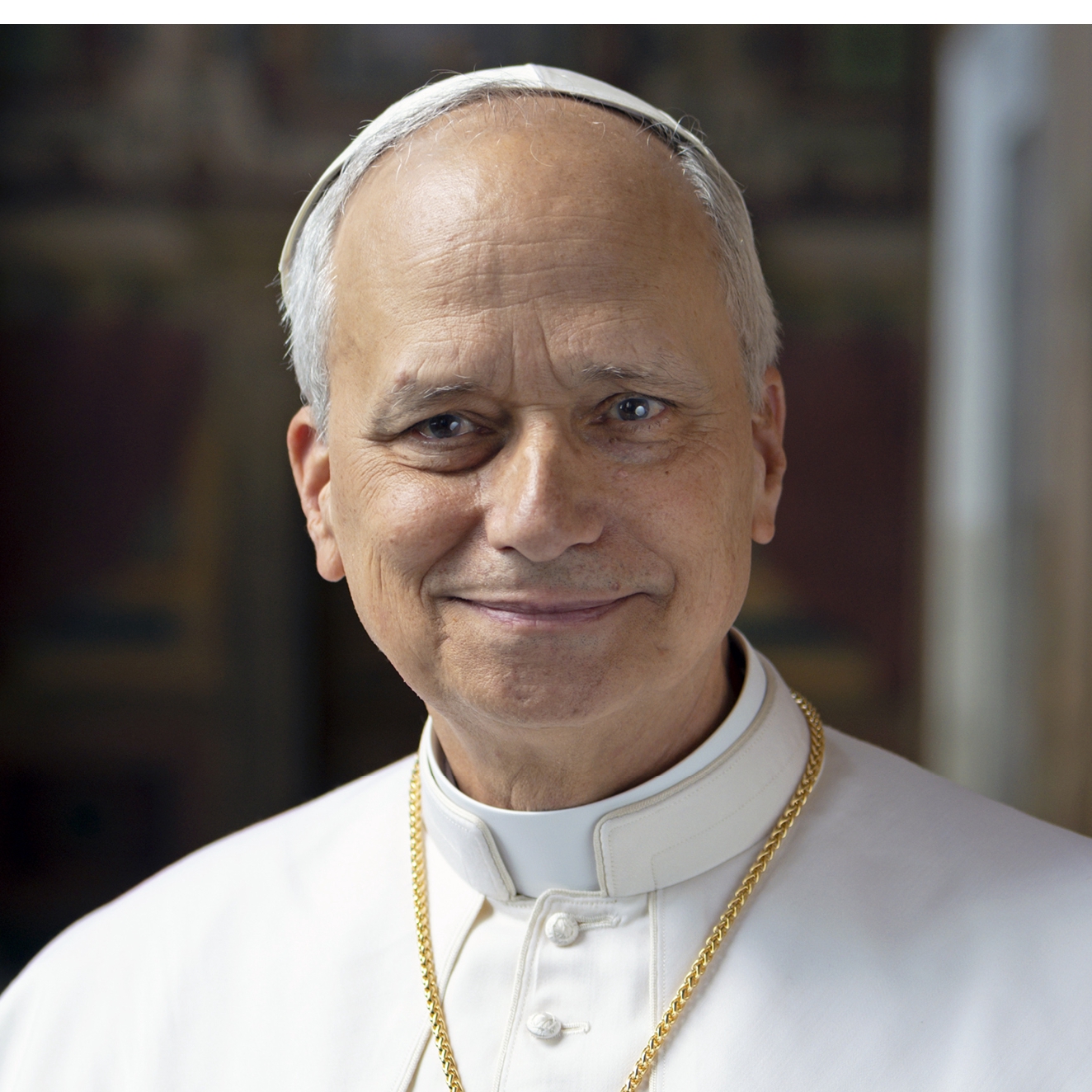
Peter WojcikHost
So this summer, a number of our people on the team here at St. Clement interviewed about 80 young adults, and then about roughly 140-plus adults did our online survey.

And part of that, Marco, was we are trying to understand how young people, Gen Zs, see themselves in the world of this expanding technology.

Yeah, I mean, I think it's difficult to summarize everything into a little bit.
I mean, it's always been there, right? It's a sci-fi futuristic type of thing.
But in the last six months with the... greater access to some of the large language models and the chatbots, the proliferation of the use of the technology in everyday life and in work life has just completely changed.
And it almost feels like it happened overnight, right? Like it almost feels very weird to think about a world where you didn't have access to chat GPT or CLAW to write things for you or to create graphics for you.
Like that was... not even nine months ago, right? That we weren't really even doing that.
So all of this is happening.
And I think we recognize that this is a very drastic change.
It's not just some new technology that's going to...
Like this is going to transform and it already is transforming and changing how we interact as humans, how we think as humans, how we work as humans.
And so...
We thought to build on the research that the team did here was unpack some of that and some of the key insights and learnings and tensions that people were wrestling with.
And so we talked about this idea of, you know, are humans simple machines? Are we just machines meant to be optimized? And we said, no, we're much more than that.
We talked about the challenge that people are having of... feeling connected to others but it's a surface level connection right and and it's exacerbated you know with with these types of technologies even more so and this importance of um a parish not needing to emulate a social network with soft connections but some a place where you can really go deep right and how do you leverage technology to help you get there The next week we talked about this whole business about attention, right? And I think what we were trying to say is whether you realize it or not, someone has your attention and someone's discipling you.
And I think what we were trying to recognize is and help people recognize that because we live these worlds that are so hyperactive and hyperconnected, it sometimes feel like our life is frictionless and we're just moving from one thing to the other.
And if you don't take a step back and recognize that in many ways your life is being run by algorithms and recommendations from a machine and now AI basically doing work for you and telling you how awesome you are, we run the risk to put our attention towards the wrong thing, right? And today we want to land the plane and kind of bring it all together with this idea of how do we bring our consciousness, right? Our faith, right? into our day-to-day life right outside of the sunday experience outside of coming to church and experiencing small group what does it look like to actually bring your faith into the workplace or into your the classroom or into you know whatever part of life you may be finding yourself in the day-to-day so maybe you can frame it a little bit yeah um given some of the background you've got from um the ethics perspective and theological perspective and we can go from there

So this summer, a number of our people on the team here at St. Clement interviewed about 80 young adults, and then about roughly 140-plus adults did our online survey.

And part of that, Marco, was we are trying to understand how young people, Gen Zs, see themselves in the world of this expanding technology.

Yeah, I mean, I think it's difficult to summarize everything into a little bit.
I mean, it's always been there, right? It's a sci-fi futuristic type of thing.
But in the last six months with the... greater access to some of the large language models and the chatbots, the proliferation of the use of the technology in everyday life and in work life has just completely changed.
And it almost feels like it happened overnight, right? Like it almost feels very weird to think about a world where you didn't have access to chat GPT or CLAW to write things for you or to create graphics for you.
Like that was... not even nine months ago, right? That we weren't really even doing that.
So all of this is happening.
And I think we recognize that this is a very drastic change.
It's not just some new technology that's going to...
Like this is going to transform and it already is transforming and changing how we interact as humans, how we think as humans, how we work as humans.
And so...
We thought to build on the research that the team did here was unpack some of that and some of the key insights and learnings and tensions that people were wrestling with.
And so we talked about this idea of, you know, are humans simple machines? Are we just machines meant to be optimized? And we said, no, we're much more than that.
We talked about the challenge that people are having of... feeling connected to others but it's a surface level connection right and and it's exacerbated you know with with these types of technologies even more so and this importance of um a parish not needing to emulate a social network with soft connections but some a place where you can really go deep right and how do you leverage technology to help you get there The next week we talked about this whole business about attention, right? And I think what we were trying to say is whether you realize it or not, someone has your attention and someone's discipling you.
And I think what we were trying to recognize is and help people recognize that because we live these worlds that are so hyperactive and hyperconnected, it sometimes feel like our life is frictionless and we're just moving from one thing to the other.
And if you don't take a step back and recognize that in many ways your life is being run by algorithms and recommendations from a machine and now AI basically doing work for you and telling you how awesome you are, we run the risk to put our attention towards the wrong thing, right? And today we want to land the plane and kind of bring it all together with this idea of how do we bring our consciousness, right? Our faith, right? into our day-to-day life right outside of the sunday experience outside of coming to church and experiencing small group what does it look like to actually bring your faith into the workplace or into your the classroom or into you know whatever part of life you may be finding yourself in the day-to-day so maybe you can frame it a little bit yeah um given some of the background you've got from um the ethics perspective and theological perspective and we can go from there
The rest of this transcript — segmented and speaker-labeled, so you land on the exact moment something was said
Search every transcript — by keyword, by phrase, or by meaning, across every show Radar indexes
Trends — what is surging across podcasts, measured against its own baseline
Alerts — when a name you follow appears in a newly indexed episode
No account is needed to search Radar.