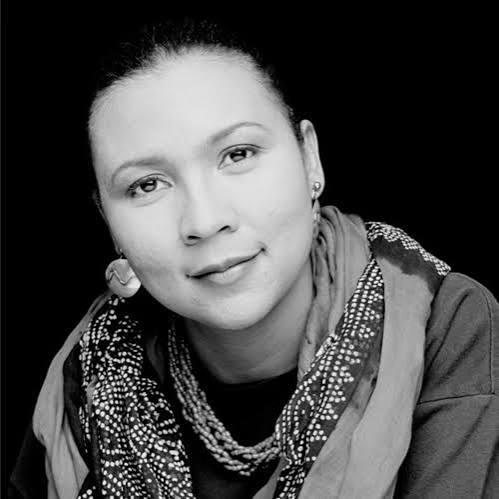
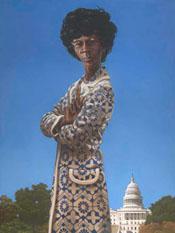
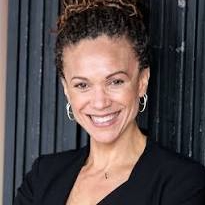
Beverly Guy-SheftallGuestAnd I'm going to say something about when I met Gloria, but the thing that I want to pinpoint that both of you have lifted up is the way that Gloria Steinem redistributed the access, the power, the authority that she had.
It's not as though she... could basically deny that she was in rooms that we weren't in or deny that she would be seen as the face of feminism, even though there are many other women who could have been that face if we weren't living in a world that is racist and is oriented in all the ways that we know contributed to them seeing her as that face.
What she did was dedicate herself to redistributing that power, that access, that authority, and not with a price tag attached to it.
And I just want to I want to pause and think about that because these were not transactional kinds of relationships.
And a lot of times, I'll just speak for myself, I sometimes do wonder when I'm in white spaces, whether it's the white left or white feminists or whatever, Whether what is being done in allyship is in fact allyship or it's transactional.
A lot of people out there will be asking, well, what has she done for us? Actually, she did a lot.
You're speaking out of lack of information, or I would just say asymmetrical information, information that comes from some of the things that people have criticized her for, and not information for some of the things that people haven't spoken about.
I'm going to say just something quickly about, like, I can't remember exactly when or where I met Gloria Steinem, I do remember the feeling I had, which was shock because she knew who I was.
So, you know, when I met her, and it was only probably a year or so after I had written my first law review article.
I was blown away that she knew me and they're sort of mad proud about it too.
But I think the most enduring relationship memories I have are quite like your Salamisha because I also wrote an article Around the 2008, you know, I think it's probably the same op-ed that you wrote something about because, you know, it kind of came out and it had Gloria Steinem's name on it.
And it was in the middle of this incredible fistfight in some ways, ideologically, politically.
you know, between African-Americans and and well, between the race first versus the gender first crowd, because who was where was kind of mixed up.
And yeah, it was like it was called Not in Our Name or something like that.
And likewise, you know, she reached out and we actually had, I think it was the first time we had one of the big meetings in her living room, uh, to, to, to, to try to talk through the tension that had developed.
And what I appreciated about Gloria at that moment and ever since is her willingness to, to engage.
And I'm going to say something about when I met Gloria, but the thing that I want to pinpoint that both of you have lifted up is the way that Gloria Steinem redistributed the access, the power, the authority that she had.
It's not as though she... could basically deny that she was in rooms that we weren't in or deny that she would be seen as the face of feminism, even though there are many other women who could have been that face if we weren't living in a world that is racist and is oriented in all the ways that we know contributed to them seeing her as that face.
What she did was dedicate herself to redistributing that power, that access, that authority, and not with a price tag attached to it.
And I just want to I want to pause and think about that because these were not transactional kinds of relationships.
And a lot of times, I'll just speak for myself, I sometimes do wonder when I'm in white spaces, whether it's the white left or white feminists or whatever, Whether what is being done in allyship is in fact allyship or it's transactional.
A lot of people out there will be asking, well, what has she done for us? Actually, she did a lot.
You're speaking out of lack of information, or I would just say asymmetrical information, information that comes from some of the things that people have criticized her for, and not information for some of the things that people haven't spoken about.
I'm going to say just something quickly about, like, I can't remember exactly when or where I met Gloria Steinem, I do remember the feeling I had, which was shock because she knew who I was.
So, you know, when I met her, and it was only probably a year or so after I had written my first law review article.
I was blown away that she knew me and they're sort of mad proud about it too.
But I think the most enduring relationship memories I have are quite like your Salamisha because I also wrote an article Around the 2008, you know, I think it's probably the same op-ed that you wrote something about because, you know, it kind of came out and it had Gloria Steinem's name on it.
And it was in the middle of this incredible fistfight in some ways, ideologically, politically.
you know, between African-Americans and and well, between the race first versus the gender first crowd, because who was where was kind of mixed up.
And yeah, it was like it was called Not in Our Name or something like that.
And likewise, you know, she reached out and we actually had, I think it was the first time we had one of the big meetings in her living room, uh, to, to, to, to try to talk through the tension that had developed.
And what I appreciated about Gloria at that moment and ever since is her willingness to, to engage.
The rest of this transcript — segmented and speaker-labeled, so you land on the exact moment something was said
Search every transcript — by keyword, by phrase, or by meaning, across every show Radar indexes
Trends — what is surging across podcasts, measured against its own baseline
Alerts — when a name you follow appears in a newly indexed episode
No account is needed to search Radar.