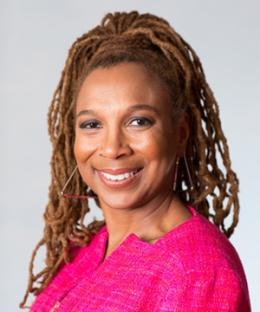
Kimberlé Crenshaw
American civil rights advocateWikipedia
36
MENTIONS
31
EPISODES
29
PODCASTS
Search complete. 36 mentions across 31 episodes found for "Kimberlé Crenshaw".
Oct 30, 2026

Delio VásquezGUEST
So later, the discourse of the most oppressed kind of catches on some in academia or the left, and that really directly comes out of Newton's theorizations of the Black Panther Party.
Delio VásquezGUEST
Though then it wasn't about identifying a single person who's the most oppressed, it's about identifying, to use later language, intersections of experience to help develop a theoretical analysis that will allow one to grasp multiple vectors of oppression, right? Actually, to that point, as I kind of invoke Kimberly Crenshaw a bit and the Combahee River Collective, it's rarely acknowledged the Combahee River Collective consisted of many former Panthers and a lot of their language in that famous statement draws directly from some of Newton's writings or his speech at Boston College in 1970.
Delio VásquezGUEST
kind of returning to the matter of how Newton conceptualized the flux of experience, he did not think of a political party, for instance, as a matter of rank and file members existing within some structure, but rather as an organized channeling of people's experiences.
Delio VásquezGUEST
So under colonial conditions, Elites of people in power do channel our experiences in particular ways whether you want to call it an algorithm whether you want to call it the structures of trauma Political institutions culture.

W. Kamau BellGUEST
Like I was over six feet tall.
W. Kamau BellGUEST
And I was aware at some point like, oh, you know, it's sort of the – The bear scratching the surface of what Professor Kimberly Crenshaw sort of coined as intersectionality.
W. Kamau BellGUEST
My identity is as a black man, not as a black person and as a man.
W. Kamau BellGUEST
It is a black man.

Rebecca SolnitGUEST
One thing I also saw is people saying, oh, second wave feminism didn't care about Black women.
Rebecca SolnitGUEST
And then I saw some of the most important Black women feminists in this country speak up, including Angela Davis and Kimberlé Crenshaw, who coined the word intersectional to mean The way that race and gender and other factors all kind of shape each other into a different kind of status or experience.
Rebecca SolnitGUEST
And Steinem... did huge things with her.
Rebecca SolnitGUEST
But then it also comes back to something I've been talking about since Hope in the Dark.

Katie KurtzHOST
And whether that's professional or personal or both.
Katie KurtzHOST
And I know that very much... resonates with me and my kind of journey with it and so many people not just who've been on this podcast but people in this movement and that you know sometimes we know trauma and again using that kind of very big with the lived experiences of people and the intersections of that and I always just want to always give gratitude to Dr. Kimberly Crenshaw who really gave us the work around intersectionality but This has been around since the dawn of time.
Katie KurtzHOST
And understanding the word trauma and what it means is still so, so new in The Greatest of Things.
Katie KurtzHOST
And we're still learning from not just the academia research perspective.

J FinleyGUEST
And the class on the philosophy of race class, that was when I first encountered critical race theory.
J FinleyGUEST
And when I started reading Derrick Bell, Kimberly Crenshaw, Ian Haney Lopez, that was really when I was like, oh, that's what kind of person I want to be.
J FinleyGUEST
I wanted to be an activist.
J FinleyGUEST
You know, I wanted to be like an activist scholar type person.

Nwamaka AgboGUEST
And when they showed up in their service lines, TKO and their members were clear like, we are more than excited and happy to serve and support you, but when you come here, you must also respect us and treat us with dignity and care as Black queer trans people.
Nwamaka AgboGUEST
So I share that example because when we look at intersectionality, Kimberly Crenshaw has taught us this well, when we are able to center the needs of those that have been most impacted, most dislocated and disinvested in, when we center them in the strategies and the decisions and how resources move, they are more able to then set up strategies to support their communities.
Nwamaka AgboGUEST
And then those strategies actually end up having a ripple effect in meeting the needs of others that are just one circle outside of them and another circle outside of them.
Nwamaka AgboGUEST
So that's what we seek to do with Katali, resource those that are most directly impacted, understanding the ripple effects that that can have, and to do it in a way where we center their dignity and their self-determination.

Sue OwenHOST
I agree.
Sue OwenHOST
And, you know, as an aside, as a PhD student, my full year of my first year in intersectionality and systems of racism or systems of oppression and the work of Kimberle Crenshaw on this, like it's not just one thing, it's a confluence of another things that create these systems of racism.
Sue OwenHOST
and marginalization.
Sue OwenHOST
I think I agree with you.

speaker_0ADVERTISER
That's bit.ly slash UTB51 underscore roundtable.
Kimberlé CrenshawHOST
I'm Kimberlé Crenshaw, and this is Intersectionality Matters, the podcast that brings intersectionality to life by exploring the hidden dimensions of today's most pressing issues, from Say Her Name to the war on woke, DEI and CRT, and the global rise of fascism.
Kimberlé CrenshawHOST
This Idea Travelogue lifts up the work of leading activists, artists, and scholars and helps listeners understand politics, the law, social movements, and even their own lives in deeper, more nuanced ways.
Kimberlé CrenshawHOST
Listeners, welcome back to Intersectionality Matters.
1 HR 4 MINS LATER
Kimberlé CrenshawHOST
Our technical producer is Marlon Bonney.
Kimberlé CrenshawHOST
To support our show, subscribe, leave a review, follow us on social media, and donate to the African American Policy Forum.
Kimberlé CrenshawHOST
Copies of my latest book, Backtalker, An American Memoir, are available at KimberlyCrenshaw.com. I'm your host, Kimberlé Crenshaw.
Kimberlé CrenshawHOST
We'll be back soon.

Marianne ChbatGUEST
Ça a commencé aux États-Unis notamment.
Marianne ChbatGUEST
Patricia Hill Collins est une figure, Kimberlé Crenshaw en est une autre.
Marianne ChbatGUEST
On connaît ces noms-là.
Chacha EnriquezHOST
Sirma Bilge au Québec.
Kimberlé CrenshawHOST
To support our show, subscribe, leave a review, follow us on social media, and donate to the African American Policy Forum.
Kimberlé CrenshawHOST
Copies of my latest book, Back Talker: An American Memoir, are available at KimberlyCrenshaw.com. I'm your host, Kimberlé Crenshaw.
Kimberlé CrenshawHOST
We'll be back soon.
Kimberlé CrenshawHOST
[upbeat music]
21 more episodes mention Kimberlé Crenshaw.
Create an account to see the whole feed, search across every transcript, and follow the entities you care about.