The topic? The systematic annihilation of Europe's Jews, what the Nazis refer to as the Final Solution.
Along with these high officials, there's one lieutenant colonel, very quiet, very unassuming, taking notes, but he's also providing information like the amount of Jews in different countries.
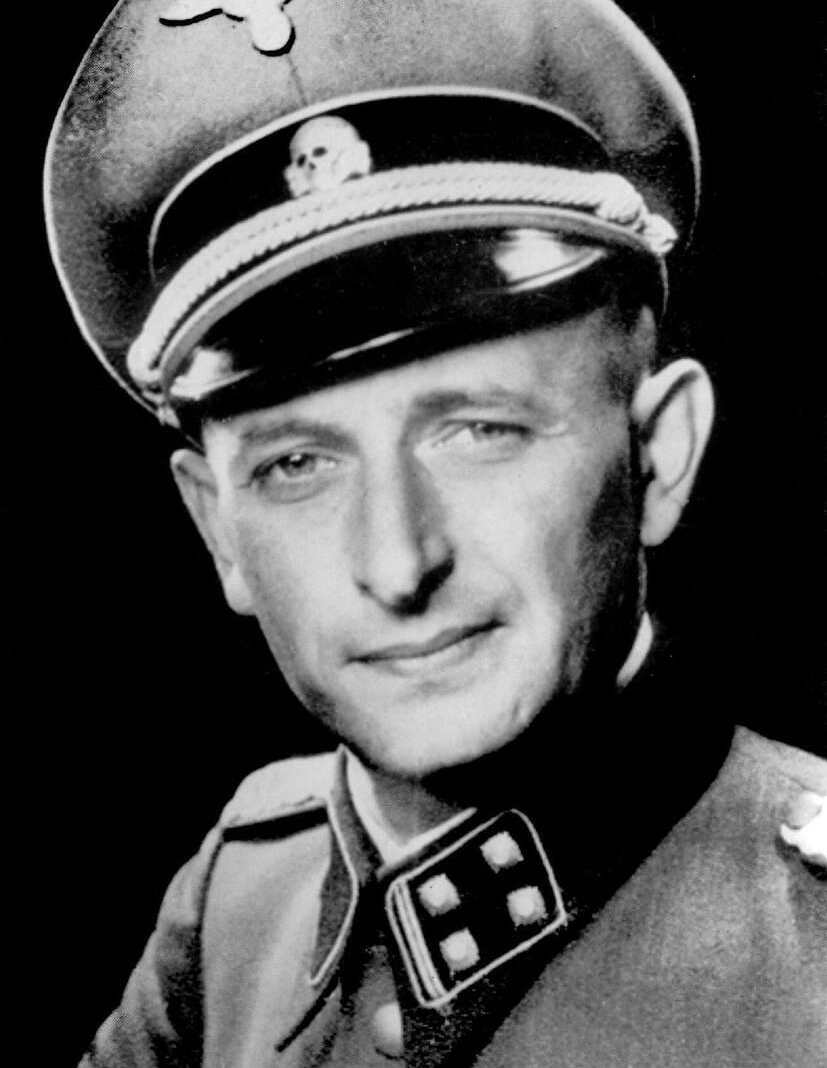
Eichmann is not really well known as a front man of the Nazis.
He's more of a behind-the-scenes bureaucrat, and he really views the killing of millions of Jews as sort of this logistical problem that he's in charge of solving.
Eichmann had joined the SD, the SS's intelligence agency, in 1934.
In 1936, he's recruited by a member of the SD to join the so-called Jewish Affairs Division.
And eventually he comes to take over this division.
He figures out how to conduct these mass deportations as fast as possible.
He devises a system to give deportation papers to Jewish people on the spot while also stripping them of their possessions, stripping them of their wealth, and getting them essentially out of the country within less than an hour's time.
Once World War II starts, Adolf Eichmann becomes more and more fanatical.
And once the final solution is decided upon, he becomes the central operational figure behind the Holocaust.
Hitler is the one who's ordering these atrocities, but Eichmann is the bureaucrat in charge of actually carrying them out.
There are a lot of pieces of information that come out of Nazi Germany during World War II.
And it's just so hard for Westerners to comprehend this scale of tragedy that it's not until we start to overrun some of the outlying murder camps that we can't deny what's going on anymore.
By April of that year, he's dead.
Despite the fact that many high-ranking Nazis have been captured, Eichmann is never found.
And on top of that, most of the world has never even heard his name.
Six months go by before the public finally learns about Adolf Eichmann and his role in the Holocaust.
The rest of this transcript — segmented and speaker-labeled, so you land on the exact moment something was said
Search every transcript — by keyword, by phrase, or by meaning, across every show Radar indexes
Trends — what is surging across podcasts, measured against its own baseline
Alerts — when a name you follow appears in a newly indexed episode
No account is needed to search Radar.