Wehrmacht
Armed forcesWikipedia
481
MENTIONS
164
EPISODES
92
PODCASTS
Search complete. 481 mentions across 164 episodes found for "Wehrmacht".
Nov 4, 2026

Paul VanderKlayHOST
The costuming is not subtle.
Paul VanderKlayHOST
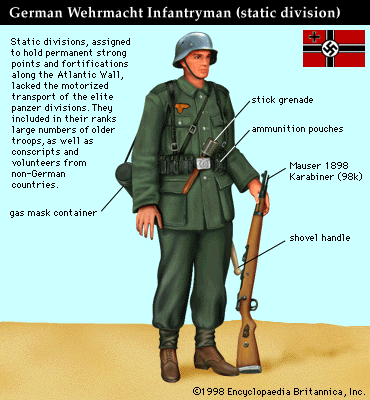
Imperial officers in tunics cut like the Wehrmacht's infantry called stormtroopers, a term lifted from the Nazi essay.
Paul VanderKlayHOST
The Empire is the Second World War's villain relocated in space and handed a generation that never had to face him.
Paul VanderKlayHOST
Lucas has said the empire was modeled on America and Vietnam and that the rebels, the Ewoks in particular, are modeled on the Viet Cong.

Michael PalmerGUEST
And it is also clear from those war plans.
Michael PalmerGUEST
that these were not defensive plans, so the Soviet troops would not wait, the Red Army would not wait for a German attack and then counter attack, but indeed it was planned that the Red Army should take the initiative and strike into East Prussia, even before the German troops, the Wehrmacht, would be fully concentrated.
Michael PalmerGUEST
So while the Wehrmacht was still in the process of marching up its troops, the Russians would already strike and destroy these troops before they could even attain a battle posture.
Michael PalmerGUEST
And this motif is really found throughout all of these operational plans.
Michael PalmerGUEST
So Schripper dissects a number of operational plans and five of them overall.
Michael PalmerGUEST
So if indeed the Soviet Union had been preparing for a defensive war, the very last thing they would have done is to put their assets this far forward.
Michael PalmerGUEST
And indeed The initial catastrophe of the Red Army was brought about by this extremely forward deployment of the troops, but also of the Air Force, for example.
Michael PalmerGUEST
I mean, all these assets were lost within a few days of fighting after the Wehrmacht had attacked, right? And then it became very difficult indeed to organize the and effective defense at that point.

Michael PalmerGUEST
And it is also clear from those war plans.
Michael PalmerGUEST
that these were not defensive plans, so the Soviet troops would not wait, the Red Army would not wait for a German attack and then counter attack, but indeed it was planned that the Red Army should take the initiative and strike into East Prussia, even before the German troops, the Wehrmacht, would be fully concentrated.
Michael PalmerGUEST
So while the Wehrmacht was still in the process of marching up its troops, the Russians would already strike and destroy these troops before they could even attain a battle posture.
Michael PalmerGUEST
And this motif is really found throughout all of these operational plans.
Michael PalmerGUEST
So Schripper dissects a number of operational plans and five of them overall.
Michael PalmerGUEST
So if indeed the Soviet Union had been preparing for a defensive war, the very last thing they would have done is to put their assets this far forward.
Michael PalmerGUEST
And indeed, The initial catastrophe of the Red Army was brought about by this extremely forward deployment of the troops, but also of the Air Force, for example.
Michael PalmerGUEST
I mean, all these assets were lost within a few days of fighting after the Wehrmacht had attacked, right? And then it became very difficult indeed to organize a...

speaker_0NARRATOR
During this period, Chechnya and Ingushetia were lumped together to form the Chechnyo-Ingush Autonomous Soviet Socialist Republic, and the 1930s saw huge numbers of immigrants arrive in the region from Ukraine during the Holodomor Joseph Stalin's terror famine that took the lives of millions.
speaker_0NARRATOR
Fighting arrived in the Caucasus in July 1942, as the German Wehrmacht surged through the region during Operation Barbarossa.
speaker_0NARRATOR
Despite some fierce and, let's be perfectly honest, pretty hopeless resistance from the local people in the face of a far superior opposition, Soviet leaders blamed the Chechens for the speed at which the Caucasus was overrun.
speaker_0NARRATOR
To such an extent, they were openly dubbed Nazi collaborators.
Thomas777GUEST
And Kennedy said, well, did Ribbentrop not offer that Germany would not only make no claim on the British Empire, but would all but guarantee its continued existence so long as the British were willing to furnish Germany once again with its colonies and that the UK would not interfere in Germany's policy in the east.
Thomas777GUEST
And including that was a guarantee that the Wehrmacht would not move one inch westward.
Thomas777GUEST
It should be noted that Hitler had no interest in the issue of colonies, but Ribbentrop and the foreign ministry did, but that's, that's kind of a, that deserves a treatment on its own.
Thomas777GUEST
But, um, much like Vancitar kind of lamely replied, uh, when confronted with, um, you know, the figures submitted by Milt's suggestion of good faith, like Churchill merely declared that these were all lies, that Ribbentrop was lying, and this was all German ledger domain.
Thomas777GUEST
Adolf Hitler saw it was underway.
Thomas777GUEST
As everybody knows, he preempted the ash loose, or he preempted this plebiscite and he preempted Schuessner declaring martial law by you know, deploying forces across the Austrian frontier.
Thomas777GUEST
And the Wehrmacht is welcomed by the people.
Thomas777GUEST
And on April 10th, Hitler held a referendum on the same day as, you know, German elections.
Thomas777GUEST
a couple of things happened to frame this in context as to why, as to why war kind of became inevitable, in my opinion.
Thomas777GUEST
Um, like I said, the Polish documents, um, a, uh, a, uh, after the invasion, uh, of Poland by the Wehrmacht, a, uh, an SS battalion seized these documents, um, from, uh, from, uh, I can't remember if it was the foreign ministry or if it was... or if it was somewhere else.
Thomas777GUEST
But in any event, the crux of these documents was that there have been diplomatic overtures to Poland, wherein Roosevelt, through William Bullitt, had given Poland a formal guarantee that if they held out against Germany, they would support them in an event of war.
Thomas777GUEST
And that, I believe, probably stiffened the resolve even more than Chamberlain's guarantee did.
23 MINS LATER
Thomas777GUEST
You sign non-aggression pacts with your enemies.
Thomas777GUEST
It should be obvious to anybody.
Thomas777GUEST
Like I said, the Reich had approached Stalin and Ribbentrop's ministry and established that the demarcation lines would be in, uh, and the, and the Wehrmacht literally met the red army and, you know, Poland central.
Thomas777GUEST
I mean, that's what, that's, that's what the hedge was.
Thomas777GUEST
If you did...
Thomas777GUEST
I think throughout 1942, the Wehrmacht had something like a 15 to 1 burn rate and major engagement with the Red Army.
Thomas777GUEST
Does the greater German Reich exist today? Did it win the war? Did it kill a whole lot of people in Russia? No.
Thomas777GUEST
But the issue with public opinion was that it wasn't so much like the court history is two things.
42 MINS LATER
Thomas777GUEST
I mean, there are...
Thomas777GUEST
But think about this.
Thomas777GUEST
Like, imagine in 1943, imagine after, you know, the US Army didn't meet the Wehrmacht in combat until 43, and they got their asses kicked, the Kasserine Pass.
Thomas777GUEST
Like, imagine if Walter Winchell had gone on the radio and said, Mr. Roosevelt's a liar, World War II can't be won, you know, victory of the Axis is imminent.
ThomasGUEST
And Kennedy said, well, did Ribbentrop not offer that Germany would not only make no claim on the British Empire, but would all but guarantee its continued existence so long as the British were willing to furnish Germany once again with its colonies, and that the UK would not interfere in Germany's policy in the east.
ThomasGUEST
And including that was a guarantee that the Wehrmacht would not move one inch westward.
ThomasGUEST
It should be noted that Hitler had no interest in the issue of colonies, but Ribbentrop and the foreign ministry did.
ThomasGUEST
But that's kind of a, that deserves a treatment on its own.
ThomasGUEST
As everybody knows, he preempted the ash loose.
ThomasGUEST
He preempted this plebiscite, and he preempted Schussner declaring martial law by... you know, deploying forces across the Austrian frontier.
ThomasGUEST
And the Wehrmacht is welcomed by the people.
ThomasGUEST
And on April 10th, Hitler held a referendum on the same day as, you know, German elections.
ThomasGUEST
a couple of things happened to frame this in context as to why, as to why war kind of became inevitable, in my opinion.
ThomasGUEST
Um, like I said, the Polish documents, um, a, uh, a, uh, after the invasion, uh, of Poland by the Wehrmacht, a, uh, an SS battalion seized these documents, um, from, uh, from, uh, I can't remember if it was the foreign ministry or if it was... or if it was somewhere else.
ThomasGUEST
But in any event, the crux of these documents was that there have been diplomatic overtures to Poland, wherein Roosevelt, through William Bullitt, had given Poland a formal guarantee that if they held out against Germany, they would support them in an event of war.
ThomasGUEST
And that, I believe, probably stiffened the resolve even more than Chamberlain's guarantee did.
23 MINS LATER
ThomasGUEST
You sign non-aggression pacts with your enemies.
ThomasGUEST
It should be obvious to anybody.
ThomasGUEST
Like I said, the Reich had approached Stalin and Ribbentrop's ministry and established that the demarcation lines would be in, uh, and the, and the Wehrmacht literally met the red army and, you know, Poland central.
ThomasGUEST
I mean, that's what, that's, that's what the hedge was.
ThomasGUEST
If you did...
ThomasGUEST
I think throughout 1942, the Wehrmacht had something like a 15 to 1 burn rate and major engagement with the Red Army.
ThomasGUEST
Does the greater German Reich exist today? Did it win the war? Did it kill a whole lot of people in Russia? No.
ThomasGUEST
But the issue with public opinion was that it wasn't so much like the court history is two things.
43 MINS LATER
ThomasGUEST
I mean, there are...
ThomasGUEST
But think about this.
ThomasGUEST
Like, imagine in 1943, imagine after, you know, the US Army didn't meet the Wehrmacht in combat until 43, and they got their asses kicked, the Kasserine Pass.
ThomasGUEST
Like, imagine if Walter Winchell had gone on the radio and said, Mr. Roosevelt's a liar, World War II can't be won, you know, victory of the Axis is imminent.
154 more episodes mention Wehrmacht.
Create an account to see the whole feed, search across every transcript, and follow the entities you care about.