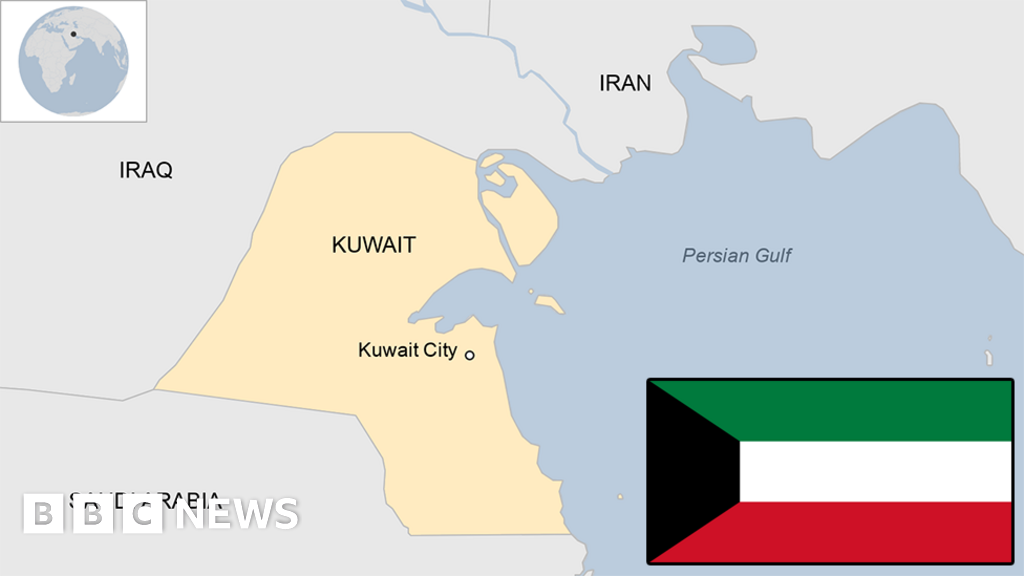
Kuwait

Kuwait

Country in the Middle EastWikipedia

Search complete. 3305 mentions across 1950 episodes found for "Kuwait".

Sep 11, 2026

John PodhoretzHOST
3:32
The initial thought was, well, obviously, this is just part and parcel of the general, uh, conflict in the Middle East that stems from the Israeli-Palestinian conflict and was just yet another iteration of that.
John PodhoretzHOST
3:48
And we were basically told by the attackers on 9/11, by Al-Qaeda, by Osama bin Laden, that this was not really the case, that Osama bin Laden believed that the United States had become the weak horse, and that, uh, it was time to strike while the iron was hot, that, uh, the United States had gravely offended the Muslim world by serving, um, 10 years earlier as the effective, uh, external defender of the holy sites of Islam, uh, against the Shiite Saddam Hussein in his efforts, uh, against Kuwait, and then his kind of rhetorical war against Saudi Arabia.
John PodhoretzHOST
4:31
And that what we had here was not, oh, if we just solve the Palestinian problem, all of this tension between America and the West and the Middle East would go away.
John PodhoretzHOST
4:43
It was w- there is a battle between civilizations.
Peter BergenGUEST
25:05
...
Peter BergenGUEST
25:05
in 100 hours, you know, the United States and its allies expelled Saddam from-- Hussein's forces from Kuwait.
Peter BergenGUEST
25:12
Uh, that was done with a lot of allies, it was done with limited goals, and it worked.
Peter BergenGUEST
25:17
And so as I say in the book, you know, George W. Bush never asked his war cabinet, "Is invading Iraq a good idea?" And I mean [chuckles] and if that debate had happened, you know, it was-- The people in his war cabinet knew it was kind of a fait accompli and they, they, you know, they just sort of went along with it and it's-

29 MINS LATER

Peter BergenGUEST
54:30
I mean, I, Andrew, I totally agree.
Peter BergenGUEST
54:31
I mean, I, I, I grew up in the UK.
Peter BergenGUEST
54:33
I'm an American citizen, so [chuckles] I've seen-- I moved here, you know, a long time ago when I finished university and, you know, I've seen, you know, we, this, I mentioned that hyperpower in the, uh- ... a kind of idea in the book because we, you know, we overthrew Saddam in, you know, in the 19-- uh, we, you know, turf Saddam out of Kuwait very quickly, 100 Hour War in 1991.
Andrew NeilHOST
54:56
No, I remember.
Mark CancianGUEST
11:37
They've become much more aggressive in the last couple of weeks.
Mark CancianGUEST
11:40
Uh, they're attacking US, uh, forces in Jordan and also Kuwait and Bahrain.
Mark CancianGUEST
11:47
Uh, they're attacking ships in the, um, Persian Gulf and in the Straits.
Mark CancianGUEST
11:53
Uh, and then they're attacking US forces and, and launching missiles against, uh, uh, naval forces, ships in the, uh, Arabian Sea.
Kate TurkingtonGUEST
7:15
Iraq
Gareth CliffHOST
7:15
... that was Kuwait.
Kate TurkingtonGUEST
7:16
Iraq.
Gareth CliffHOST
7:16
Well, look, I mean, so, you know-
Kate TurkingtonGUEST
7:20
Never stops.
Kate TurkingtonGUEST
7:21
Never stops
Gareth CliffHOST
7:21
... you could argue, you could argue that, that Saddam started that whole thing by invading Kuwait, which he shouldn't have done, but-
Kate TurkingtonGUEST
7:28
I suppose so.
Laurel RappHOST
8:42
So Jason, how did this plot come to be, and could or should the US administration under George W. Bush have known there was this extremist violence fomenting which could lead to such an act of terrorism?
Jason BurkeGUEST
8:55
The plot started to become a substantial project in about '99, 2000, when Osama Bin Laden was offered a kind of proposed project involving hijack planes on a vast scale by a Kuwaiti-born Pakistani militant called Khalid Sheikh Mohammed, who wasn't part of Al-Qaeda, but kinda came with this idea that he wanted kind of resources for.
Jason BurkeGUEST
9:22
And Bin Laden took it and adapted it to something that he thought would be much more likely to succeed.
Jason BurkeGUEST
9:30
And over the next two years, 18 months, the personnel for the attack were picked as recruits taken from training camps in Afghanistan that Al-Qaeda were running, and then they were got into the US by a variety of means, and finally were able to go ahead with the attack with, as we know, very kind of low technology, but just exploiting the vulnerabilities of American airport security and other deficiencies in the counterterrorist setup at the time.
Lewis Scooter LibbyGUEST
42:42
It was a generational challenge.
Lewis Scooter LibbyGUEST
42:44
It would be fought, not like the war in Kuwait in 1990, but it would be fought in the shadows as well as militarily with intelligence, et cetera.
Lewis Scooter LibbyGUEST
42:57
And when he finished, the NBC crew applauded him.
Lewis Scooter LibbyGUEST
43:03
And I asked the host of the show, how often does that happen? And the host said, it's never happened before.

13 MINS LATER

Lewis Scooter LibbyGUEST
55:52
lack of cohesion and self-doubt and anger within the Muslim world.
Lewis Scooter LibbyGUEST
55:56
And when you look at it, you wonder, why is this part of the world with all these resources, why does it lag in so many different ways from the rest of civilization? So I recall people saying, Why is Saudi Arabia spreading hatred about us after we just saved them in 1991 from Saddam's...
Lewis Scooter LibbyGUEST
56:16
A large part of that war was to prevent Saddam not only gobbling up Kuwait, but then coming down and taking the Saudi oil fields.
Lewis Scooter LibbyGUEST
56:24
So why should Saudi be against us? So we did defend them.
Truman VailHOST
8:52
That's infrastructure being built to operate outside the dollar, which is exactly what you'd do if you were preparing to let your own currency appreciate.
Truman VailHOST
9:00
And there's still guidance circulating that the opportunity to participate in the pre-revaluation phase is rapidly diminishing, with the claim that Iraqi authorities may follow a path similar to post-war Kuwait, where official estimates for currency exchange windows were rapidly condensed from 90 days down to about 43 to 47 days.
Truman VailHOST
9:20
That's a warning to currency holders to maintain operational readiness.
Truman VailHOST
9:23
Make sure your currency is accessible, your documentation is in order, and you know which banks in your area are planning to participate.
Truman VailHOST
9:31
If the window genuinely compresses the way Kuwait's did, there won't be time to scramble.
Truman VailHOST
9:36
On the dong, Vietnam's FTSE Russell Emerging Market Index upgrade happens September 21st, 10 days from today.
Truman VailHOST
9:42
That's confirmed and it's real.
Dick CheneySOUNDBITE_SPEAKER
18:51
It would have been a U.S. occupation of Iraq.
Dick CheneySOUNDBITE_SPEAKER
18:53
None of the Arab forces that were willing to fight with us in Kuwait were willing to invade Iraq.
Dick CheneySOUNDBITE_SPEAKER
18:58
Once you got to Iraq and took it over and took down Saddam Hussein's government, then what are you going to put in its place? That's a very volatile part of the world.
Dick CheneySOUNDBITE_SPEAKER
19:06
And if you take down the central government in Iraq, you can easily end up seeing pieces of Iraq fly off part of it.
Thom HartmannHOST
9:21
One of the things Bush said to me, Herskowitz says, is, quote, one of the keys to being seen as a great leader is to be seen as a commander in chief.
Thom HartmannHOST
9:30
My father had all this political capital built up when he drove the Iraqis out of Kuwait, and he wasted it.
Thom HartmannHOST
9:37
If I have a chance to invade Iraq, if I had that much capital, I'm not going to waste it.
Thom HartmannHOST
9:41
I'm going to get everything passed that I want to get passed, and I'm going to have a successful presidency, end of quote.
James Noel-BeswickHOST
1:26
Then the bit that matters for shipping, what we're going to speak about freight later.
James Noel-BeswickHOST
1:29
The Iranian Armed Forces, again, the Navy, has told tanker crews at Kuwait and Bahrain ports, hosting Americans to evacuate their vessels.
James Noel-BeswickHOST
1:37
And Tehran says it will announce a new exclusion zone outside of Meuse in the coming days, where it intends to stop ships transiting through or without Iranian permission.
James Noel-BeswickHOST
1:46
So the danger zone is widening from Iranian waters to the Gulf of Amman and the Arabian Sea.

1,940 more episodes mention Kuwait.

Create an account to see the whole feed, search across every transcript, and follow the entities you care about.

We value your privacy

We use cookies to understand how you use our platform and to improve your experience. Click “Accept All” to consent, or “Decline non-essential” to opt out of non-essential cookies. Read our Privacy Policy.