We use cookies to understand how you use our platform and to improve your experience. Click “Accept All” to consent, or “Decline non-essential” to opt out of non-essential cookies. Read our Privacy Policy.
Are people basically good?
Rebecca talks with theologian Gray Sutanto about the Christian doctrine of original sin, why our selfishness seems to come so naturally, and whether it's fair that Adam's…
Are people basically good?
Rebecca talks with theologian Gray Sutanto about the Christian doctrine of original sin, why our selfishness seems to come so naturally, and whether it's fair that Adam's sin affects the rest of us.
Use code **SPIRIT** to get **30% off** **What Jesus Started** at thegoodbook.com.
Learn more and find the **Life Application Study Bible** at lifeapplication.com.
Are people basically good?
Rebecca talks with theologian Gray Sutanto about the Christian doctrine of original sin, why our selfishness seems to come so naturally, and whether it's fair that Adam's…
So I love how you brought up how in the New Testament we see Christ and the church or Jesus and his people being described by Paul as the the telos, I guess, the sort of original meaning of marriage, which is we first see this strange idea of one man and one woman becoming one flesh in Genesis 2.
So that's between the first creation account of Genesis 1 and Genesis 3 when everything goes horribly wrong and Adam and Eve both rebel against God's rule.
So that even from the very beginning, God's creation of human beings, male and female, with the capacity for sex and marriage and the kind of ordaining of this one flesh union.
in marriage, also as the means by which other humans are created, that was always sort of preaching to us about Jesus' love relationship and his one flesh union with his people.
So every Christian is included in this picture of the wife or bride of Christ, which is the church, regardless of whether they are male or female, while Jesus is uniquely the husband in that scenario.
It's also true that there's a sort of representative role that Eve plays for me and Gray as the first sort of prototype of the one flesh union between one man and one woman, which is really ultimately all about Jesus and his people.
And conversely, actually, I can say that I am a son of God in the sense of the sonship language in the New Testament referring to inheritance, which in the ancient world was very much something that went to the Son first and foremost.
So there's a meaningful sense in which I can use that language of myself just as Gray can use the language of being included in in the bride of Christ.
Sign up to see more
The rest of this transcript— segmented and speaker-labeled, so you land on the exact moment something was said
Search every transcript— by keyword, by phrase, or by meaning, across every show Radar indexes
Trends— what is surging across podcasts, measured against its own baseline
Alerts— when a name you follow appears in a newly indexed episode

 Rebecca McLaughlinHost
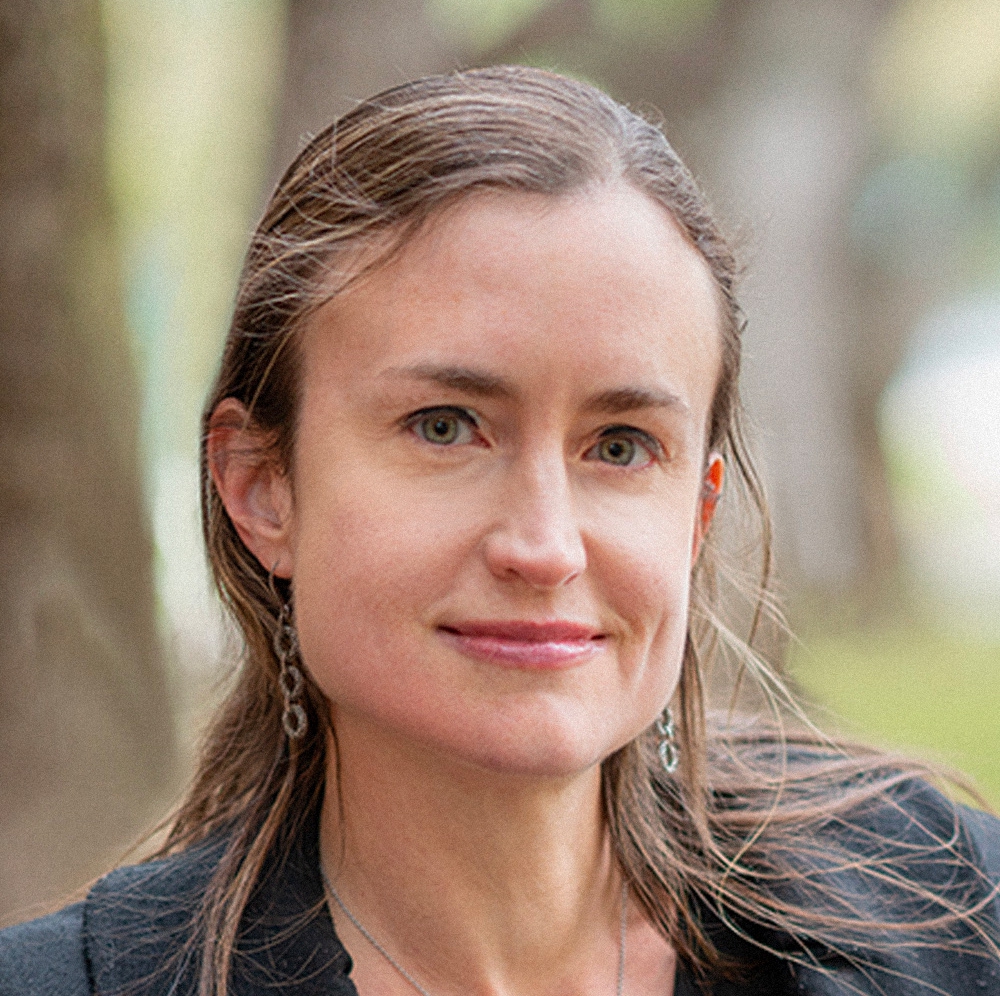
 Gray SutantoGuest