
CONTROVERSIAL1:01
Social Media Annihilates Connection
Platforms can amplify antisocial behavior at scale

Jun 18, 2026 · 2 hr 2 min · 18 segments
What shapes our relationships, fears, and sense of self? In this insightful episode of Tomorrow Today, Shekhar Natarajan sits down with renowned psychotherapist Dr. Aaron Balick to explore the…
 Aaron BalickGuest
 Shekhar NatarajanHost
So the one thing about depth psychology is we're terribly bad at marketing ourselves.
You ask, [clears throat] "What is psychoanalysis?" And it's like, well, let me...
So the very brief definition is that depth psychology is inclusive of all the psychoanalytic theories that really prize unconscious process.
So today, because we're very much into our outcome measures and, uh, things that we can see numerically, things that we can prove, we really like CBT because you can say, "I walk into a session with an anxiety level of seven, and I walk out of the session with an anxiety level of three, so I'm, I'm better." Um, with depth psychology, we're looking at what are the underlying processes that I'm not aware of? What might be informing that anxiety?
What is the meaning of that anxiety? Is that anxiety a symptom, a sign of something that needs to be addressed? The solution may not be about alleviating the symptom, but understanding why it, why it's arising-
So Freud very famously said, you know, "The ego is not the master of its own house." The ego is a part of consciousness that has awareness of its internal world and the external world.
Lots of unknowns in the external world, but also loads of unknowns in the internal world, and depth psychology is interested in inferring from the surface what's going on underneath the surface.

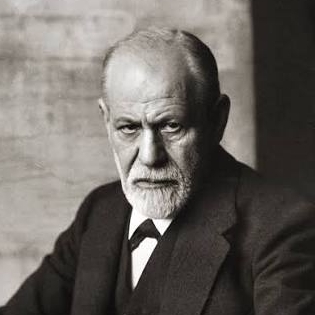





So the one thing about depth psychology is we're terribly bad at marketing ourselves.
You ask, [clears throat] "What is psychoanalysis?" And it's like, well, let me...
So the very brief definition is that depth psychology is inclusive of all the psychoanalytic theories that really prize unconscious process.
So today, because we're very much into our outcome measures and, uh, things that we can see numerically, things that we can prove, we really like CBT because you can say, "I walk into a session with an anxiety level of seven, and I walk out of the session with an anxiety level of three, so I'm, I'm better." Um, with depth psychology, we're looking at what are the underlying processes that I'm not aware of? What might be informing that anxiety?
What is the meaning of that anxiety? Is that anxiety a symptom, a sign of something that needs to be addressed? The solution may not be about alleviating the symptom, but understanding why it, why it's arising-
So Freud very famously said, you know, "The ego is not the master of its own house." The ego is a part of consciousness that has awareness of its internal world and the external world.
Lots of unknowns in the external world, but also loads of unknowns in the internal world, and depth psychology is interested in inferring from the surface what's going on underneath the surface.
Every episode on Radar is fully transcribed, speaker-labeled, and rich with metadata. Here is a taste of this one. Try Radar for free to see the rest.
3 of 11
Social Media Annihilates Connection
Platforms can amplify antisocial behavior at scale
Validation Is Junk Food
Technology is reshaping how people seek validation
How Projection Protects the Ego
Freud challenged assumptions others refused to examine
+8 more clips · 8 min 36 sec of audio in all
7 of 25
The rest of this transcript — segmented and speaker-labeled, so you land on the exact moment something was said
All 11 clips — the highlight moments, each cut as its own audio, with a title and a speaker
All 18 segments — the transcript broken into labeled sections, every ad read marked
All 25 topics — jump to every other episode discussing the same subject
Every related episode — other shows Radar links to this one
No account is needed to search Radar.

