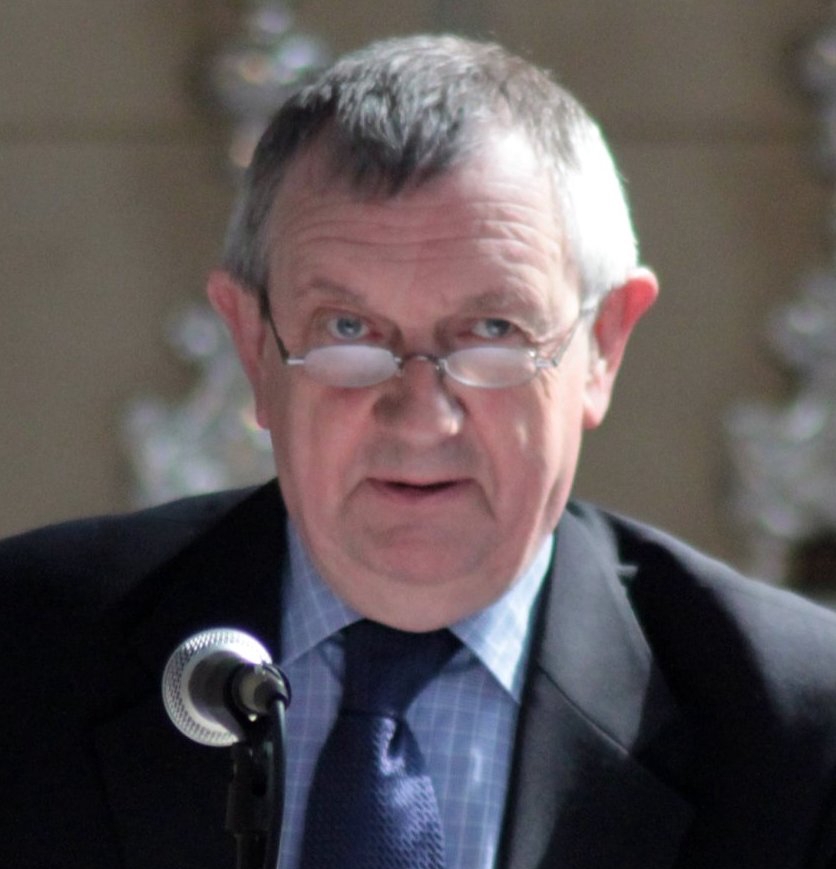
Tom PriceHost
C. R. WileyHost
Glenn SunshineHost
And it's basically that modern secularism did not simply emerge just by rejecting religion or rejecting tradition or ritual or even spiritual experience.

Rather, it was largely a byproduct, as we've talked before, shifts in kind of theological and philosophical assumptions, but also transformations, especially in Protestant religious practice itself.

And some of these we could say that elevated what she will call spontaneity, sincerity, personal feeling, experience, and what you would basically look at as unmediated religious experience over inherited forms.

And so this becomes really an examination of, you know, different sermons and different writers during kind of this period, both in kind of the church, a lot of kind of Puritans fighting with the Anglicans, and then it's spillover into the US.

And then also what's going on in literature and even some of the kind of birth pangs of Romanticism, right? And it's really a fascinating work.

But one of the sub kind of almost ironies of the sub thesis is that, well, it didn't replace ritual.

And this ritual is our rituals that form us into privileging the spontaneous ritual.

that this is more authentic, it's more direct, it shows kind of a, you could maybe use a religious warmth rather than the coldness of just saying a written prayer.

And it has definitely a kind of emphasis on kind of where one's subjectivity and interiority are in relationship to authentic religious expression, I guess could be one way of putting it.

And it's interesting the way she does it, because she looks at the way, even with, you know, the Pilgrim's Progress, sees that as a prime example, the kind of anxiety expressed in it, and the kind of anxiety created by weighing whether or not one's sentiments are kind of authentic.

And so that's kind of, I kind of will just throw that out there and let you guys comment on that first part, the kind of modern elevation in the religious context of spontaneity.

Yeah, I would say that that's, um, Definitely something that we can more or less take for granted today that this shift has happened.

But where I think this maybe goes that would have been maybe surprising to people in the early days of this development is Now we live in a world where unchurched people expect that to be kind of the default position of the church.

Even if you've never spent a day in church, unless you've had some kind of introduction to the church, to the beauties of the Western tradition and you're looking for that, you're looking for something that feels authentic.

That's where a lot of people are, unless they're just completely disillusioned with the modern world where we're seeing more and more of that.

Yeah, well, I think we'll get to that kind of shift that I think is kind of from a world that this is now the default position.

But some of the kind of things she identifies, and it has impacted all traditions, but she's talking about kind of the contribution of certain lines of the Protestant tradition.
The rest of this transcript — segmented and speaker-labeled, so you land on the exact moment something was said
Search every transcript — by keyword, by phrase, or by meaning, across every show Radar indexes
Trends — what is surging across podcasts, measured against its own baseline
Alerts — when a name you follow appears in a newly indexed episode
No account is needed to search Radar.