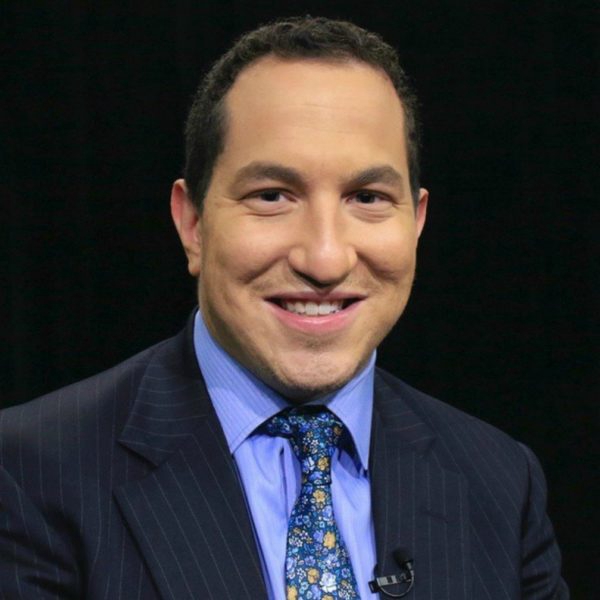
The Open Mind, Hosted by Alexander Heffner
Oct 7, 2026 · 28 min · 11 segments
Constructive Dialogue Institute executive director Caroline Mehl discusses strategies to inform effective political discourse
Caroline MehlGuest
Alexander HeffnerHostI like the fifth plank there because it's inspiring some commonality, the bridge through which you're going to create some consensus, see what may be feasible.
I do have to ask you, because I know that what you're describing is intellectually rigorous and and sophisticated tactically.
But you and I, I think, are roughly the same vintage in terms of when we were in college ourselves.
The reason I'm bringing that up is because even if you are teaching in those five pillars or tactically implementing them, I wonder if the Overton window of what is considered... either acceptable discourse or the Overton window of what is considered basically humane conduct, if it has extended to a place where there's misalignment and there will continue to be misalignment to such an extent, such a significant extent compared to when we were in college, then I wonder if even with the most sophisticated strategy, you are going to be able to have the outcome you want of constructive In other words, if there are people in that Overton window who want to accept something that the majority of people would say is plainly immoral, either the way they're engaging in the discourse or the policies they view, whether that's discrimination or segregation or something else.
Has that Overton window expanded to welcome more divisiveness and lethality of sort of the lethal discourse? And if it has, will this approach still work to yield illicit constructive outcomes?

The nature of our political discourse has changed quite a bit in the last decade.

So it's certainly made dialogue a lot more challenging at the same time the types of principles and practices that i just outlined are practices that are used in very extreme situations so they are practices that people use to de-radicalize kkk members and to you know engage in like hostage crisis situations They actually can be surprisingly powerful despite how simple they sound.

Tell a story, ask a question, connect with someone on a human level, make them feel heard.

They feel so simple to such a hard problem, but there's very clear evidence that they are effective.

And then the other thing that I just want to highlight is that despite all the toxicity in our current political climate, the vast majority of college students are not engaging that type of behavior and actively want to have these types of conversations.

So while on the one hand, there are people that you are not going to move, and I think that's important to acknowledge, this is not always going to work.

It's not like if you use these skills, anytime you have a conversation, it's going to go well.

But on the other hand, I think it's important to be aware that the majority of students are actually hungry for having constructive conversations.
I like the fifth plank there because it's inspiring some commonality, the bridge through which you're going to create some consensus, see what may be feasible.
I do have to ask you, because I know that what you're describing is intellectually rigorous and and sophisticated tactically.
But you and I, I think, are roughly the same vintage in terms of when we were in college ourselves.
The reason I'm bringing that up is because even if you are teaching in those five pillars or tactically implementing them, I wonder if the Overton window of what is considered... either acceptable discourse or the Overton window of what is considered basically humane conduct, if it has extended to a place where there's misalignment and there will continue to be misalignment to such an extent, such a significant extent compared to when we were in college, then I wonder if even with the most sophisticated strategy, you are going to be able to have the outcome you want of constructive In other words, if there are people in that Overton window who want to accept something that the majority of people would say is plainly immoral, either the way they're engaging in the discourse or the policies they view, whether that's discrimination or segregation or something else.
Has that Overton window expanded to welcome more divisiveness and lethality of sort of the lethal discourse? And if it has, will this approach still work to yield illicit constructive outcomes?

The nature of our political discourse has changed quite a bit in the last decade.

So it's certainly made dialogue a lot more challenging at the same time the types of principles and practices that i just outlined are practices that are used in very extreme situations so they are practices that people use to de-radicalize kkk members and to you know engage in like hostage crisis situations They actually can be surprisingly powerful despite how simple they sound.

Tell a story, ask a question, connect with someone on a human level, make them feel heard.

They feel so simple to such a hard problem, but there's very clear evidence that they are effective.

And then the other thing that I just want to highlight is that despite all the toxicity in our current political climate, the vast majority of college students are not engaging that type of behavior and actively want to have these types of conversations.

So while on the one hand, there are people that you are not going to move, and I think that's important to acknowledge, this is not always going to work.

It's not like if you use these skills, anytime you have a conversation, it's going to go well.

But on the other hand, I think it's important to be aware that the majority of students are actually hungry for having constructive conversations.
The rest of this transcript — segmented and speaker-labeled, so you land on the exact moment something was said
Search every transcript — by keyword, by phrase, or by meaning, across every show Radar indexes
Trends — what is surging across podcasts, measured against its own baseline
Alerts — when a name you follow appears in a newly indexed episode
No account is needed to search Radar.