Jun 17, 2026 · 58 min · 12 segments
In this season finale of The Long Path, Amitai Freiman looks back on a season of meaningful conversations with some of the most thoughtful voices in the Jewish world today — educators, activists…
Amitai FraimanHost
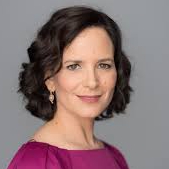
She's running an organization called the Ogin for the reservist families where they support 30,000 families at this point across the country from different segments in the Israeli society.

And we talked a lot about the questions of, you know, how do we carry a society forward? What are the burdens that we have to place on our shoulders? Who is carrying that burden? How does the country show up? How does the society show up? What is the social contract that is in play? And what is missing in this moment? And in a post-10-7 world, you know, it's been three years almost since.

But nonetheless, these conversations became even more relevant and more pressing because, you know, we've never been in such a prolonged conflict.

And these questions are now much more have to do with the survival of the country, not just on a physical, but also on a psychological level, on a social level.

The questions of resilience and bringing people together, not just chipping into society, but really the deep bonds, the thick bonds that connect a society and weave people together.

Looking at Israel now, what keeps you up at night? What is the thing that you really are worried about and thinking about on a regular basis?
Um, so, so first of all, great, great question.
Um, as you said, I work with the reservist families, um, and I'm a former member of the Israeli parliament.
And when I was a member of the Israeli parliament, I was a member of the defense and foreign affairs, uh, committee.
And one of the assumptions, everything that had to do with war in Israel was that wars in Israel would always be, or operations would always be around six weeks.
And therefore, everything was organized, counting on the reservists to be our major fighting units.
So you have the people that are from the age of 18 to 21, okay, more or less.
That's the regular army.
Then you have those that stay for the professional army.
But most of the army units at the end of the day, most of the combat units at the end of the day, are reservists.
And it's OK, because if you count on a max six to eight week war, so you call them in, they do their job, and then they go back to their regular life, and everything is OK.
No one ever expected to have such a long war.
And before October 7, in every given moment, there were more or less between 3,000 to 5,000 reservists in duty.
Since October 7th, 360,000 reservists were called in.
OK, now in every given moment, we're talking about if there's nothing going on.
If everything is 100 percent peaceful or whatever, peaceful and whatever, not peaceful.
But if everything is the regular, you know, baseline, yes, stable.
The rest of this transcript — segmented and speaker-labeled, so you land on the exact moment something was said
Search every transcript — by keyword, by phrase, or by meaning, across every show Radar indexes
Trends — what is surging across podcasts, measured against its own baseline
Alerts — when a name you follow appears in a newly indexed episode
No account is needed to search Radar.