The LIUniverse with Dr. Charles Liu
Ruby Raindrops and Painted Peacocks with Munazza Alam
May 16, 2026 · 45 min · 11 segments
Are there really exoplanets with where it rains ruby and emerald raindrops? How do we measure the atmospheres of exoplanets light years away? To find out, Dr. Charles Liu and co-host Allen Liu…
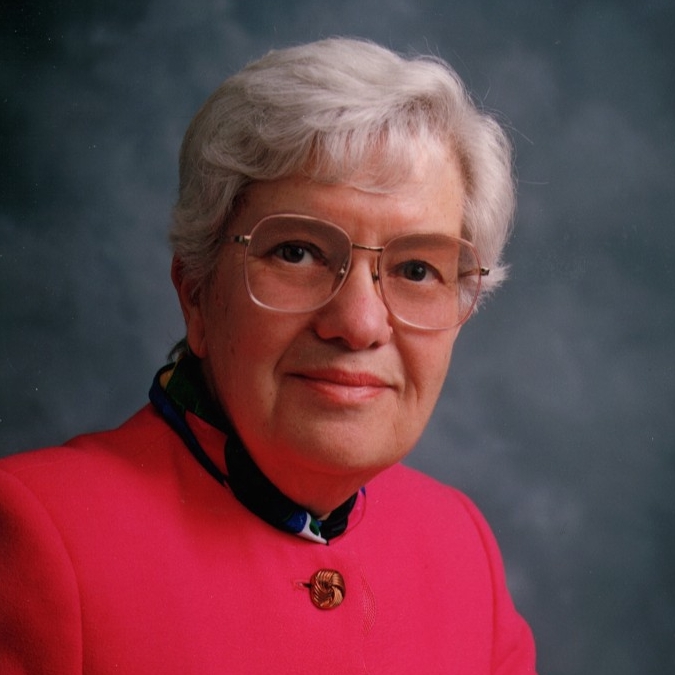
Are there really exoplanets with where it rains ruby and emerald raindrops? How do we measure the atmospheres of exoplanets light years away? To find out, Dr. Charles Liu and co-host Allen Liu welcome Dr. Munazza Alam of the Space Telescope Science Institute. The STScI performs science operations for the Hubble Space Telescope, the James Webb Space Telescope, and the Nancy Grace Roman Space Telescope when it launches in 2026. As always, though, we start off with the day’s joyfully cool cosmic thing. On Feb 24, 2026, the Vera C. Rubin Observatory activated the alert system it will use to notify astronomers of noteworthy events and sent out 800,000 alerts on that single day! Munazza tells us about how she studies the atmospheres of exoplanets like Wasp 121-b, a gas giant thought to have ruby and sapphire rain. Dr. Alam describes exoplanets with surface oceans made of magma, and she and Chuck talk about the importance of plate tectonics. You’ll hear about Hot Jupiters, Super-Earths, and Sub-Neptunes – and the theories about why we don’t have any of them in our solar system despite the fact that they’re incredibly common in the Milky Way galaxy. Then it’s time for audience questions, which for this episode come from students at Notre Dame Academy on Staten Island, where Munazza is an alum. Not only does past guest Dr. Betty Jensen teach there, as well, but she was a critical influence on Munazza’s career path. (You can listen to our episode with Dr. Jensen here.) The first question is from Charlotte, who asks, “How far have we gone in space?” Munazza, Allen, and Chuck discuss Voyager 1, which at a current distance of nearly 16 billion miles is the man-made object that has gone furthest from Earth. Next up, Gabby asks, “What was the best advice you were given when you were preparing for college?” Dr. Alam’s answer: Pick something you enjoy and are good at - in spite of any pressure you might get from friends, family, and others. A second piece of advice Munazza got was to maintain your breadth, i.e., developing other interests besides your primary focus. For Munazza, that was art and writing, and she shares some of her art later in the show. Finally, Gisella asks if it was hard picking a college. Dr. Alam shares her process, with the caveat that it might not be good advice for everyone. Charles and Munazza reflect on the tradition of scientific exploration, observation, discovery and analysis of which she’s part. Munazza recounts the excitement when JWST observations of transmission spectra of the exoplanet Wasp 39b confirmed their predictions – and also detected something unexpected: sulfur dioxide in the atmosphere of the planet which is a by-product of photochemistry between light from its star and water molecules in the atmosphere of the planet. Finally, Chuck asks Munazza to share some of her art. She shows us one of the first paintings she ever did, a peacock, and tells us a little about it and a portrait she has displayed at the Lowell Observatory. If you’d like to know more about what Dr. Alam is up to, you can follower her on LinkedIn or visit her website . We hope you enjoy this episode of The LIUniverse, and, if you do, please support us on Patreon. Credits for Images Used in this Episode: - Artist impression of Wasp 121-b, an exoplanet thought to have ruby and sapphire rain. – Credit: NASA, ESA, Q. Changeat et al., M. Zamani (ESA/Hubble) - Quake epicenters Digital Tectonic Activity Map of the Earth (DTAM). – Credit: NASA/Goddard Space Flight Center - Illustration comparing the sizes of sub-Neptune exoplanets TOI-421 b and GJ 1214 b to Earth and Neptune. – Credit: NASA, ESA, CSA, Dani Player (STScI) - Illustration of the inferred size of the super-Earth CoRoT-7b (center) in comparison with Earth and Neptune. – Credit: Creative Commons / Aldaron - Location of the Voyager 1 and Voyager 2 spacecraft. – Credit: NASA/JPL-Caltech - JWST transmission spectra of the exoplanet Wasp 39b. – Credit: NASA, ESA, CSA, Joseph Olmsted (STScI) - Radial velocity method to detect exoplanets. – Credit::ESA - Transit method for discovering exoplanets (animation). – Credit: NASA PlanetQuest - Artist's concept of WASP-107b, a gas giant, orbiting a highly active K-type star about 200 light-years from Earth. – Credit: ESA/Hubble, NASA, M. Kornmesser CHAPTERS 00:00 - We welcome Dr. Munazza Alam of the Space Telescope Science Institute 02:50 - Joyfully cool cosmic thing: Vera C. Rubin Observatory Alert System 07:00 - How Do We Know What Exoplanets Are Like? 10:37 - The Importance of Plate Tectonics 11:45 - Hot Jupiters, Super Earths, and Sub-Neptunes 19:56 - How Far Have We Gone In Space, i.e., Where is Voyager now? 22:44 - Best advice when preparing for college? 25:32 - Was it hard picking a college? 31:00 - Confirming Theories and Discovering the Unexpected 36:33 - Munazza Alam Shares Her Painting of a Peacock 38:49 - What data and measurements are used to study exoplanets?
Are there really exoplanets with where it rains ruby and emerald raindrops? How do we measure the atmospheres of exoplanets light years away? To find out, Dr. Charles Liu and co-host Allen Liu…