Sep 16, 2026 · 30 min · 11 segments
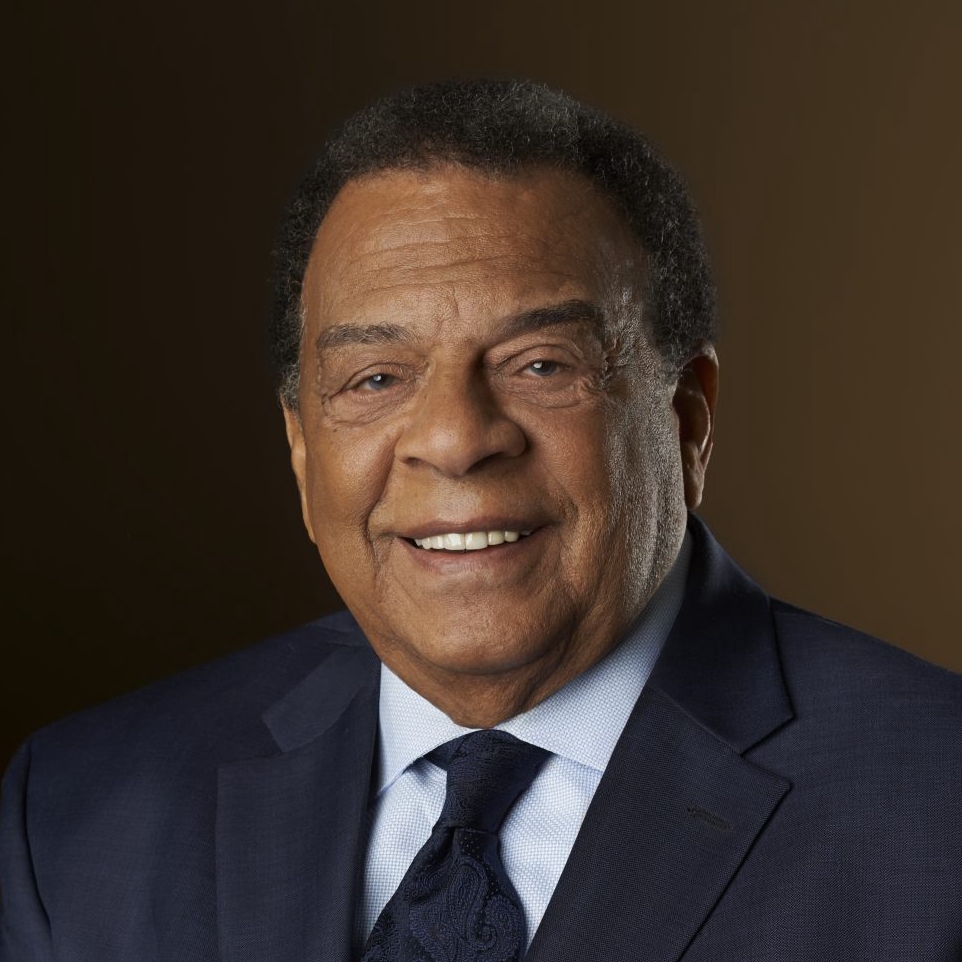
Following the GA100 Mini-Pitch launch at the Andrew & Walter Young YMCA Center, our dynamic duo sits down with the brothers who have helped shaped so much of the city's history. Ambassador Andrew…
Andrew YoungGuest
Walter YoungGuestAs you guys both grew in your careers and throughout society and your impact on society, what would you guys say? How has Atlanta, you know, basically the history of this city, how has that changed in creating a better a better today tomorrow?

And one of the first problems we took on was trying to develop a mass transit system.

And so we had to organize the whole metropolitan area to get people to vote for a one cent sales tax.

And we started out negotiating with each other, saying, first of all, you can't have a rapid transit system that's just where white people have different treatments than black people.

you have to have black people, brown people, Asian, Hispanic, whatever, and that it has to be a community-wide project.

And we negotiated all that, and finally we won by just, it was in two counties, Fulton and DeKalb, and we won by only 400 votes in two counties.


They're going to build it first to Buckhead, and then they're going to forget about us.

And so the mayor then, Sam Masell, agreed that we would lower the bus fare from 55 cents to 15 cents for 10 years to show poor people that we wanted to do everything fair.

And so it was the process that, well, we also agreed that 30%, of all the work would be done by minority and female-owned companies.

So it was the negotiation really set the pattern that we followed, leading in Atlanta right on through the Olympics and right on up through the World Cup last month, that everything we do here, in fact, with the Olympics, we raised $2.5 billion, and 41 percent of it went to minority and female-owned companies.
As you guys both grew in your careers and throughout society and your impact on society, what would you guys say? How has Atlanta, you know, basically the history of this city, how has that changed in creating a better a better today tomorrow?

And one of the first problems we took on was trying to develop a mass transit system.

And so we had to organize the whole metropolitan area to get people to vote for a one cent sales tax.

And we started out negotiating with each other, saying, first of all, you can't have a rapid transit system that's just where white people have different treatments than black people.

you have to have black people, brown people, Asian, Hispanic, whatever, and that it has to be a community-wide project.

And we negotiated all that, and finally we won by just, it was in two counties, Fulton and DeKalb, and we won by only 400 votes in two counties.


They're going to build it first to Buckhead, and then they're going to forget about us.

And so the mayor then, Sam Masell, agreed that we would lower the bus fare from 55 cents to 15 cents for 10 years to show poor people that we wanted to do everything fair.

And so it was the process that, well, we also agreed that 30%, of all the work would be done by minority and female-owned companies.

So it was the negotiation really set the pattern that we followed, leading in Atlanta right on through the Olympics and right on up through the World Cup last month, that everything we do here, in fact, with the Olympics, we raised $2.5 billion, and 41 percent of it went to minority and female-owned companies.
The rest of this transcript — segmented and speaker-labeled, so you land on the exact moment something was said
Search every transcript — by keyword, by phrase, or by meaning, across every show Radar indexes
Trends — what is surging across podcasts, measured against its own baseline
Alerts — when a name you follow appears in a newly indexed episode
No account is needed to search Radar.