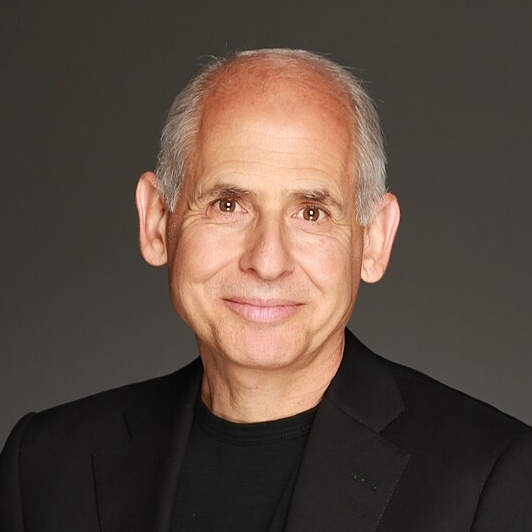
A Deep Dive into EEG with Firefly Neuroscience's Dave DeCaprio
Jul 20, 2026 · 45 min · 13 segments
Dear readers, I’ve been a sceptic for too long. It’s easy to be sceptical as a psychiatrist—the flowers will be lour’d upon you! I’ve been using…
Dear readers, I’ve been a sceptic for too long. It’s easy to be sceptical as a psychiatrist—the flowers will be lour’d upon you! I’ve been using Graymatter’s Health PRISM EEG-fMRI neurofeedback system for a few years, it’s true. There are EEG leads on there. I saw a lot of EEG-related technology in Beijing. It’s possible I’m looking at an EEG in this very photo from my hotel room in China, below: But have I been measuring the brain with EEG regularly? Well, no, again! I’ve been content with my fancy fMRI scans alone, for SAINT, and giant brain healing magnets at set frequencies, like deep TMS with SWIFT. There are even videos of me talking about TMS, like this one below, with friends like Colleen Hanlon from BrainsWay, and heroic patients who chose to speak publicly, too. But one thing I haven’t routinely done is measure the brain itself as part of clinical care, as companies like Firefly Neuroscience are making possible. That may need to change, is the outcome in my personal brain as a result of this interview. I speak, at length, with Dave Decaprio, their president and COO. The EVOKE system provides multimodal analysis of brain function, including Quantitative EEG and Event-Related Potentials. From the Firefly website: At Firefly Neuroscience, our technology is built to measure and interpret brain function in a clinically meaningful way. The Evoke™ system combines quantitative EEG (qEEG) and event-related potentials (ERP) to capture both baseline brain activity and cognitive response during structured tasks. This data is analyzed against a proprietary normative database of over 191,000 EEG and ERP sessions, allowing clinicians to evaluate patterns relative to age-matched expectations and track changes over time. The result is a structured, interpretable view of brain function that can be used alongside clinical evaluation to support earlier insight, more informed treatment decisions, and a clearer understanding of patient progress. I haven’t used it in clinical practice yet, but Dave makes a compelling case, and at this point I think it’s only a matter of time. Brain Medicine, as an emerging specialty, brings change. That change needs to be measured. EEG might be one such tool. I hope you enjoy today’s podcast! And thanks to Sharena Rice, PhD, William M. Sauve, MD, along with Dave, for their guest spots. —Owen Announcements: \* You can Join The Frontier Psychiatrists LIVE at Psych Congress 2026. Get your tickets now! \* You can buy a copy of my IRL in print book on Amazon, Inessential Pharmacology. It’s got a lot of good reviews, and one “one star” review, which, in the spirit of transparency, I will excerpt for you: *The author has taken a collection of drug leaflets from pharmaceutical companies and woven them together with underwhelming lackluster commentary and memes. *He intended to create an engaging reading experience, however, this aim should have been clearly stated, should have been made explicitly clear in the book description.* He wanted to have fun writing it and wanted readers to have fun reading it. Now, having missed the return window, I find myself stuck with a book that feels more tedious than enjoyable.* Don’t miss the return window if you hate my work! Good advice for us all. This is a public episode. If you'd like to discuss this with other subscribers or get access to bonus episodes, visit thefrontierpsychiatrists.substack.com/subscribe
Dear readers, I’ve been a sceptic for too long. It’s easy to be sceptical as a psychiatrist—the flowers will be lour’d upon you! I’ve been using…