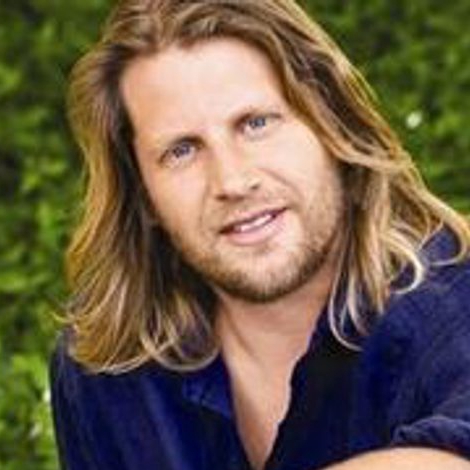
Rupert IsaacsonGuest
Pernille HoggHost
The first day he, uh, met this mare, Betsy, who was actually my neighbor's mare, she modified her behavior around him in a way that I'd never seen a horse do before.

So he actually got away from me while we were walking in the woods, and he got through the fence and under her hooves.

So a- as you can imagine, I was somewhat stressed by that, and not just her hooves, but there were at least two other horses, yeah, there with.

She bent her head to him and sort of licked and chewed, and then she turned to the other horses and very gently sort of pushed them off with her nose, which considering she was the boss bitch mare of the herd and quite ready to be as rude as necessary to move those other horses around, if that had been what she'd done at that particular juncture, of course, Rowan would've been badly injured.

And so she completely changed what she might normally have done in order to safeguard this junior Sapien sapiens who had just sort of appeared under her feet.

And as I watched that unfold, I realized he had a direct line to her that was unfiltered by species or human ego or predator-prey barrier or any of the normal things that, you know, we, we have to deal with as equestrians.

And, uh, I realized [laughs] I didn't know as much about horses as I thought I did, and that I was very, very, very ready to learn more.

Yeah, tell us about that whole, you know, with the healing and the seeking and just what came about.

So people quite naturally thought at the time, and still think today, that I was completely nuts, and I'm not saying I'm not nuts.

But that particular decision actually to go to Mongolia, in my world, is a very rational one because I have spent a lot of time, I had a, a, another career which you didn't have time to touch on really, um, working as a human rights activist and journalist.

And I lived with and among Bushmen, Khoisan Bushmen hunter-gatherers in the Kalahari area of Southern Africa for some years, helping them to get legal title to their ancestral lands after having been illegally evicted for diamond mines.

And if you spend a lot of time with hunters and gatherers, true hunters and gatherers, you're going to be exposed to a lot of shamanic healing.

You're gonna see it going on around you all the time, not just for healing, but for very practical things like hunting or gathering plants.

Um, you'll see people entering the minds of the animals that they're hunting because they're only hunting with, you know, a spear and a small bow, and they're hunting animals that run as fast as a horse but run all day, and they have to sort of enter the minds of these animals.

And then you see the healing rituals in which they do things where [laughs] you have to say, "I don't know what I just saw, but I saw it." Things like cancers being pulled out of people's bodies and that sort of thing.

If you speak to anybody who has been exposed to that kind of culture, whether they're people like me, you know, activists, or whether they're ethnobotanists or explorers or anthropologists or whatever, you will find the same stories that, that, uh, you just, you realize that this is actually what human life has always been, and it's only latterly that we've moved away from that since we've sort of moved towards, you know, technology over the last few hundred years.

And, uh, so what we regard as something very exotic, those people regard as sort of everyday technology that helps you to thrive out there on the lion-infested plains of planet Earth, and thrive they do.

The first day he, uh, met this mare, Betsy, who was actually my neighbor's mare, she modified her behavior around him in a way that I'd never seen a horse do before.

So he actually got away from me while we were walking in the woods, and he got through the fence and under her hooves.

So a- as you can imagine, I was somewhat stressed by that, and not just her hooves, but there were at least two other horses, yeah, there with.

She bent her head to him and sort of licked and chewed, and then she turned to the other horses and very gently sort of pushed them off with her nose, which considering she was the boss bitch mare of the herd and quite ready to be as rude as necessary to move those other horses around, if that had been what she'd done at that particular juncture, of course, Rowan would've been badly injured.

And so she completely changed what she might normally have done in order to safeguard this junior Sapien sapiens who had just sort of appeared under her feet.

And as I watched that unfold, I realized he had a direct line to her that was unfiltered by species or human ego or predator-prey barrier or any of the normal things that, you know, we, we have to deal with as equestrians.

And, uh, I realized [laughs] I didn't know as much about horses as I thought I did, and that I was very, very, very ready to learn more.

Yeah, tell us about that whole, you know, with the healing and the seeking and just what came about.

So people quite naturally thought at the time, and still think today, that I was completely nuts, and I'm not saying I'm not nuts.

But that particular decision actually to go to Mongolia, in my world, is a very rational one because I have spent a lot of time, I had a, a, another career which you didn't have time to touch on really, um, working as a human rights activist and journalist.

And I lived with and among Bushmen, Khoisan Bushmen hunter-gatherers in the Kalahari area of Southern Africa for some years, helping them to get legal title to their ancestral lands after having been illegally evicted for diamond mines.

And if you spend a lot of time with hunters and gatherers, true hunters and gatherers, you're going to be exposed to a lot of shamanic healing.

You're gonna see it going on around you all the time, not just for healing, but for very practical things like hunting or gathering plants.

Um, you'll see people entering the minds of the animals that they're hunting because they're only hunting with, you know, a spear and a small bow, and they're hunting animals that run as fast as a horse but run all day, and they have to sort of enter the minds of these animals.

And then you see the healing rituals in which they do things where [laughs] you have to say, "I don't know what I just saw, but I saw it." Things like cancers being pulled out of people's bodies and that sort of thing.

If you speak to anybody who has been exposed to that kind of culture, whether they're people like me, you know, activists, or whether they're ethnobotanists or explorers or anthropologists or whatever, you will find the same stories that, that, uh, you just, you realize that this is actually what human life has always been, and it's only latterly that we've moved away from that since we've sort of moved towards, you know, technology over the last few hundred years.

And, uh, so what we regard as something very exotic, those people regard as sort of everyday technology that helps you to thrive out there on the lion-infested plains of planet Earth, and thrive they do.
The rest of this transcript — segmented and speaker-labeled, so you land on the exact moment something was said
Search every transcript — by keyword, by phrase, or by meaning, across every show Radar indexes
Trends — what is surging across podcasts, measured against its own baseline
Alerts — when a name you follow appears in a newly indexed episode
No account is needed to search Radar.