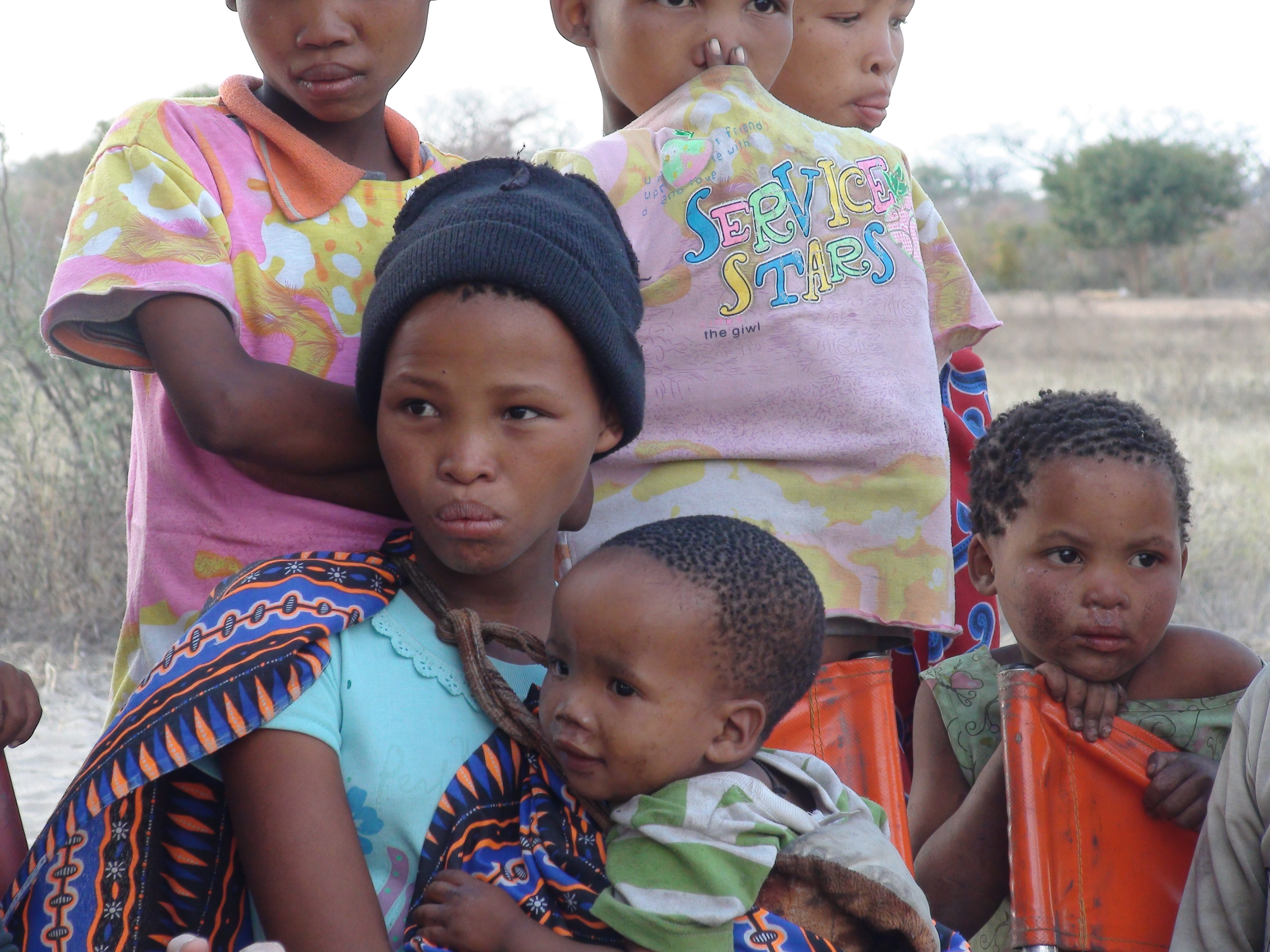
San people
PeopleWikipedia
78
MENTIONS
39
EPISODES
38
PODCASTS
Search complete. 78 mentions across 39 episodes found for "San people".
Oct 28, 2026

Deane SpallGUEST
Then we have the ethnic groups who have been around much longer.
Deane SpallGUEST
Bushmen, the Sun, the Sand People in Namibia.
Deane SpallGUEST
They were the, I would say, the original inhabitants.
Rael ZieveHOST
For people coming from overseas, from the Americas, from the Europes, they have so many options to choose from to do a safari or just an African adventure.

Alex ThomsonGUEST
And then certainly in the Northern Cape, of course, you've got the Greek element.
Alex ThomsonGUEST
It's more the Malay than the Bushmen.
Alex ThomsonGUEST
But both of those elements came into it and you would get the sandy skinned, well, half breeds is what they used to be called.
Alex ThomsonGUEST
It sounds very derogatory now.

Tony WeisbeckiGUEST
The problem that we have is that humans are not adapted to the environment in which they're currently living.
Tony WeisbeckiGUEST
If we look at any of the traditional societies, from Kalahari Bushmen to Mongolian yak herders to Indian Naga Hill tribesmen in the Himalayas, all of them have cholesterol levels that are about Four in total, with an LDL, the damaging fraction, somewhere around one.
Tony WeisbeckiGUEST
To compare that to what we have in southern England, the total is around six, and the damaging fraction is about four.
Tony WeisbeckiGUEST
So there has been a huge transition that's occurred probably in the last certainly century in the West, possibly longer, that's actually driven this rise and the consequences that have come from it.

Richmond HeathGUEST
It's just another story.
Richmond HeathGUEST
So if you look at cultures like the Kalahari Bushmen, if you've seen the film, The Gods Must Be Crazy, they call themselves the keepers of the shake.
Richmond HeathGUEST
They deliberately use it.
Richmond HeathGUEST
You've got the ancient samurai warriors, you know, famous for their superhuman ability and their ability to go from a lethal warrior to a chilled out Zen master.

Alex ThompsonGUEST
And then certainly in the Northern Cape, of course, you've got the Greek element.
Alex ThompsonGUEST
It's more the Malay than the Bushmen.
Alex ThompsonGUEST
But both of those elements came into it and you would get the sandy skinned, well, half breeds is what they used to be called.
Alex ThompsonGUEST
It sounds very derogatory now.

John David UlfertsHOST
Giraffes have stirred the imagination of man since the earliest of times.
John David UlfertsHOST
Painted on rocks by the Bushmen, immortalized on tomb walls by the Egyptians, and given as gifts by Arab rulers to kings and emperors in Europe, India, and China, giraffes have long been revered for their gentleness, gracefulness, and beauty.
John David UlfertsHOST
Giraffes were known to ancient Egyptians and were commonly depicted in their wall paintings and sculpted in their artifacts.
John David UlfertsHOST
The giraffe was appreciated as an astonishing creature, and a band of giraffe skin was reputed to have magical powers.
John David UlfertsHOST
Giraffe tails were given as tributes to Tutankhamen in the 14th century B.C.
John David UlfertsHOST
The Bushmen of Botswana and Namibia frequently painted giraffes in their rock art.
John David UlfertsHOST
In 1991, I trekked with a Gerba overland group to see the Sedillo Hills, located in the Kalahari Desert and northwestern Botswana near the Namibian border.
John David UlfertsHOST
This World Heritage Site has been called the Louvre of the Desert as its massive quartzite rock formations contain over 4,500 rock paintings dating back at least 100,000 years.

speaker_2UNKNOWN
All we want to do is sweat our way through the woods.
speaker_2UNKNOWN
We are Bushmen.
speaker_2UNKNOWN
Now isn't it good? The famous Norwegian woods.
speaker_5VOICE_ACTOR
Oh, mannen drog ut og løp orientering med kart og kompass og med rektige sko.

Boaz SoiferHOST
Some animals it's very natural for, and some it's not, I think.
Boaz SoiferHOST
Very interesting sidetrack reference to Lawrence Vanderpost and his experience with the Bushmen, whose understanding of knowledge of animals is just blows the mind.
Boaz SoiferHOST
And it talks about some of the different predispositions of the different animals, why some are easy to hunt and some are very difficult to hunt,
Brian LeeHOST
for example.

Kim McCallisterHOST
This one is the Silaswane cave painting.
Kim McCallisterHOST
More than 6,000 years ago, the Bushmen people who gathered fruits and hunted animals barefooted lived in groups of about 40 or more, and they left records and information enough which depicted their lifestyle.
Kim McCallisterHOST
The tallest is one meter.
Kim McCallisterHOST
They were eventually named nomadic hunters because of the system which was adapted to their kind of hunting.

ScafiHOST
And people were saying, hey, this is going to be a wet season.
ScafiHOST
And he said, how do you know it's a wet season? And people are looking at each other like the traditional Bushmen.
ScafiHOST
And so they're kind of laughing.
ScafiHOST
It's like, how do you not know that? Because Ernst was thinking about all of our systems and radars and groundbreaking information technology to try to foretell and models to see if a certain year is going to be drier.
29 more episodes mention San people.
Create an account to see the whole feed, search across every transcript, and follow the entities you care about.