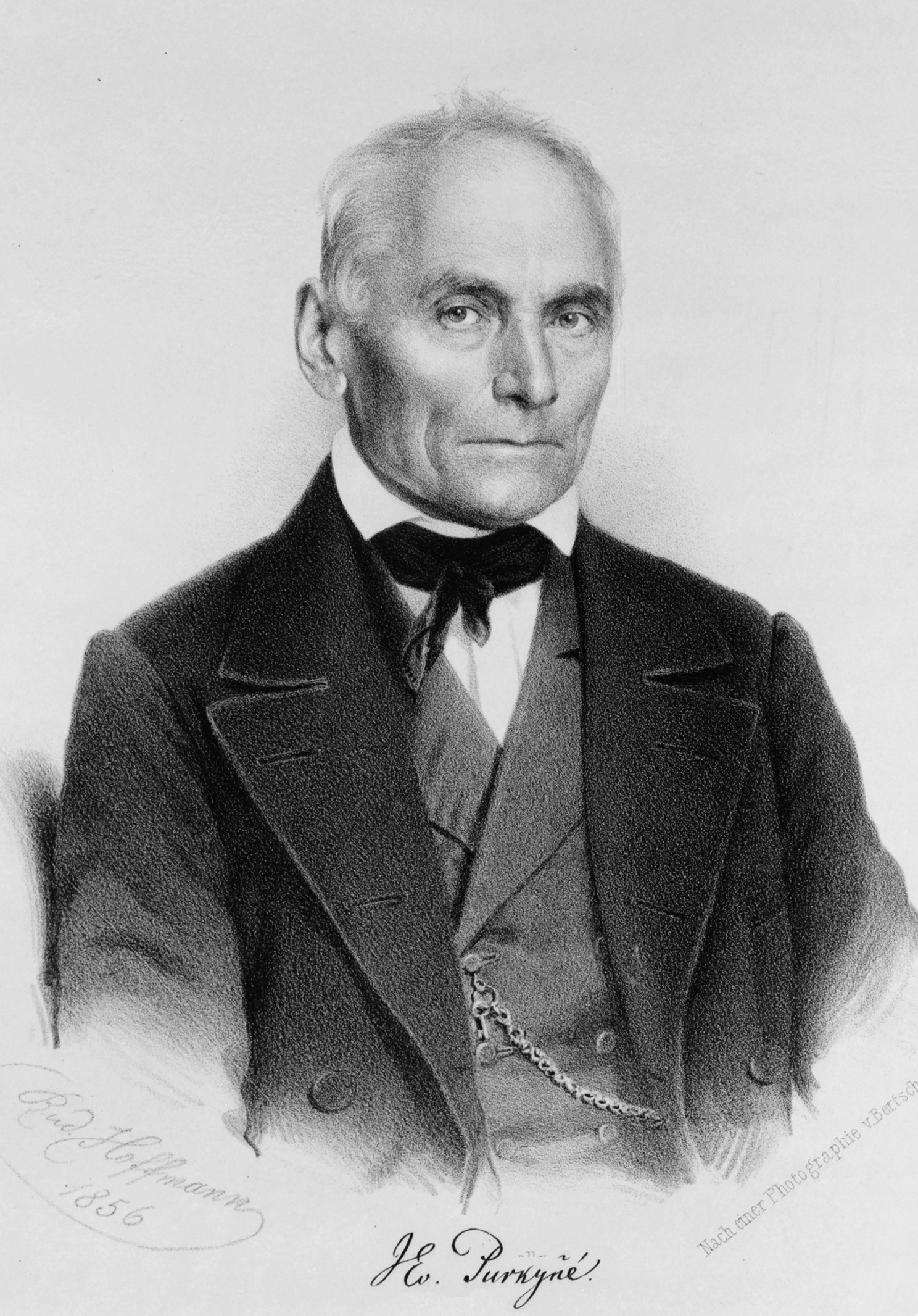
Jan Evangelista Purkyně
Czech anatomist and physiologistWikipedia
5
MENTIONS
4
EPISODES
4
PODCASTS
Search complete. 5 mentions across 4 episodes found for "Jan Evangelista Purkyně".
Oct 4, 2026

speaker_2HOST
Mm.
speaker_3HOST
Like Jan Purkinje, for instance.
speaker_3HOST
He managed to identify those massive, beautifully branched cells in the cerebellar cortex in eighteen thirty-seven.
speaker_2HOST
The Purkinje cells-

speaker_2NARRATOR
From there, the signal fans out through a network of tiny fibers called Purkinje fibers.
speaker_2NARRATOR
These fibers were named after Jan Evangelista Purkyně, a Czech anatomist who first described them in 1839.
speaker_2NARRATOR
They distribute the electrical impulse across the ventricles in a very specific pattern, triggering them to contract from the bottom up.
speaker_2NARRATOR
That bottom-up contraction pattern is important because it pushes blood upward and out through the arteries at the top of the heart, like squeezing a tube of toothpaste from the bottom rather than the middle.

Rupert IsaacsonGUEST
And then with- within that process of all these billions of neurons that get fired in that situation, there are some which live in the cerebellum, in the back of your brain, and they have a funny name for English people because they're named after a Czech dude who discovered them.
Rupert IsaacsonGUEST
So they're called Purkinje cells.
Rupert IsaacsonGUEST
We should really call them Purkinje cells.
Rupert IsaacsonGUEST
He was a scientist who...
Rupert IsaacsonGUEST
Clever dude, he found these things.

Mac ShineGUEST
They come into this ponta nigra, this big bulge that's expanded in humans, spread out into the granule cell population, which is about half of the neurons in your brain.
Mac ShineGUEST
Those granule cells then communicate via parallel fibers with these things called Purkinje cells.
Mac ShineGUEST
There's these big, beautiful cells that project down to the cerebellar nuclei that then send that message back up into the thalamus, then back up into the cortex.
Mac ShineGUEST
They can also go down into the brainstem.