May 10, 2026 · 39 min · 12 segments
Join us for updates on the latest developments in Israel and across the Middle East, from Lebanon to Iran and beyond, with Lt. Col. (Res.) Jonathan Conricus. We’ll also hear from Noam Bettan, who…
Noam BettanGuestMichael DixonHostNoah ShufatinskyIsrael's story at the Eurovision Song Contest is not just about music.
It's a story of cultural contribution, resilience, and the power of art to connect people across borders.
And over the decades, Israel hasn't just participated, it has helped shape the contest.
It's one of Eurovision's most successful countries, with four historic victories.
In 1978, Yitzhar Cohen and the Alphabeta won with the now classic Abba Nibi, marking Israel's first win and introducing a fresh, creative sound to the European stage.
That victory led Israel to host the contest for the first time in 1979 in Jerusalem, bringing Eurovision to the Middle East and showcasing Israel's culture to millions around the world.
And the next year, Israel achieved something even more remarkable, a second consecutive victory.
Milk and Honey and Gali Atari won with Hallelujah, a timeless anthem that continues to symbolize hope and unity.
It would take another 20 years before Israel welcomed Eurovision back on its stage.
With Dana International's win, the song Diva made headlines around the world.
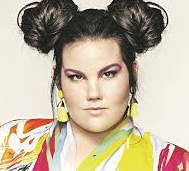
Netta's creativity and message of strength was embraced by the Eurovision audience, leading the next year's contest in 2019 to be hosted in Tel Aviv.
However, in recent years, Israel's participation has faced increasing politicization, being singled out and targeted.
Following the October 7th, 2023 Hamas massacre in southern Israel, Israeli artists, including Eden Golan in 2024, Yuval Raphael in 2025, and Noam Bettan in 2026, have encountered protests, harassment, and unjust calls for Israel to be excluded from the contest.
Some countries have even pulled out or refused to screen the show, injecting extreme politics into a contest whose motto is United by Music.
Meanwhile, over 1,000 artists, including Boy George, Amy Schumer, Mila Kunis, and Sharon Osbourne, have signed an open letter to reject attempts to ban Israel.
In 2025, Yuval Raphael's New Day Will Rise earned second place and notably won the public vote, showing strong support from audiences across Europe and beyond.
Despite the challenges, Israeli artists continue to show up, perform, and share their music with millions.
Israel's story at the Eurovision Song Contest is not just about music.
It's a story of cultural contribution, resilience, and the power of art to connect people across borders.
And over the decades, Israel hasn't just participated, it has helped shape the contest.
It's one of Eurovision's most successful countries, with four historic victories.
In 1978, Yitzhar Cohen and the Alphabeta won with the now classic Abba Nibi, marking Israel's first win and introducing a fresh, creative sound to the European stage.
That victory led Israel to host the contest for the first time in 1979 in Jerusalem, bringing Eurovision to the Middle East and showcasing Israel's culture to millions around the world.
And the next year, Israel achieved something even more remarkable, a second consecutive victory.
Milk and Honey and Gali Atari won with Hallelujah, a timeless anthem that continues to symbolize hope and unity.
It would take another 20 years before Israel welcomed Eurovision back on its stage.
With Dana International's win, the song Diva made headlines around the world.
Netta's creativity and message of strength was embraced by the Eurovision audience, leading the next year's contest in 2019 to be hosted in Tel Aviv.
However, in recent years, Israel's participation has faced increasing politicization, being singled out and targeted.
Following the October 7th, 2023 Hamas massacre in southern Israel, Israeli artists, including Eden Golan in 2024, Yuval Raphael in 2025, and Noam Bettan in 2026, have encountered protests, harassment, and unjust calls for Israel to be excluded from the contest.
Some countries have even pulled out or refused to screen the show, injecting extreme politics into a contest whose motto is United by Music.
Meanwhile, over 1,000 artists, including Boy George, Amy Schumer, Mila Kunis, and Sharon Osbourne, have signed an open letter to reject attempts to ban Israel.
In 2025, Yuval Raphael's New Day Will Rise earned second place and notably won the public vote, showing strong support from audiences across Europe and beyond.
Despite the challenges, Israeli artists continue to show up, perform, and share their music with millions.
The rest of this transcript — segmented and speaker-labeled, so you land on the exact moment something was said
Search every transcript — by keyword, by phrase, or by meaning, across every show Radar indexes
Trends — what is surging across podcasts, measured against its own baseline
Alerts — when a name you follow appears in a newly indexed episode
No account is needed to search Radar.