Sep 29, 2026 · 35 min · 10 segments
A chunk of flesh floating in a glass of water—this was the discovery made by Fr. Alejandro Pezet on August 26, 1996 when he opened the tabernacle at his church in Buenos Aires, Argentina. A week…
W. Tyler AllenGuestMatthew PetersonHostYeah, I think this debate about how we use words and how we label ourselves as Christians and how we label our faith plays in well to another thing I wanted to ask you about, which is your book is labeled Strange, A Catechism of the Strange.
But I think in many circles, the word strange is not a particularly positive word.
It's a word that is maybe othering or it's a word that is – it's not like us.
And I'm curious where you see as – how does the word strange become a bad thing and why ought we to reclaim it if it needs to be reclaimed?

I think it's become a bad thing, as many things do in Christianity and as I experience in Catholicism, because we build this box of a respectable Christianity.

It must look, especially in the internet age, it must look like what it looks like online.

We start judging ourselves, not by scripture, not by the teachings of Christ, but the box that we have created.

I think that when we get stuck into this is what Christianity, this is what Catholicism should look like, things that are strange, things that are bodily are also very much seen as other.

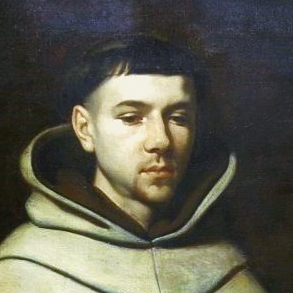
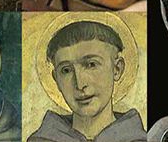
The saints – are all very strange people that you might not vibe with if you meet them in person um and we do this disservice when we kind of sand them down you know soon we're going to be celebrating the feast of saint francis of assisi and many of us we know saint francis as this hippie nature-loving saint you know we've turned him into a bird bath but saint francis he was a man who had ptsd he was a prisoner of war not many people know that He likely had a form of leprosy.

So sometimes when we reject the strangeness or even the humanity, the stranger parts of humanity, we reject the relatability of Scripture and the relatability of Christ as well.
I also think there's a sense in which if holiness is set apartness and strangeness is a difference of some kinds, there ought to be more of an association between what is holy and what is strange.
And not that strange doesn't have limits and that always doing something different makes it good just because it's different.
But I'm surprised that that isn't a more commonly held belief just in the similarity of the definition of those terms.

And one way I use, and I believe I have a chapter on it, I consider the strange to be a transcendental.
Yeah, I think this debate about how we use words and how we label ourselves as Christians and how we label our faith plays in well to another thing I wanted to ask you about, which is your book is labeled Strange, A Catechism of the Strange.
But I think in many circles, the word strange is not a particularly positive word.
It's a word that is maybe othering or it's a word that is – it's not like us.
And I'm curious where you see as – how does the word strange become a bad thing and why ought we to reclaim it if it needs to be reclaimed?

I think it's become a bad thing, as many things do in Christianity and as I experience in Catholicism, because we build this box of a respectable Christianity.

It must look, especially in the internet age, it must look like what it looks like online.

We start judging ourselves, not by scripture, not by the teachings of Christ, but the box that we have created.

I think that when we get stuck into this is what Christianity, this is what Catholicism should look like, things that are strange, things that are bodily are also very much seen as other.

The saints – are all very strange people that you might not vibe with if you meet them in person um and we do this disservice when we kind of sand them down you know soon we're going to be celebrating the feast of saint francis of assisi and many of us we know saint francis as this hippie nature-loving saint you know we've turned him into a bird bath but saint francis he was a man who had ptsd he was a prisoner of war not many people know that He likely had a form of leprosy.

So sometimes when we reject the strangeness or even the humanity, the stranger parts of humanity, we reject the relatability of Scripture and the relatability of Christ as well.
I also think there's a sense in which if holiness is set apartness and strangeness is a difference of some kinds, there ought to be more of an association between what is holy and what is strange.
And not that strange doesn't have limits and that always doing something different makes it good just because it's different.
But I'm surprised that that isn't a more commonly held belief just in the similarity of the definition of those terms.

And one way I use, and I believe I have a chapter on it, I consider the strange to be a transcendental.
The rest of this transcript — segmented and speaker-labeled, so you land on the exact moment something was said
Search every transcript — by keyword, by phrase, or by meaning, across every show Radar indexes
Trends — what is surging across podcasts, measured against its own baseline
Alerts — when a name you follow appears in a newly indexed episode
No account is needed to search Radar.