On Common Ground: An American Inheritance
Oct 19, 2026 · 43 min · 10 segments
In this bonus episode of *On Common Ground: An American Inheritance,* we find inspiration in people who saw the places they love threatened and took action. The first six episodes of this series laid…
Bill HeddenHost
Becky RomGuestGillian FitzgeraldGuest
Matt Lee-AshleyGuest
None of us workers at the Atlas Uranium Mill knew that the company was negotiating with the Nuclear Regulatory Commission all throughout the 1970s and '80s over what to do with the ever-growing lake of mill waste that we were slurrying into an unlined pit on the bank of the Colorado River.

Stuff like that was way above our pay grade, and anyway, Moab was a mill town where everybody figured that Atlas would get to do whatever Atlas wanted.

We all knew that in big water years like 1983, the river topped its banks so that the tailings stood eroding in the floodwaters.

But nobody had really tested to see how nasty the chemistry was inside of the pile, or what had happened to the groundwater under it, so it was sort of a see no evil, hear no evil situation.

But because Atlas was the oldest and one of the biggest uranium mills in the country, when operations shut down in 1984, this mess had grown to 16 million tons of slime-like wastes chock-full of uranium and radium, heavy metals, nitrates, and ammonia.

It leaked more than 110,000 gallons of poison into the river every day, making it by far the most polluting uranium mill in the US, and nobody knew it yet.

And then in a strange twist, it largely fell to me, once a laborer at the mill, to bring out the truth that would finally get the tailings moved away from the drinking water for more than 250 cities, and the irrigation for millions of acres of America's most productive farmland.

When it came to Atlas, my leverage came from a local bit of history where the old county government in Grand County, Utah, was intent on building a road across the remote Book Cliffs.

In a series of corrupt deals, they spent all the money the community needed to keep its hospital open on the road instead, with the result that there was a local insurrection to throw the bums out of office by overturning the county commission form of government and creating a new county council.

I ran against 12 opponents in the giant district that encompassed all of the county outside of the town of Moab, which I nicknamed the Prairie Dog District, and I was shocked to win election in 1992.

The outgoing commissioners bequeathed the new council a budget half a million dollars in the red, and a host of other problems.

The good old boys immediately launched a recall election, which we survived as we did the work of saving the hospital and rebuilding the economy.

The Colorado River flooded over its banks and inundated the tailings once again, and the Nuclear Regulatory Commission issued a long-awaited finding that there would be no significant impact from letting Atlas place some gravel on the pile and walk away.

I was one of just 20 people who wrote to comment on the plan, and one of the very few who opposed it, but I had a tiny finger hold because I represented local government.

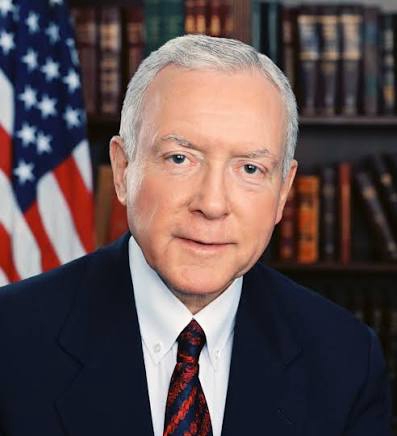
Senator Orrin Hatch then surprised us, responding to my letter by telling the Nuclear Regulatory Commission to do a full environmental impact study of the reclamation plan.

But he tipped his hand when he told me at a county meeting that Atlas has some things they need to educate you people about.

Basically, what Atlas wanted to teach us was that they had posted a $5 million reclamation bond, and they had no intention of spending an extra dollar.

The Nuclear Regulatory Commission, with no capacity to clean up a uranium mill, couldn't make them.

At that low moment, the first of my friends from the mill died of cancer, and others were falling sick, and I realized that I was the only one in a position to try to find some kind of justice for them.

I turned to the engineers and scientists at Oak Ridge National Lab, who came and sampled the tailings and the groundwater beneath.

That finding helped me convince the US Geological Survey to check out the impact to the river.
The rest of this transcript — segmented and speaker-labeled, so you land on the exact moment something was said
Search every transcript — by keyword, by phrase, or by meaning, across every show Radar indexes
Trends — what is surging across podcasts, measured against its own baseline
Alerts — when a name you follow appears in a newly indexed episode
No account is needed to search Radar.