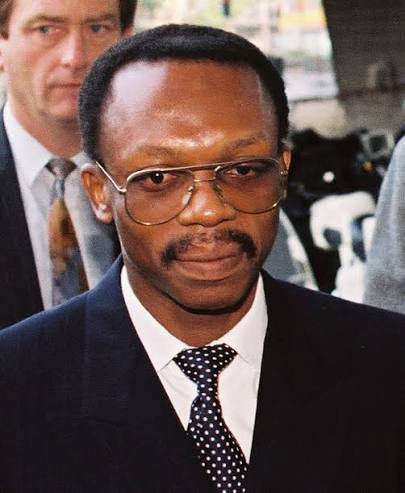
Louis-Henri MarsGuestLouino RobillardGuestMichael DivertHostFrom 2012 until 2025, Louis-Henri Mars served as the executive director of La Coup La Paix.
The name means peaceful community in Creole, a group whose mission was the promotion of a culture of nonviolence and dialogue in some of the most marginalized neighborhoods of Haiti's capital, Port-au-Prince.
the grandson of the diplomat, writer, ethnographer, and champion of negritude, Jean Prismas.
He was born in Port-au-Prince and now works as a consultant in the peacebuilding sector.
And I'm very happy to have him on this special edition of Notes from the World to discuss the situation in Haiti today.
Louis, you spent many years in some of the most underprivileged communities in Port-au-Prince.
What are the factors in them that have made them vulnerable to the kind of armed groups that eventually coalesced to form Vive Ensemble?

Well, first of all, the basic issue from the get-go has been the unspeakable poverty that these people experience in those neighborhoods.

but also the fact that the system of control that was in place, that was put in place by the army and the Duvalier regime afterwards started being lost as of 1986 with the setting aside of the militia, the

And then after the coup d'etat, of 1991 by the army and the return of President Aristide in 1994 and the dismantling of the army, the police control of the country disappeared completely.

So in this vacuum there's individuals that came out and took over and encouraged also by political interests that wanted to control votes and activities in the neighborhoods and therefore encouraged the armament and the organization of those we could say, parallel paramilitary groups.

The international community and the national community tried to build a police force But it never had the total control of the country the way that the former system had it.
And also, would you say, I mean, it later became a more generalized phenomenon among the kind of body politic in Haiti.
But from 94 to 2004, I mean, it was certainly, I mean, as I witnessed it, I mean, certainly, you know, Aristide and Famille Lavalasse, his political party, were very active in kind of suckering these young armed groups that were existing in some of these marginalized neighborhoods.

Well, yes, and it's nothing new in the sense that using individuals that have no education, no hope, and have only the opportunity to pillage and oppress their fellow citizens, using them to control neighborhoods and areas of the country is a tradition in Haitian politics.

In the end, when you look at it, the Toto Makout, what were they? There were just one big gang at the service of one individual, the president of the country at the time, Francois Duvalier.
From 2012 until 2025, Louis-Henri Mars served as the executive director of La Coup La Paix.
The name means peaceful community in Creole, a group whose mission was the promotion of a culture of nonviolence and dialogue in some of the most marginalized neighborhoods of Haiti's capital, Port-au-Prince.
the grandson of the diplomat, writer, ethnographer, and champion of negritude, Jean Prismas.
He was born in Port-au-Prince and now works as a consultant in the peacebuilding sector.
And I'm very happy to have him on this special edition of Notes from the World to discuss the situation in Haiti today.
Louis, you spent many years in some of the most underprivileged communities in Port-au-Prince.
What are the factors in them that have made them vulnerable to the kind of armed groups that eventually coalesced to form Vive Ensemble?

Well, first of all, the basic issue from the get-go has been the unspeakable poverty that these people experience in those neighborhoods.

but also the fact that the system of control that was in place, that was put in place by the army and the Duvalier regime afterwards started being lost as of 1986 with the setting aside of the militia, the

And then after the coup d'etat, of 1991 by the army and the return of President Aristide in 1994 and the dismantling of the army, the police control of the country disappeared completely.

So in this vacuum there's individuals that came out and took over and encouraged also by political interests that wanted to control votes and activities in the neighborhoods and therefore encouraged the armament and the organization of those we could say, parallel paramilitary groups.

The international community and the national community tried to build a police force But it never had the total control of the country the way that the former system had it.
And also, would you say, I mean, it later became a more generalized phenomenon among the kind of body politic in Haiti.
But from 94 to 2004, I mean, it was certainly, I mean, as I witnessed it, I mean, certainly, you know, Aristide and Famille Lavalasse, his political party, were very active in kind of suckering these young armed groups that were existing in some of these marginalized neighborhoods.

Well, yes, and it's nothing new in the sense that using individuals that have no education, no hope, and have only the opportunity to pillage and oppress their fellow citizens, using them to control neighborhoods and areas of the country is a tradition in Haitian politics.

In the end, when you look at it, the Toto Makout, what were they? There were just one big gang at the service of one individual, the president of the country at the time, Francois Duvalier.
The rest of this transcript — segmented and speaker-labeled, so you land on the exact moment something was said
Search every transcript — by keyword, by phrase, or by meaning, across every show Radar indexes
Trends — what is surging across podcasts, measured against its own baseline
Alerts — when a name you follow appears in a newly indexed episode
No account is needed to search Radar.