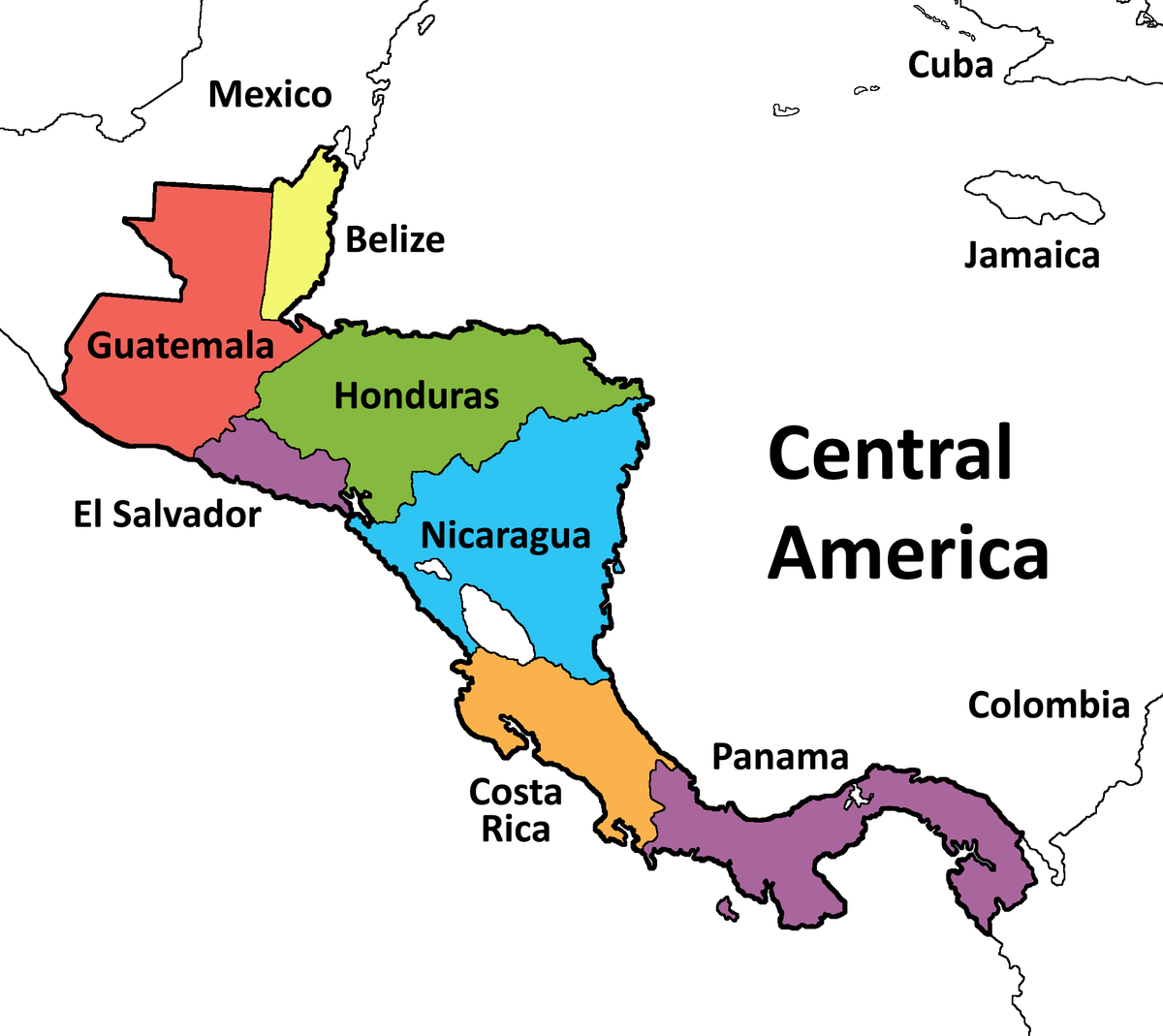
Guatemala
Country in Central AmericaWikipedia
2.5k
MENTIONS
1.2k
EPISODES
964
PODCASTS
Search complete. 2515 mentions across 1180 episodes found for "Guatemala".
Sep 17, 2026

Dylan ThurasHOST
And I was like, this is fascinating.
Dylan ThurasHOST
Like, is that a traditional Guatemalan thing?
Ross JenningsGUEST
Yes.
Ross JenningsGUEST
In, in short, it is.

Tyler WenzelGUEST
And Inca Terns went farther afield than Peruvian Boobies this year, at least as far as we've seen.
Tyler WenzelGUEST
Because they got up into El Salvador, and there's also a- an older report from Guatemala.
Tyler WenzelGUEST
Whereas Peruvian Booby just crossed the border into Nicaragua.
Tyler WenzelGUEST
So if I had to guess, like, one of them-
Nate SwickHOST
Oh, it's weird.
Nate SwickHOST
I don't know why they did that.
Tyler WenzelGUEST
And so there's some old records off, like, Guatemala and Mexico, uh, that we don't know what they were.
Tyler WenzelGUEST
Like, there was some census-

Tracy Leeds KaplanHOST
Oh, I know this one.
Tracy Leeds KaplanHOST
September 15th is Independence Day for five Central American countries: Costa Rica, El Salvador, Guatemala, Honduras, and Nicaragua.
Tracy Leeds KaplanHOST
Then Mexico celebrates its independence on September 16th, and Chile on September 18th.
Tracy Leeds KaplanHOST
So just one week includes a whole lot of important anniversaries.

Chris WilliamsonHOST
You know, even for me and you, love doing the show, love speaking to all these interesting people, get to fly around the world and all...
Chris WilliamsonHOST
But I would be lying if I said I love writing show notes or doing research in Guatemala airport at three in the morning because I'm on a delayed flight and I've got a episode tomorrow.
Chris WilliamsonHOST
It's grind.
Chris WilliamsonHOST
It's grind that I care about and it's grind that I can do that other people couldn't do.

MeganHOST
But I want you to think, not hundreds, there were over 1,500 people in this room working Coaches, speakers, leaders, entrepreneurs gathering all in one place from all over the world.
MeganHOST
I met people from the Philippines, Indonesia, Canada, Mexico, Spain, Guatemala, South Africa, the Ukraine, I mean all over the world.
MeganHOST
It was incredible.
MeganHOST
And like I said, the energy was unlike anything I have ever experienced before.

Chris DonatoGUEST
I can't figure that fully out, but you know, that nothing's a guarantee.
Chris DonatoGUEST
So, you know, but then compare it to like, I fish Guatemala every year as well.
Chris DonatoGUEST
I run Mike's boat over there, um, and intensity and, um, that's more of like, so now we're not, not so much blue Marlin, that's all sailfish, but we do, you do get your fair share of Marlin as well.
Chris DonatoGUEST
But that's a fishery where like, when I leave, I know I'm going to catch billfish.
Chris DonatoGUEST
I got to get more than 20 today to make myself happy as a captain.
Chris DonatoGUEST
I need to catch more than 20 today.
Chris DonatoGUEST
And that's just like a number that sits in my head when I fish Guatemala.
Chris DonatoGUEST
And And that's a different fishery.

Morgan GrossHOST
Okay, and then our last question that we have still in Pillar 4 around cross-cultural communication is, would at least half of your last 10 donor-facing content pieces contain a specific person, place, or moment and not a general program description? This is so crucial because, again, exactly what Shil was saying earlier is, like, those little moments really count and making sure, like, we really – are specific and our language and our communication.
Morgan GrossHOST
Because again, like you can say, you can write a piece like, you know, this person at school and talk about them at school, but what does school look like in, Laos or what a school look like in Guatemala or what a school look like in Tanzania.
Morgan GrossHOST
It's going to be very different to an American donor.
Morgan GrossHOST
So like really like pull that apart and explain that.

Tejasvi NagarajahGUEST
And when that foreign policy was fighting fascism, there was a credible mandate and a vision of unity among super majorities.
Tejasvi NagarajahGUEST
But when that same national security state would turn to anti-communism and a new US imperialism in Guatemala or Vietnam, unions role in Guatemala or Vietnam or Chile would be much more debatable and much more controversial.
Tejasvi NagarajahGUEST
And so again, I point to things we think of as 1960s controversies and really thinking by the 1960s, it was actually too late, you know, because actually the stage had been set the national security turn took shape in the 40s, and it was double-edged.
Tejasvi NagarajahGUEST
It did create civil rights and labor openings, but it also created certain capture to a national security discipline.

Paul FullerNARRATOR
In Portugal, for example, drivers are honking horns and blocking roads in a slow drive to protest diesel prices, which have reached a record high of more than $9 a gallon.
Paul FullerNARRATOR
Protests and strikes have also been reported in Syria, Guatemala, Indonesia, Pakistan, the Philippines, India, Bangladesh, and Sri Lanka.
Paul FullerNARRATOR
The impact of the war on world energy prices has been catastrophic for the working class.
Paul FullerNARRATOR
Brent crude oil, which hovered in the $65 to $75 range before the war, has surged to a peak of approximately $120 per barrel in late April before a brief illusory lull following a ceasefire announcement in early May.
Paul FullerNARRATOR
In Syria, the largest demonstration since the fall of the Assad regime two years ago erupted after the government announced temporary price increases of up to 40% on gasoline, diesel, and other petroleum products.
Paul FullerNARRATOR
Protesters burned tires and cars in several cities, expressing fury at a transitional government that had promised reconstruction but is now presiding over energy collapse.
Paul FullerNARRATOR
In Guatemala, mass protests broke out as the latest surge in oil prices pushed costs beyond the reach of poor and working-class households.
Paul FullerNARRATOR
Demonstrators burned tires and vehicles, blockading major roads in what observers described as some of the most intense unrest in the country in many years.

Mike GomollGUEST
So we did an international adoption.
Mike GomollGUEST
All three of our kids are adopted from Guatemala.
Mike GomollGUEST
We did an international adoption and Joe came home to us at about six months.
Mike GomollGUEST
So from the moment his birth mother gave up custody through him coming to us, he was with the foster family.
1,170 more episodes mention Guatemala.
Create an account to see the whole feed, search across every transcript, and follow the entities you care about.