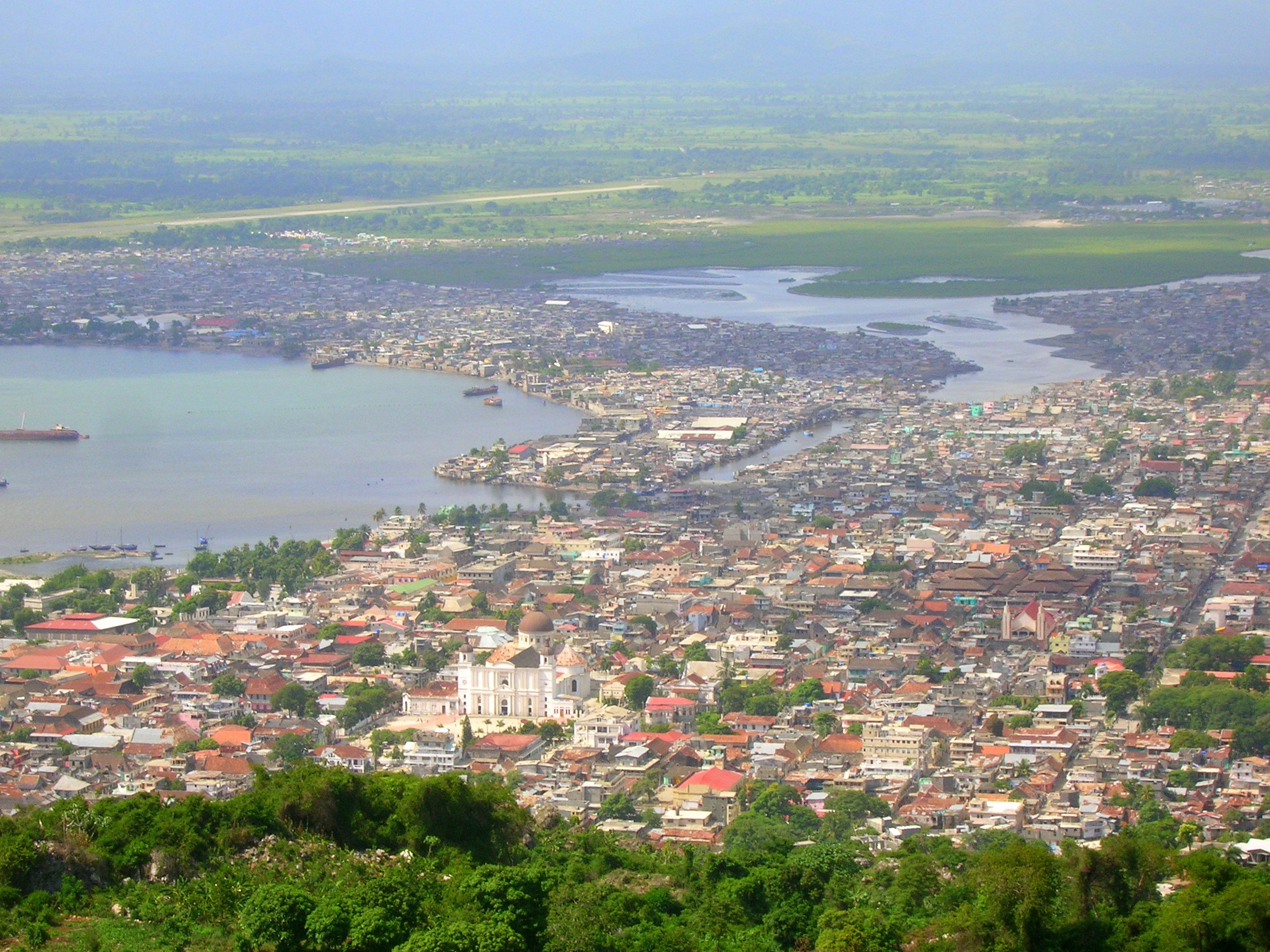
Cap-Haïtien
Commune in HaitiWikipedia
45
MENTIONS
22
EPISODES
21
PODCASTS
Search complete. 45 mentions across 22 episodes found for "Cap-Haïtien".
Oct 6, 2026

Ric GazarianGUEST
It's more secure.
Ric GazarianGUEST
It's called Cap-Haïtien.
Ric GazarianGUEST
I spent four days there, and it truly surprised me on the upside in such a good way, where I was really happy and thankful that the country was as delightful as it was.
Jason MooreHOST
[laughs] Nice.

EmilyGUEST
Yeah.
EmilyGUEST
Yeah, I went to Cap-Haitien.
EmilyGUEST
Yeah, it was horrible.
EmilyGUEST
It's a horrible place.

Lloyd BattistaVOICE_ACTOR
We have traced the automobile.
Lloyd BattistaVOICE_ACTOR
A private car owned by a woman who takes parties on tour to visit the sugar plantations along the Artibonite River, Cap-Haïtien, the Citadel, even Pic La Selle, our highest peak.
Lloyd BattistaVOICE_ACTOR
The woman's name was Ballau.
Heather MacRaeVOICE_ACTOR
Well, what happened to her, and to my cousin?

EmilyGUEST
Yeah.
EmilyGUEST
Yeah, I went to Cap-Haitien.
EmilyGUEST
Yeah, it was, it was, yeah, it was horrible.
EmilyGUEST
It's a horrible place.

Lucretia VanDykeHOST
Um, you have a quote on your website, which I highly encourage everybody to look through the pictures and, and follow, and we'll give all your socials linked to this also You said, "I came back to Haiti because the land called me back, not metaphorically.
Lucretia VanDykeHOST
I mean, I arrived in Cap-Haïtien in a season of personal unraveling, and the mountains held me in a way that nothing else had.
Lucretia VanDykeHOST
I stayed, I started paying attention, uh, to what I saw in the soil, the erosion, the loss, and slowly forgetting what once grew here mirrored something I recognized inside of myself." And you talk about that Grown in Haiti was born not from a plan, but from a reckoning.
Lucretia VanDykeHOST
Can you speak to that?
Sidney-Max EitenneGUEST
... no organization, nothing in mind.
Sidney-Max EitenneGUEST
Um, and then I got into an accident.
Sidney-Max EitenneGUEST
That's what brought me to where I am now, which is a, a beautiful community, Cap-Haïtien, where I used to visit when I was much younger, like when I was like 10, 11, I used to visit that area, and it was just like beautiful.
Sidney-Max EitenneGUEST
And the people are beautiful.

Ken MertenGUEST
to get to Port-au-Prince.
Ken MertenGUEST
They're sending people, as I understand it, and I could be wrong, but I understand they're sending people up to the city in the north, Cape Haitian, which is, if you're from the Port-au-Prince area, there's not an easy way to get back and forth between Port-au-Prince and Cape Haitian.
Ken MertenGUEST
The roads are I maybe could even say impassable at certain times of the year.
Ken MertenGUEST
So, you know, it's problematic.

Kevin Perez-AllenHOST
Between the water and the swamp at Chalmé, there's only one river road, and the earthworks cut across it.
Kevin Perez-AllenHOST
At the end of November, at Cap Francais, on the north coast of Saint-Domingue, General Rochambeau surrenders the last French army in the Caribbean to a British blockade.
Kevin Perez-AllenHOST
He's the son of the general who fought beside George Washington at Yorktown.
Kevin Perez-AllenHOST
The commander of the British squadron at Jamaica, Sir John Duckworth, takes his surrender.

James GieslerGUEST
De Grasse has been given very wide orders to be able to negotiate with the Spanish, so...
James GieslerGUEST
He arrives in July 1781 in Saint-Domingue, which is modern-day Haiti, in the town of Cap-Francois, which was at the time the main source of wealth and largest sugar colony in the world, and a huge source of wealth for the French.
James GieslerGUEST
So that's where Saavedra is sent after Pensacola.
James GieslerGUEST
He arrives also in early July 1781. and is introduced to de Grasse by the Soledad de Montaigne, who has taken him there.

Carolyn BeelerHOST
We start in Haiti.
Carolyn BeelerHOST
Once a week since late August, a plane has left Louisiana carrying Haitians across the sea to the city of Cape Haitian.
Carolyn BeelerHOST
Inside are rows of deportees in handcuffs, waist chains, and leg irons.
Carolyn BeelerHOST
Many have been living in the U.S. under Temporary Protected Status, or TPS.
Carolyn BeelerHOST
But the Department of Homeland Security ended TPS for Haitians in late July.
Carolyn BeelerHOST
Today, we're going to focus on what that decision actually means for one individual.
Carolyn BeelerHOST
We reached out to the Miami Herald's Jacqueline Charles, who's been covering this.
Carolyn BeelerHOST
She has been closely following the fate of a 33-year-old Haitian pastor, Molise Agustave.

Jude AzardGUEST
They've been trying to... spread them.
Jude AzardGUEST
And also, there were speculation that they're planning on going to Cap-Haitien.
Jude AzardGUEST
They've tried a few times.
Jude AzardGUEST
But people are being very vigilant.
12 more episodes mention Cap-Haïtien.
Create an account to see the whole feed, search across every transcript, and follow the entities you care about.