Making Gay History | LGBTQ Oral Histories from the Archive
Jul 23, 2026 · 27 min · 11 segments
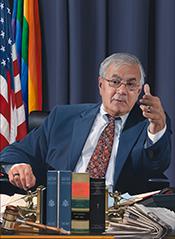
“Are you gay?” a reporter asked U.S. Representative Barney Frank in 1987. “Yes, so what?” With that, Frank became the first member of Congress to voluntarily come out as gay. But the casualness of his…
Barney FrankGuest
Eric MarcusHost
And so when they first started televising things, the key forward hearings, and then the Republican and Democratic conventions, and then the Army McCarthy hearings when I was anywhere from 11, 12 to 14 years old, I was fascinated with them.

And by 1954, I found I had a kind of a rooting interest in the Democrats winning elections.

I didn't think of having an active political career The fact that I was gay, which I knew from the time I was 13, was not the primary reason.

And I grew up in Bayonne, New Jersey, part of Hudson County, which back then was boss-ridden, corrupt, you just didn't think about a political career in the normal sense.

You had to kind of apprentice yourself to an organization that was dominated by the corruptest part of the Teamsters and the Longshoremen, and Jews were not very welcome.

But I just assumed that I would be, as an undergraduate, I decided I would be professionally a professor.

And so from that period, really from 57 to 67, I had about 10 years in which I worked actively on other people's campaigns and I worked for some people who won, some people who lost.
The rest of this transcript — segmented and speaker-labeled, so you land on the exact moment something was said
Search every transcript — by keyword, by phrase, or by meaning, across every show Radar indexes
Trends — what is surging across podcasts, measured against its own baseline
Alerts — when a name you follow appears in a newly indexed episode
No account is needed to search Radar.