
Makdisi Street Reviews w/ Assal Rad
Oct 23, 2026 · 58 min · 9 segments
The brothers host author Assal Rad (@AssalRad) to discuss her new book…
Oct 23, 2026 · 58 min · 9 segments
The brothers host author Assal Rad (@AssalRad) to discuss her new book…
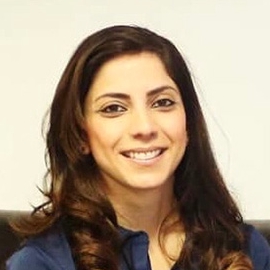
 Assal RadGuest
 Saree MakdisiHost
 Ussama MakdisiHost
 Karim MakdisiHost

And we're going to come back to the dissonance between what Israelis, like, for example, just the other day, I think, what's his name? He's not the sharpest tool in the shed, their defense minister.
Like, oh, we destroyed, we've destroyed, he's gloating, in fact, we destroyed Israel.
And that's why I was struck by The first example you give in the book, when we just talked about a few minutes ago, that use of the word eviction, because it's so subtle, you know, it's so subtle.
As soon as you say that word to anybody who doesn't know more than, you know, to the pretend average reader, whoever that is.
You know, they're going to come out, you've already, even just in the headline, you've already kind of framed everything they need to know.
And they might break free of the mind-forged manacles, to quote Blake, but they might not also, they might just be, you know, programed at that point.
And I remember talking with editors of the LA Times about this years ago, this is like 10 to 15 years ago almost, thinking, why do you guys keep saying Arab this and Arab that when they're Palestinians? They're not just generic Arabs, they're the Palestinian citizens of the state.
Why do you say Arab? And I said, it's a bit like using the term colored, which is a 1950s American language.
to talk about African Americans or Black Americans today, why don't you use a more accurate language? And of course, their answer was, that's just what we've always done, which of course is not a very good answer.
But this is just to reinforce your point that it's sometimes in the most subtle things, the most seemingly innocuous things that actually have the greatest power because they do so much to frame narratives.




And we're going to come back to the dissonance between what Israelis, like, for example, just the other day, I think, what's his name? He's not the sharpest tool in the shed, their defense minister.
Like, oh, we destroyed, we've destroyed, he's gloating, in fact, we destroyed Israel.
And that's why I was struck by The first example you give in the book, when we just talked about a few minutes ago, that use of the word eviction, because it's so subtle, you know, it's so subtle.
As soon as you say that word to anybody who doesn't know more than, you know, to the pretend average reader, whoever that is.
You know, they're going to come out, you've already, even just in the headline, you've already kind of framed everything they need to know.
And they might break free of the mind-forged manacles, to quote Blake, but they might not also, they might just be, you know, programed at that point.
And I remember talking with editors of the LA Times about this years ago, this is like 10 to 15 years ago almost, thinking, why do you guys keep saying Arab this and Arab that when they're Palestinians? They're not just generic Arabs, they're the Palestinian citizens of the state.
Why do you say Arab? And I said, it's a bit like using the term colored, which is a 1950s American language.
to talk about African Americans or Black Americans today, why don't you use a more accurate language? And of course, their answer was, that's just what we've always done, which of course is not a very good answer.
But this is just to reinforce your point that it's sometimes in the most subtle things, the most seemingly innocuous things that actually have the greatest power because they do so much to frame narratives.
The rest of this transcript — segmented and speaker-labeled, so you land on the exact moment something was said
Search every transcript — by keyword, by phrase, or by meaning, across every show Radar indexes
Trends — what is surging across podcasts, measured against its own baseline
Alerts — when a name you follow appears in a newly indexed episode
No account is needed to search Radar.