Sep 1, 2026 · 1 hr 5 min · 11 segments
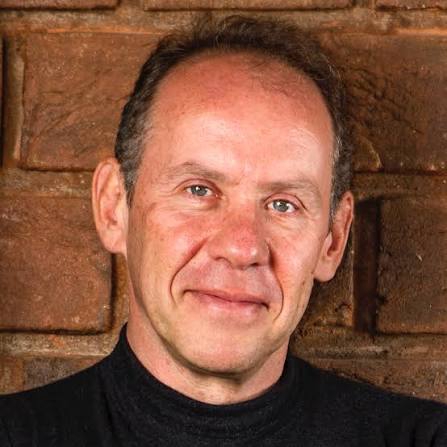
Isaac Getz is a business philosopher and professor at ESCP Business School, and the co-author, with Brian Carney, of Freedom, Inc., the book that gave us the idea of the liberated company and sparked…
Isaac GoetzGuestLisa GillHostSo I thought we could start by, well, with some basics, I guess, because I really wanted to talk to you about your work around the Liberated Company.
So could you say something about what is a Liberated Company and what is this movement that you sparked?

And I know that you read my initial book, right? That was written with Brian Carney.

And the definition, though, has been given in the article that has appeared in California Management Review the same year, 2009.

A liberated company is a company in which the majority of employees enjoy both freedom and responsibility to take actions they decide by themselves, not their superiors, not some procedures, by themselves to be the best for their company's vision.

I maybe will precise a little bit that the definition sparked a lot of debate, in fact, among particular researchers, I mean, it's not and consultants in some way because it doesn't have any attributes right it's it's not a model right that you can check boxes or attributes and then put in place and it's true it's rather a philosophy which is as a definition built upon the function not the structural attributes for example engineers and architects know this type of definitions right for example the bridge is not defined around any structural common element.

The only function is it has to allow to pass from one side to another over an obstacle.

So the function here is to have an organizational environment, if you want, that allows employees this freedom of action and this responsibility.
Yeah, and I like this definition because, and this analogy of the bridge, kind of defining it by its outcome, really.
And the reason for organizing or leading in such a way, because I think it's a pitfall is to, I think a lot of people listening to this podcast are familiar with Frederick Lallou's book, for example, Reinventing Organizations.
And it's very easy to try to be a concept for the sake of being a concept rather than for what that might give us or help us achieve in line with our vision.
So I thought we could start by, well, with some basics, I guess, because I really wanted to talk to you about your work around the Liberated Company.
So could you say something about what is a Liberated Company and what is this movement that you sparked?

And I know that you read my initial book, right? That was written with Brian Carney.

And the definition, though, has been given in the article that has appeared in California Management Review the same year, 2009.

A liberated company is a company in which the majority of employees enjoy both freedom and responsibility to take actions they decide by themselves, not their superiors, not some procedures, by themselves to be the best for their company's vision.

I maybe will precise a little bit that the definition sparked a lot of debate, in fact, among particular researchers, I mean, it's not and consultants in some way because it doesn't have any attributes right it's it's not a model right that you can check boxes or attributes and then put in place and it's true it's rather a philosophy which is as a definition built upon the function not the structural attributes for example engineers and architects know this type of definitions right for example the bridge is not defined around any structural common element.

The only function is it has to allow to pass from one side to another over an obstacle.

So the function here is to have an organizational environment, if you want, that allows employees this freedom of action and this responsibility.
Yeah, and I like this definition because, and this analogy of the bridge, kind of defining it by its outcome, really.
And the reason for organizing or leading in such a way, because I think it's a pitfall is to, I think a lot of people listening to this podcast are familiar with Frederick Lallou's book, for example, Reinventing Organizations.
And it's very easy to try to be a concept for the sake of being a concept rather than for what that might give us or help us achieve in line with our vision.
The rest of this transcript — segmented and speaker-labeled, so you land on the exact moment something was said
Search every transcript — by keyword, by phrase, or by meaning, across every show Radar indexes
Trends — what is surging across podcasts, measured against its own baseline
Alerts — when a name you follow appears in a newly indexed episode
No account is needed to search Radar.