Lily GeismerGuestBen WaterhouseHost
Lee VinselHost
And even, you know, so that is some of like what I've like tried to sort of understand and think through.
Yeah, so that's, I mean, that's really interesting because, of course, you know, as listeners who are familiar with your work will know, you end up, you know, going to college and then going to graduate school in the 2000s where you start working on the dissertation project that ultimately becomes your first book that you mentioned about writing.
about liberalism and about this is, you know, don't blame us is the name of the book, right? Suburban liberals and the transformation of the democratic party, which really kind of flows the way you're describing it from this experience that you, that you lived through as a teenager.
And then I would presume then as a, as a college student, So can you tell us about what it was like to do that work in the 2000s, kind of looking back on the 70s, 80s, and maybe a little bit of the 90s? And what was it about the Democratic Party that you thought really kind of was due for a historical reassessment?

So I was always really interested in, like, liberalism and its contradictions.

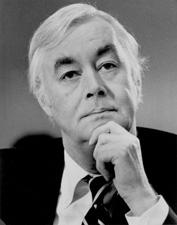
So I went to, like, for my larger narrative, I went to college and that was, like, something I, my thesis was about that topic, looking at through the lens of Daniel Patrick Moynihan and, like, using him as a lens to think about the

And actually, that's I think to go back to the welfare question, I think I must have been inspired because I got really interested in the questions of welfare.

And so that's what I thought I was going to go to graduate school to study was like national liberal, like these questions around liberalism nationally.

When I got to grad to PhD graduate school in 2004, I so we're giving my full like I'm giving all of my dates.

So that moment, in terms of the historical literature, at that point, like, all anyone was studying was conservatism.
Right.
So like, that was the

And I think that what happened to me was that, like, there was this story of Democratic, the Democratic Party was in like, complete decline.

And that just didn't really resonate with my lived experience, I guess, growing up in Massachusetts, like growing up in Massachusetts.

And I will say as a as a pin in this, like actually most of our lived experiences, because it was like if you came of age in the 90s, like that was like a Democrat.

I mean, for I mean, there was there was, you know, Republicans control the Congress.

But anyway, I was interested in that, that issue of like, everyone is saying the Democratic Party is over.

And even, you know, so that is some of like what I've like tried to sort of understand and think through.
Yeah, so that's, I mean, that's really interesting because, of course, you know, as listeners who are familiar with your work will know, you end up, you know, going to college and then going to graduate school in the 2000s where you start working on the dissertation project that ultimately becomes your first book that you mentioned about writing.
about liberalism and about this is, you know, don't blame us is the name of the book, right? Suburban liberals and the transformation of the democratic party, which really kind of flows the way you're describing it from this experience that you, that you lived through as a teenager.
And then I would presume then as a, as a college student, So can you tell us about what it was like to do that work in the 2000s, kind of looking back on the 70s, 80s, and maybe a little bit of the 90s? And what was it about the Democratic Party that you thought really kind of was due for a historical reassessment?

So I was always really interested in, like, liberalism and its contradictions.

So I went to, like, for my larger narrative, I went to college and that was, like, something I, my thesis was about that topic, looking at through the lens of Daniel Patrick Moynihan and, like, using him as a lens to think about the

And actually, that's I think to go back to the welfare question, I think I must have been inspired because I got really interested in the questions of welfare.

And so that's what I thought I was going to go to graduate school to study was like national liberal, like these questions around liberalism nationally.

When I got to grad to PhD graduate school in 2004, I so we're giving my full like I'm giving all of my dates.

So that moment, in terms of the historical literature, at that point, like, all anyone was studying was conservatism.
Right.
So like, that was the

And I think that what happened to me was that, like, there was this story of Democratic, the Democratic Party was in like, complete decline.

And that just didn't really resonate with my lived experience, I guess, growing up in Massachusetts, like growing up in Massachusetts.

And I will say as a as a pin in this, like actually most of our lived experiences, because it was like if you came of age in the 90s, like that was like a Democrat.

I mean, for I mean, there was there was, you know, Republicans control the Congress.

But anyway, I was interested in that, that issue of like, everyone is saying the Democratic Party is over.
The rest of this transcript — segmented and speaker-labeled, so you land on the exact moment something was said
Search every transcript — by keyword, by phrase, or by meaning, across every show Radar indexes
Trends — what is surging across podcasts, measured against its own baseline
Alerts — when a name you follow appears in a newly indexed episode
No account is needed to search Radar.