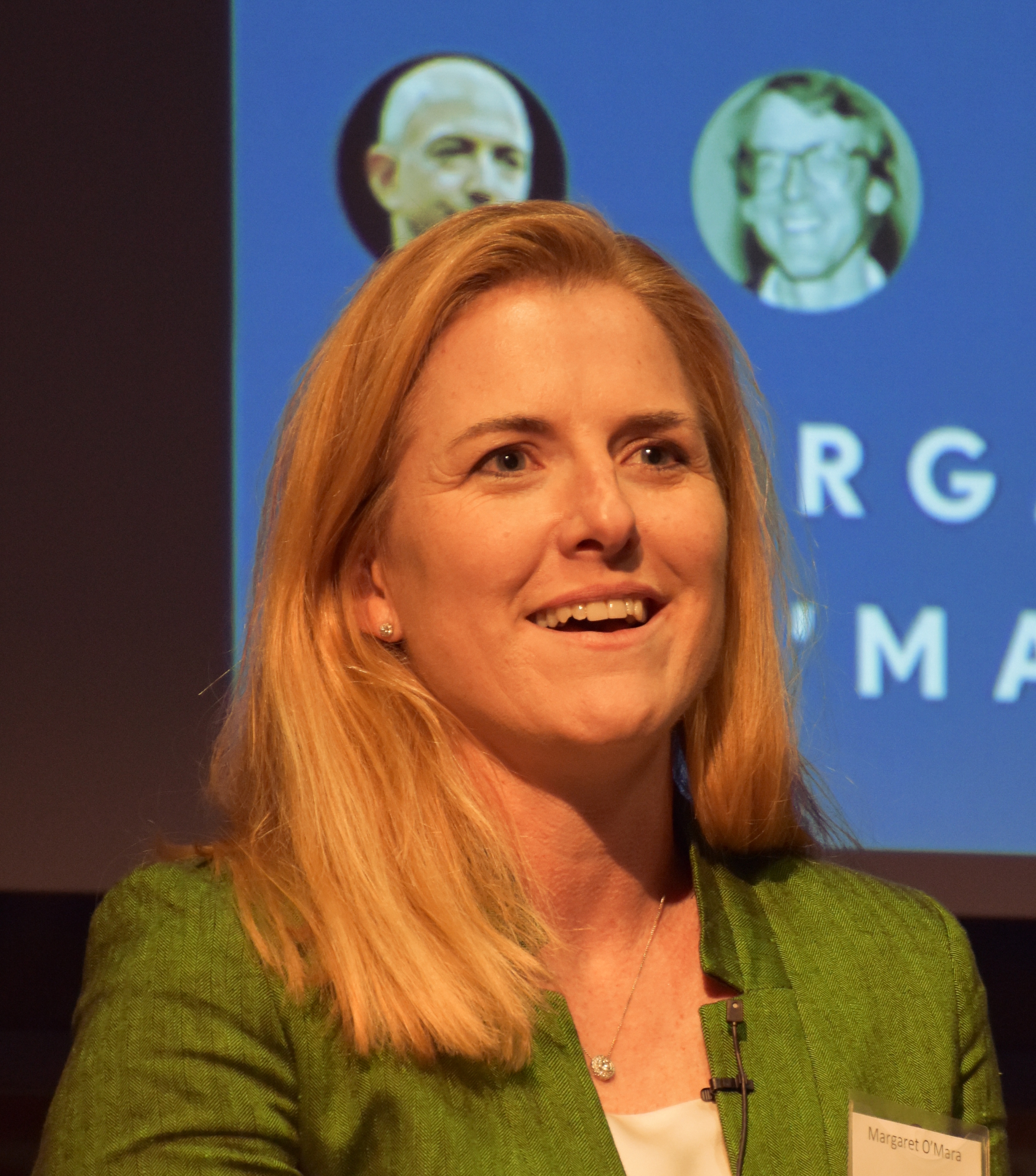
Margaret O'Mara
American historian and professorWikipedia
12
MENTIONS
11
EPISODES
9
PODCASTS
Search complete. 12 mentions across 11 episodes found for "Margaret O'Mara".
Oct 4, 2026

Dick ShanleyHOST
The industrial tycoons of the Gilded Age bankrolled cultural institutions like the Met, Carnegie Hall, as a way to soften the public image.
Dick ShanleyHOST
The historian Margaret O'Mara referred to it as reputation laundering.
Dick ShanleyHOST
By comparison, Dr. O'Mara told us many of today's rich tycoons are more capricious.
Dick ShanleyHOST
Witness the way Mark Zuckerberg and his wife funded a free tuition school through the Foundation for Low-Income Children in the poorest area of Silicon Valley.

Dick ShanleyNARRATOR
The industrial tycoons of the Gilded Age bankrolled cultural institutions like the Met, Carnegie Hall, as a way to soften the public image.
Dick ShanleyNARRATOR
The historian Margaret O'Mara referred to it as reputation laundering.
Dick ShanleyNARRATOR
By comparison, Dr. O'Mara told us many of today's rich tycoons are more capricious.
Dick ShanleyNARRATOR
Witness the way Mark Zuckerberg and his wife funded a free tuition school through the Foundation for Low-Income Children in the poorest area of Silicon Valley.

Margaret O'MaraPANELIST
So You know, I don't know.
Margaret O'MaraPANELIST
I'm not going to, you know, I'm a historian.
Margaret O'MaraPANELIST
I don't make predictions.
Margaret O'MaraPANELIST
But I think there's, you know, it is important to say, yes, so many things are indeed new.
JeanNARRATOR
Silicon Valley has long sought to burnish its prestige by recruiting people who want to change the world, not just get rich.
JeanNARRATOR
And AI firms are eager to signal that they are less about money and more about the science, said Margaret O'Mara, a historian at the University of Washington and the author of The Code: Silicon Valley and the Remaking of America.
JeanNARRATOR
After all, these for-profit companies call themselves labs.
JeanNARRATOR
The staff title, Dr. O'Mara added, isn't like CTO or these other titles that are businessy rather than having to do with actual research or the technology itself.
JeanNARRATOR
Silicon Valley has long sought to burnish its prestige by recruiting people who want to change the world, not just get rich.
JeanNARRATOR
And AI firms are eager to signal that they are less about money and more about the science, said Margaret O'Mara, a historian at the University of Washington and the author of The Code, Silicon Valley and the Remaking of America.
JeanNARRATOR
After all, these for-profit companies call themselves labs.
JeanNARRATOR
The staff title, Dr. Omara added, isn't like CTO or these other titles that are business-y rather than having to do with actual research or the technology itself.

Lily GeismerGUEST
Yeah
Ben WaterhouseHOST
... you know, we, we talked to, uh, Margaret O'Mara, who had, who worked for the Clinton campaign, uh, in, in 1992 as well, and, you know, made a comment i- in, in a response to something that Joe brought up.
Ben WaterhouseHOST
Uh, you know, Joe said something around, along the lines of, you know, he kinda, he wasn't really in the '90s kinda big on Clinton's vision of what it meant to be a liberal.
Ben WaterhouseHOST
And, and, and Margaret says, "Well, you would've really loved like 1978 Bill Clinton, um, when he was-"

Ben WaterhouseHOST
Um, and we've, in earlier, um, episodes of this podcast, we've talked to, uh, other historians who have, who have takes on this.
Ben WaterhouseHOST
Um, you know, for example, that, you know, we, we talked to, uh, Margaret O'Mara who had, who worked for the Clinton campaign, uh, in, in 1992 as well and, you know, m- made a comment i- in, in response to something that Joe brought up.
Ben WaterhouseHOST
Uh, you know, Joe said something around, along the lines of, you know, he kinda, he wasn't really in the '90s kinda big on Clinton's vision of what it meant to be a liberal.
Ben WaterhouseHOST
And, and, and Margaret says, "Well, you would've really loved like 1978 Bill Clinton, um-

Ben WaterhouseHOST
So should we go deep on Clinton for a little bit? I mean, there's this question that's kind of embedded, Lily, in a lot of what we've been talking about, about if we accept that Bill Clinton, the human, is a sort of central figure in the New Democrats, and he was deeply involved and a leader in the Democratic Leadership Council in the 80s before he became a national candidate, there's this kind of fascinating historiographical question about How do you understand him as as a leader and what he does to the Democratic Party? And we've in earlier episodes of this podcast, we've talked to other historians who have who have takes on this.
Ben WaterhouseHOST
You know, for example, that, you know, we talked to Margaret O'Mara, who had who worked for the Clinton campaign in 1992 as well.
Ben WaterhouseHOST
And, you know.
Ben WaterhouseHOST
made a comment in response to something that Joe brought up.

Ben WaterhouseHOST
So should we go deep on Clinton for a little bit? I mean, there's this question that's kind of embedded, Lily, in a lot of what we've been talking about, about if we accept that Bill Clinton, the human, is a sort of central figure in the New Democrats, and he was deeply involved and a leader in the Democratic Leadership Council in the 80s before he became a national candidate, there's this kind of fascinating historiographical question about How do you understand him as as a leader and what he does to the Democratic Party? And we've in earlier episodes of this podcast, we've talked to other historians who have who have takes on this.
Ben WaterhouseHOST
You know, for example, that, you know, we talked to Margaret O'Mara, who had who worked for the Clinton campaign in 1992 as well.
Ben WaterhouseHOST
And, you know.
Ben WaterhouseHOST
made a comment in response to something that Joe brought up.

Ben WaterhouseHOST
So should we go deep on Clinton for a little bit? I mean, there's this question that's kind of embedded, Lily, in a lot of what we've been talking about, about, you know, if we accept that Bill Clinton, the human, is a sort of central figure in the New Democrats, and he was, you know, he was deeply involved and a leader in the Democratic Leadership Council in the 80s before he became a national candidate, you know, there's this kind of fascinating historiographical question about How do you understand him as as a leader and what he does to the Democratic Party? And we've in earlier episodes of this podcast, we've talked to other historians who have who have takes on this.
Ben WaterhouseHOST
You know, for example, that, you know, we talked to Margaret O'Mara, who had who worked for the Clinton campaign in 1992 as well.
Ben WaterhouseHOST
And, you know.
Ben WaterhouseHOST
made a comment in response to something that Joe brought up.
1 more episode mentions Margaret O'Mara.
Create an account to see the whole feed, search across every transcript, and follow the entities you care about.