Hark! The 87th Precinct Podcast
Oct 15, 2026 · 40 min · 12 segments
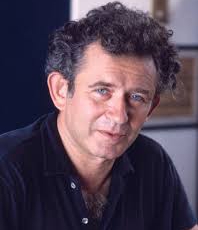
**Hark! It's an 87th Precinct Podcast.** This is a very special episode, the first of a two-parter, released to commemorate the 100th birthday of Evan Hunter. This is adapted from my ongoing…
Ruvo del Monte is a small Italian commune some 90 miles drive away from Naples, nestling high in the hills of the Basilicata region of the country.
Back in 1898, many young people from the village were leaving to make new lives for themselves in the United States of America.
One of those who departed that year was 19-year-old Giuseppe Antonio Coppola, who stepped aboard a boat in Naples on the 17th of September, ready for departure and a three-week crossing.
He arrived into New York and his new life in America at 3:00 PM on the afternoon of the 9th of October.
He was a tailor, as was the tradition in the family, and he carried this profession into his new life.
In 1905, he married Caterina Vaccaro, a New York native, and they settled in Italian Harlem.
Elsewhere in the city, Salvatore Lombino and his wife, Francesca, were already established residents.
Salvatore was a laborer originally from Bolognetta in Sicily, and had arrived in New York in 1897, with Francesca following a couple of years later.
They too had settled in Italian Harlem, and in 1901 had added another child to a growing family when Carmelo, later to go by Charles, was born.
Giuseppe Antonio, now sometimes known as Joseph, and Caterina had produced their own brood, including their first, Marie.
It was the following year, on October 15th, that their first and only child was born.
He was given the name of his paternal grandfather, Salvatore, the middle name Albert, and that was the name he would live with for the next 26 years until he legally changed it to Evan Hunter.
Baby Sal was delivered at home by his Aunt Jenny on a blanket on the kitchen table.
[upbeat music] Sal Lombino lived with his family on East 120th Street in Italian Harlem for the first few years of his life.
He and his father would walk to and from the Apollo Theater to see acts such as Ethel Walters and Bill "Bojangles" Robinson.
His father, Charles, aside from his day job as a postman, was a drummer in jazz and Dixieland bands, and his Uncle Andrew was a violinist.
As a teenager, Sal Lombino learned to play the piano, not very well by his own admission, but the idea of being in a band probably appealed to Salvatore because of the potential income rather than as a purely creative outlet.
Of all of his father's many side projects and money-making schemes, such as his lady's crochet dress beading business, the only one that ever brought in any cash was his band.
[upbeat music] In fact, Charles Lombino's time as a musician is perhaps a little more significant than the various hints about it given in interviews by Evan Hunter over the years would suggest.
His time as a drummer began around 1920 when he acquired a drum kit from an acquaintance.
He studied with instruction for six months and soon started playing live engagements.
When the jazz craze began to sweep the city in the '20s, he formed a series of bands, all of which had names riffing off more successful outfits.
There was already the original Memphis Five, but that didn't stop Charles and friends calling themselves the Original Memphis Syncopators.
They played gigs at places like the oft-raided-during-Prohibition Witch's Cat in Greenwich Village, and later, cashing in on the Dixieland craze, became Lombino's Louisiana Five.
The rest of this transcript — segmented and speaker-labeled, so you land on the exact moment something was said
Search every transcript — by keyword, by phrase, or by meaning, across every show Radar indexes
Trends — what is surging across podcasts, measured against its own baseline
Alerts — when a name you follow appears in a newly indexed episode
No account is needed to search Radar.