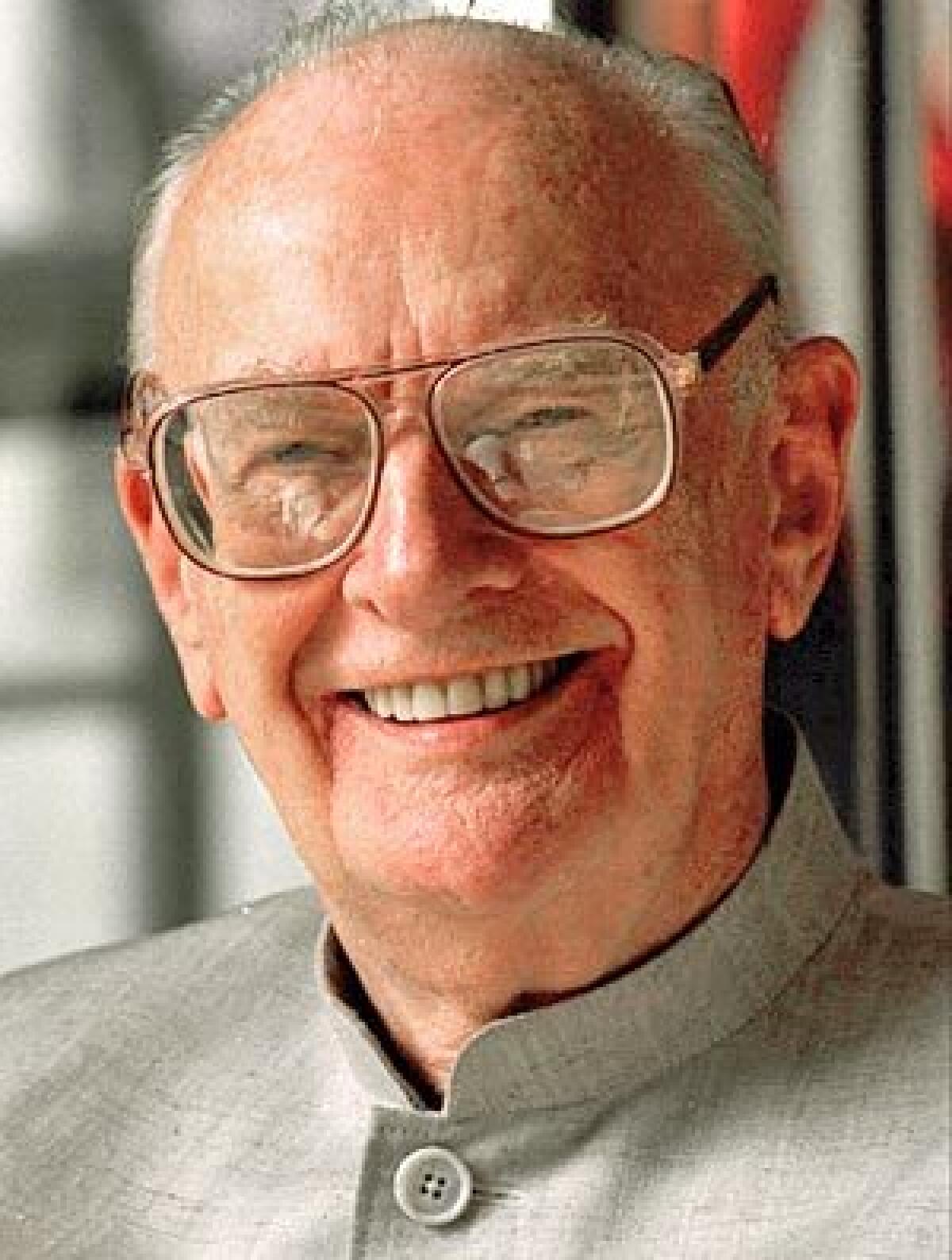
Arthur C. Clarke
Fiction writerWikipedia
321
MENTIONS
200
EPISODES
163
PODCASTS
Search complete. 321 mentions across 200 episodes found for "Arthur C. Clarke".
Oct 26, 2026

Richard MunizCORRESPONDENT
The idea behind them was one we take almost for granted today.
Richard MunizCORRESPONDENT
Now, way back in 1945, science fiction writer Arthur C. Clarke, the same guy who wrote 2001 A Space Odyssey, came up with the idea of using satellites as a means of communication.
Richard MunizCORRESPONDENT
The following year...
Richard MunizCORRESPONDENT
They tried some experiments using a more natural satellite, in this case our moon, to reflect microwaves for communications.

Genevieve BellGUEST
You know that moment of it being wonderful, right? And we spend all of our time thinking about how to design things practically, whereas designing for wonder, I actually think, and magic, hugely important.
Genevieve BellGUEST
Arthur C. Clarke, another science fiction writer, has a number of laws.
Genevieve BellGUEST
I find the first two to be self-serving.
Genevieve BellGUEST
The third one is useful.

Hans UtterGUEST
But essentially, if you look at, say, the Manichaean, this is all Manichaean cathar.
Hans UtterGUEST
This is the idea, you go back, whatever, is that basically you see this in Robert Heinlein, Stranger in a Strange Land, various other books, Childhood Ends, or Childhood's End, Arthur C. Clarke, is that...
Hans UtterGUEST
God, this creation is by its nature evil um satan is the one who's going to set you free because this creation is flawed and they have the dual god right so this isn't you know a lot of the gnostic uh stuff is this dual god you have the god that made this world who's or else you have the so this is like the kilophot progression right see the downward progression he goes down to his upward ascension is to death right he thinks he's going up he's going down but he's it's already pre-programmed it's predestined it's predetermined the fan can't get off its track it just keeps going
Sean McCannGUEST
just like the elevator you know he gets in the elevator and it's like he's it's not his will anymore it's going down it's taking him and then he's frozen like when he gets to the bottom there's no more motion

Damien WalterGUEST
I read Neuromancer...
Damien WalterGUEST
I had been reading just before a lot of Arthur C. Clarke.
Damien WalterGUEST
I'm like a third generation science fiction fan and I had finally...
Damien WalterGUEST
My mum really loved Arthur C. Clarke.
Damien WalterGUEST
My grandfather was into Jules Verne and H.G. Wells.
Damien WalterGUEST
And I picked all of the Arthur C. Clarke novels.
Damien WalterGUEST
So Clarke is...
Damien WalterGUEST
There is a little bit of interest in the transcendent in Clarke as well.

Rob PattisonGUEST
But it's funny because I think you are more of a user of it than I am.
Rob PattisonGUEST
I think this technology is a perfect example of Arthur C. Clarke's second or third law.
Rob PattisonGUEST
Sufficiently advanced technology is indistinguishable from magic.
Rob PattisonGUEST
It's incredible stuff.

James BarratGUEST
But then I started talking to other people.
James BarratGUEST
I had an interview with Arthur C. Clarke, the science fiction writer.
James BarratGUEST
And he said, well, intelligence won't necessarily be nice.
James BarratGUEST
He said, we steer the future not because we're the fastest or the strongest creature, but because we're the most intelligent.
Peter ScottHOST
And you said that you've been a filmmaker and you've made documentaries about biblical tombs.
Peter ScottHOST
You mentioned that you got fired for wanting to make one about the hoaxes of UFOs and they wanted you to make it about UFOs as though they were real.
Peter ScottHOST
And you mentioned that you talked with Arthur C. Clarke, who died sometime around 2008, I think.
Peter ScottHOST
So you go back away in this career with the ways you've expressed this interest.

Wole TalabiGUEST
There were not that many of them, I think like eight or nine, but he had the whole thing and I read through the whole thing.
Wole TalabiGUEST
You know, I read Ringworld, your classic SF, Arthur C. Clarke.
Wole TalabiGUEST
I love Rendezvous with Rama.
Wole TalabiGUEST
It actually inspired elements of the novel I will be telling you about later on.

Diana PasulkaGUEST
And basically, The Others is that book.
Diana PasulkaGUEST
It looks at what people back in the early 20th century, including science fiction authors like Arthur C. Clarke, what they've envisioned for our time period.
Diana PasulkaGUEST
And it was really, really mind-blowing to me.
Diana PasulkaGUEST
So that's the book.
50 MINS LATER
Diana PasulkaGUEST
We also have the transformation of the human being.
Diana PasulkaGUEST
All right, these three things all during our time period, every single one of those visionaries looks at that and basically projects it for our future as a reality.
Diana PasulkaGUEST
So if you look at some videos of Arthur C. Clarke, he's jubilant.
Diana PasulkaGUEST
that he seems jubilant, that we are at the end of human history, humans are gonna be gone, and a new form of life will replace us, and we shouldn't be too upset about it, he thinks.

Mark DevlinGUEST
So I wonder if that, just like the hell AI computer, was an indication of foreknowledge of what was going to come next.
Mark DevlinGUEST
in these times, you know, a few decades on and that Stanley Kubrick and Arthur C. Clarke who co-wrote that movie with him and the production designer and other key staff were privy to it because it's all about futuristic society, the way it's going to be controlled by AI where human consciousness is going to go.
Mark DevlinGUEST
And I just think it's too much of a coincidence that the dimensions of that monolith are similar to that of a mobile phone.
Mark DevlinGUEST
And also the dimensions of the simple screen itself on which the film was shown back in the day are similar to those of a smartphone as well.

Alondra NelsonGUEST
Where did things go wrong and how might they go better? For Founders Fund, this manifesto recalls something called the Ford Nucleon, which was a 1958 concept car that was meant to run on a small nuclear reactor.
Alondra NelsonGUEST
Then it recalls 10 years later, the author Arthur C. Clarke imagining in 1968 that we would soon be booking commercial flights into space.
Alondra NelsonGUEST
And all of those dreams seemed reasonable at the time, the Founders Fund insists, but that somewhere along the way we lost our nerve.
Alondra NelsonGUEST
And the reason that we don't have a car that's running on a nuclear reactor right now is that we weren't bold enough, we weren't brazen enough, we lost our way.
Alondra NelsonGUEST
And women and men then gathered at Seneca Falls to adopt a declaration of sentiments.
Alondra NelsonGUEST
It borrowed words from the Declaration of Independence and changed them to read, all men and all women are created equal.
Alondra NelsonGUEST
What that manifesto shared was that their authors had almost no formal power.
Alondra NelsonGUEST
None of the women at Seneca Falls could vote, but they decided and articulated that they had a voice.
190 more episodes mention Arthur C. Clarke.
Create an account to see the whole feed, search across every transcript, and follow the entities you care about.