Food Talk with Dani Nierenberg (by Food Tank)
Oct 22, 2026 · 48 min · 13 segments
On Food Talk with Dani Nierenberg, Dani speaks with Dr. Dariush Mozaffarian, a cardiologist and Director of the Food is Medicine Institute at Tufts University, about his new book Food Is Medicine…
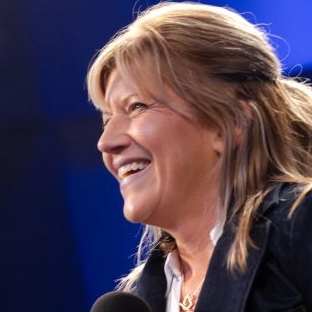
Dani NierenbergHost

Authorities say all are linked to the first patient with no evidence of wider community transmission.

They're tracing contacts and strengthening screening as neighboring Democratic Republic of Congo confronts its deadliest Ebola outbreak.

And these are moments that remind us that strong public health systems and the people behind them are really essential to security in all of its forms, whether it's national security or food security.

War-related shipping disruptions, expensive fertilizer, and extreme weather linked to El Nino could push food inflation higher into 2027.

And families with the least money have the least room to absorb another increase.

When food takes up most of your budget, higher prices mean difficult choices, less variety, smaller portions, skipping meals, not sending your children to school, not getting the health care that you need.

An analysis of 108 national biodiversity plans finds that 105 recognize agroecology.

And agroecology, as a reminder, are approaches that support healthy soils, diverse crops, and local knowledge.

That's progress, but recognition doesn't pay farmers or put seeds in the ground.

Only about half of the plans, these national plans for biodiversity, include agricultural a clear commitment, ways to measure progress, an institution responsible for the work, and funding.

The next step is really turning those promises into support farmers can actually use.

Meanwhile, a federal lawsuit in the United States is challenging what sustainable means in the seafood aisle.

The proposed class action alleges that Hannaford and its parent company, O'Hall Del Hayes USA, misled shoppers by marketing farm salmon as sustainable despite environmental harms associated with its production.


Finally, I want to end in Gela, Nigeria, where women farmers are rebuilding after years of violence from Boko Haram.

Through a cooperative, they share a solar-powered irrigation pump, exchange farming knowledge, and sell their harvest to build a shared fund that they can all take from.

They also make decisions together from scheduling work to resolving disagreements.
The rest of this transcript — segmented and speaker-labeled, so you land on the exact moment something was said
Search every transcript — by keyword, by phrase, or by meaning, across every show Radar indexes
Trends — what is surging across podcasts, measured against its own baseline
Alerts — when a name you follow appears in a newly indexed episode
No account is needed to search Radar.