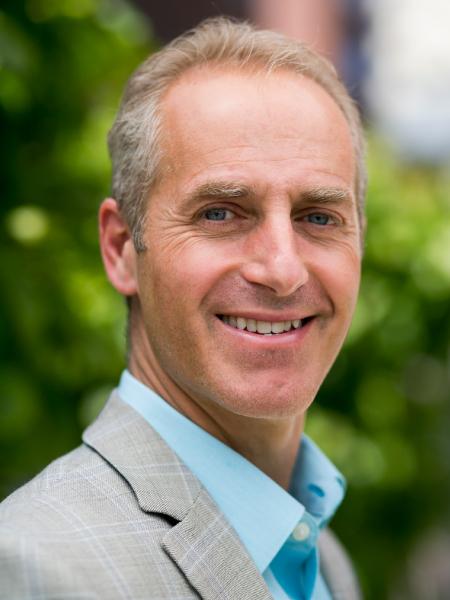
Dariush Mozaffarian
Cardiologist
17
APPEARANCES
14
PODCASTS
Oct 28, 2026


Max LugavereHOST
So what do you think it is? What are we getting? What do you think it is that we're getting wrong about obesity, overweight?

Dariush MozaffarianGUEST
Yeah, so the fascinating thing is the type of food we eat determines, first of all, who digests the calories, us or our gut microbiome, which is a really important question.
Dariush MozaffarianGUEST
So do they go to body fat or muscle or bone? And if they go to body fat, do they go to the body fat that's under the skin that's less dangerous or do they go to the visceral fat around the organs that's metabolically really diabolical? And it also actually affects the energy we burn.
Dariush MozaffarianGUEST
Our resting energy expenditure is affected by the quality of the food we eat.
Dariush MozaffarianGUEST
This is totally different than the thermic effect of protein, which has been written about for decades, that protein takes a tiny amount more of energy to digest.
37 MINS LATER
Max LugavereHOST
But their mechanism of action isn't that they're waving a magic wand to people's microbiomes or you know balancing people's hormones like they're they're getting people to eat less right

13:44

Do you think the letter will help in any way? Or is the industry opposition just so great? What do you think, Dari? I think you organized the letter, right? Or how did it come together?
Dariush MozaffarianGUEST
Well, so as I mentioned over the last few years, you know, our research has really looked at this concept of ultra processing and shown that it is indeed an independent additional factor that's related to health.
Dariush MozaffarianGUEST
Ultra processed food, the definition, the concept isn't supposed to replace everything else we know.
Dariush MozaffarianGUEST
And critics, particularly industry critics, try to say, well, there's other things that matter.
18:28
But maybe just dig into Nova first and how we've been using that one.


Mark HymanHOST
So eat less, exercise more, which is what we're all told doesn't seem to be working.
Dariush MozaffarianGUEST
And so what's kind of amazing, what's truly amazing is the science of how food affects our biology.
19 MINS LATER
Mark HymanHOST
So how do you think about ultra-processed food? How do you define them? And why are they so bad?


Dani NierenbergHOST
How did we end up with a food system and a health care system that's so disconnected from what actually keeps people healthy?
Dariush MozaffarianGUEST
Well, a lot of people start the history around 1980 with the low-fat diet recommendations, the first time low-fat was recommended, and then the rise of ultra-processed foods and the tobacco companies buying most of the food companies in the 1970s and 1980s and trying to make foods addictive and the rise of ultra-processed foods.
Dariush MozaffarianGUEST
The answer is let's let's, you know, beat these big food companies like big food is the problem is that is the sole problem.
25 MINS LATER
Dani NierenbergHOST
But what do you actually eat and what do you eat purely because you enjoy it, not because it's good for you?

Jonathan WolfHOST
And so as we've moved too far away from that, we've hit problems we just didn't even realize.
Dariush MozaffarianGUEST
And of course, at an individual level, physical activity is critical for general health, and we all should be exercising more.
Dariush MozaffarianGUEST
But you sort of implied that perhaps this rise of chronic disease has been due to a decline in physical activity in the population.
Dariush MozaffarianGUEST
And so what's really fascinating is if you look in the UK and the US or you look across other countries, the average physical activity in cultures now living very traditionally kind of hunter-gatherer lifestyles or middle-income countries or high-income countries, the average physical activity is actually the same across all of those populations.
Dariush MozaffarianGUEST
And the physical activity over time in Europe and the United States has actually gone up since I was in medical school and training.
12 MINS LATER
Jonathan WolfHOST
But if everything is very refined, actually my body is sort of stripped out all of this stuff and nothing's making it through to my gut, my microbiome, except whatever little bits of fiber I would eat.


Dariush MozaffarianGUEST
so coming out of World War II with that 20, 30 million people dead from starvation in front of everybody's eyes and vision, demographers noticed the world population was starting to boom.
Dariush MozaffarianGUEST
And so more people were born in the 20th century than in all of prior human history combined.
Dariush MozaffarianGUEST
More humans were born in 100 years than in all of the prior human history combined.
7 MINS LATER

Dariush MozaffarianGUEST
You're 100% correct, and another reason I wrote this book is there's so many solutions that seem to make sense, but when they've actually been studied, they don't work.
Dariush MozaffarianGUEST
We wrote a paper, a research paper in 2012 exactly talking about this issue, that there's actually very little evidence that food deserts, the concept of food deserts, is real.
Dariush MozaffarianGUEST
It could just be the other way around, that people in, in those neighborhoods for cultural reasons, time, other things, just, uh, can't buy healthy food and cook it and all the things, and just creating grocery stores probably won't make a difference.
Dariush MozaffarianGUEST
And then the Obama administration and others actually invested money in some interventions that were carefully evaluated to build grocery stores in, in these food deserts with really no effect on healthful eating.
Dariush MozaffarianGUEST
And so just like there's science to nutrition and science to what we should eat, which I talk about in the book, the, the new exciting science of, of what really healthy food is, there's also science to policy change.
Dariush MozaffarianGUEST
And a lot of the stuff we focused on, nutrition facts panels, dietary guidelines, you know, nutrition education in, in, in, in schools, food deserts, they're gonna have s- actually pretty small effects, pretty small effects on, on people's behavior.
Monica ReinagelHOST
We were, as a generation Totally propagandized, right? Should the Food Is Medicine movement being, doing more in that same way with that early education piece, like getting in there and working with these young kids, building different kinds of preferences and awareness and knowledge and skills in those younger kids while we work on some of this other societal rebuilding?
Dariush MozaffarianGUEST
Well, this is, again, the most critical thing we can do, and people right now are focused on nutrients and looking at the back of the package and trying to get their protein or vitamins or other things, and we really have to be thinking about food quality and embracing the good.
Dariush MozaffarianGUEST
And so one of the core messages of the book and of Food Is Medicine is more disease is caused by what we're not eating, the, the good food.
Dariush MozaffarianGUEST
And so fruits and vegetables, nuts and seeds, yogurt, fish, whole grains, beans, plant oils, we need to be embracing those foods.
Dariush MozaffarianGUEST
And so thinking about embracing the good deliciousness rather than thinking about deprivation or cutting out, uh, unhealthy foods.

Norah O'DonnellHOST
One of the things I really like about what you do is you say, "Don't think so much about calories, but think about cardioprotective foods." Give some examples of what are things that can, uh, protect our heart.
Dariush MozaffarianGUEST
Well, what's really nice about the nutrition science that we've generated is that n- for most diseases, it's the same set of foods.

Dariush MozaffarianGUEST
I mean, most of the reasons we're here is very purposeful actions by government and business leaders and scientists, uh, who had actually the best interests of humanity at heart and, and fixed problems that were the problems of the day.
Dariush MozaffarianGUEST
You know, the three big trends of the 20th century were vitamins, the discovery of vitamins, a quadrupling of the world population in 100 years that led to great, great fears of, of, uh, food shortages and famine, and finally the, the rise of kind of industrial processing.
Dariush MozaffarianGUEST
And so those three things, uh, thinking about vitamins, uh, thinking about calories, uh, and then thinking about how to process foods for stability and shelf life and price and all those things, basically led to the modern food system.
27 MINS LATER
Gabrielle LyonHOST
One of the things as we talk about and think about carbohydrates, you s- you state in the book, "Saturated fat is far less concerning than fast carbs." I would love to talk about fast carbs because you also write that ice cream is healthier than bread.

Dariush MozaffarianGUEST
I think, you know, one of the take-home messages that I go through in my book is to really understand where we need to go.
Dariush MozaffarianGUEST
And a lot of the story about nutrition science and our food system kind of starts in the 80s and the 90s with the rise of ultra-processed foods, which we should definitely talk about the low-fat diet, you know, low cholesterol, low saturated fat.
Dariush MozaffarianGUEST
But to really understand where we are, we have to go back just a few decades earlier.
43 MINS LATER


Joel BervellHOST
When you look at what's actually standing in the way of more widespread adoption of this idea of Food is Medicine, what's the biggest disconnect? Is it a mindset problem? Is it the way our healthcare system is structured and financed, or are there other barriers that we're overlooking?
Dariush MozaffarianGUEST
You know, this is something that I thought about a lot in my career and I al-also lay out in the book, is how, how we got here explains where we are today.
Dariush MozaffarianGUEST
And the reasons for this lack of attention are actually pretty straightforward if you just kinda look back about a hundred years.
Dariush MozaffarianGUEST
And it has to do with how we started approaching modern nutrition science.
Dariush MozaffarianGUEST
As, as you mentioned, healers have known for millennia that certain foods are important for certain conditions.
Dariush MozaffarianGUEST
But it wasn't based on what we would consider modern science, understanding, you know, the molecules involved or the pathways involved.
Dariush MozaffarianGUEST
And so really, modern nutrition science started around nineteen thirty with the discovery of vitamins.
14 MINS LATER
Joel BervellHOST
Um, and do you see a world where the financial incentives, the health incentives actually align where Food Is Medicine scales because there's a return on investment, um, and that patients are genuinely getting healthier?


Ethan SupleeHOST
So there is also a genetic component where your liver is just going to produce this LDL
Dariush MozaffarianGUEST
And there's also HDL cholesterol and triglycerides and lipoprotein little a and blood pressure and endothelial function and inflammation and glucose.
Dariush MozaffarianGUEST
So focusing on any one of those, even in addition to the genetic causes, is not the whole story.
Dariush MozaffarianGUEST
And so now I worry we've shifted from you know, cholesterol being the, you know, pinnacle of our focus to weight being the pinnacle of our focus.
Dariush MozaffarianGUEST
And so when I talk to patients, when I talk to, you know, the members of the public, I say, look, it's really about having a healthy diet and being healthy.
Dariush MozaffarianGUEST
And generally speaking, that will be associated with better, less body fat and better body weight.
13 MINS LATER
Ethan SupleeHOST
But the the mania about seed oils to me is like you're walking past the forest and concentrating on like the bark of this one tree and it drives me a little crazy.
Dariush MozaffarianGUEST
when there were very real concerns about national security, fitness for milit- the military duty, real food shortages.
Dariush MozaffarianGUEST
And as just one example, you know, President Franklin Delano Roosevelt convened a conference in 1941 before Pearl Harbor saying, "We're going to war.
Dariush MozaffarianGUEST
What do we need to do to address, you know, these new vitamins and these new deficiencies?" And the scientific panel of, you know, blue ribbon scientists looked at all the science and they said, "Well, you know, we're getting these diseases because we've stripped away food through processing.
Dariush MozaffarianGUEST
We've stripped away the vitamins." And so, for example, they said grains, we stripped away, you know, with refined grains and, and, and r- wheat flour and rice, w- white rice and all that, we, we've stripped away all these nutrients.
57 MINS LATER
Mark HymanHOST
You know, Darry, I went back and saw a slideshow I did in 2000 and it said 1.6. [laughs]

17:39

I mentioned that tuna fish is processed foods, canned vegetables are considered processed foods, but you define
Dariush MozaffarianGUEST
ultra-processed foods as what? So, you know, we've always processed foods throughout human history, and processing is okay, but in the last, you know, 20 or 30 years, we've made foods unrecognizable.
Dariush MozaffarianGUEST
And so ultra processed foods are basically made with processes or additives that you wouldn't find in a home kitchen.
Dariush MozaffarianGUEST
They're molecularly disassembled often with the actual molecules of food put back together, which loses all the natural food structure.
Dariush MozaffarianGUEST
They're often very, very high in additives and preservatives and other negative compounds.

Gayle KingHOST
Isn't part of the problem too, though, it's less expensive and that's why people gravitate to it.
Dariush MozaffarianGUEST
This is, you know, one of the great internet myths that's out there that seed oils are, are harmful, and canola oil has been studied in well over 100 randomized controlled trials, andoverwhelmingly been shown to improve every risk factor that has been looked at and never been shown to be pro-inflammatory, which is kind of the theory.
Dariush MozaffarianGUEST
This is one of the most well-established areas of science there is, is the health effects of plant oils.


Cynthia GraberHOST
And this whole science of getting at what was in our food, the parts and chemicals that seemed to make food healthy for us, this totally transformed our understanding of and relationship to food.
Dariush MozaffarianGUEST
From what it had always been before was, you know, we need to have some food, we need to enjoy it, we need it to taste good.
Dariush MozaffarianGUEST
Yeah, there might be some things in there that you need to have to be healthy, but nobody really knew what they were.
Dariush MozaffarianGUEST
Changed it to this new science of if we have the right vitamins and we have enough calories, we can technologically manufacture the right healthy food.
Dariush MozaffarianGUEST
And so the scientific community, the governmentThe food industry said, well, what's the next battle? And the next battle was, was chronic disease, and heart disease was the first target.
12 MINS LATER
Cynthia GraberHOST
But Dariush says that we pay a lot closer attention to these changes when it comes to the science of what we eat, which makes them seem a lot more shocking.
Dariush MozaffarianGUEST
I'm a cardiologist, and in my career-We've had dramatic changes in the understanding of heart attacks and the treatments for heart attacks, from the kinds of blood thinners we use to the kinds of cholesterol-lowering medicines we use to the kinds of procedures we use to open the heart arteries to how we do surgery.

Dariush MozaffarianGUEST
And just what's really interesting, and again, sort of wonderful from a point of view of wanting to study this, is that just like there's no single magic bullet to eating, And nutrition science shows us that you can't just pick one piece of the diet and fix it and everything's fine.