Sep 17, 2026 · 42 min · 17 segments
Medical Donations can be made here: https://buymeacoffee.com/jfkbook Follow me on X: https://x.com/BloodyHistory63 Check Out my…
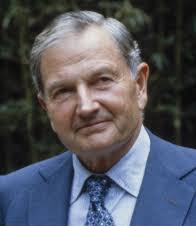
The twisting, turning career that Joseph Hirshhorn found to be the shortest distance between poverty and fortune zigzagged to a climax in 1955 at Joe's Suite in Toronto's Bank of Nova Scotia building.
For the occasion, there perched on Joe's desk was a cake whose pink-and-green frosting proclaimed, Towering at Joe's five-foot-four-inch side stood the natty British figure of Roy William Wright, boss of the Rio Tinto Mining Company of Canada, a new offspring of Great Britain's venerable Rio Tinto Company Limited, in which the Rothschilds have large interests.
He had just traded Rio Tinto Limited, his equity in a vast sweep of Canadian mining properties, uranium, gold, iron, copper, acquired over a period of two decades at a cost of some $4.8 million for about $31 million in Canadio Rio Tinto stocks and debentures and the chairmanship of the Canadian company's board.
That's on page 57 from The Very, Very Rich and How They Got That Way by Max Gunther, 1972, Playboy Press, Chicago.
It was in the late 40s that Joe first acquired his interest in uranium, which was to prove more fascinating than anything he had touched in his life.
Joe's geologist and partner, Frank Jubin, J-O-U-B-I-N, began reading about the leaching of uranium-bearing land where sulfur is present and gave him an idea about deeply bedded deposits.
The men formed a Hirshhorn company, Peach Uranium, and sent trained men to stake the northern area, known as Blind River.
And on July 11, 1952, in mining recorders' offices all over Ontario, lawyers and engineers raced in to enter a total of 1,400 claims covering 56,000 acres.
Joe and his friends had secretly staked out one of the most fabulous claims in Canadian history.
As is his custom, Joe sought out some expert help in New York, attorney Sam Harris, who became his most intimate counselor.
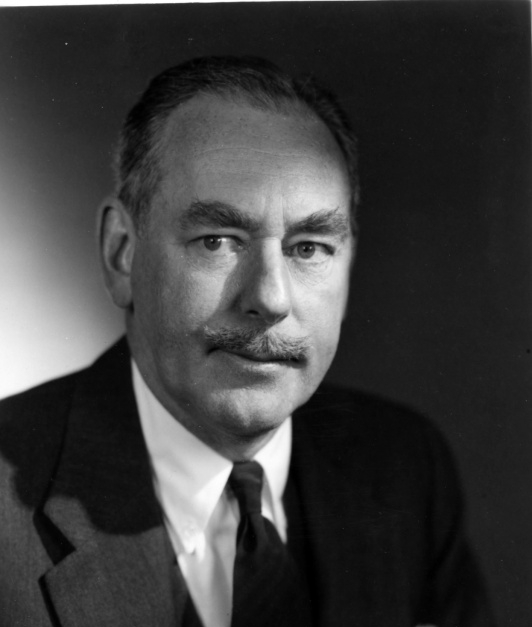
And in Washington, D.C., the dignified former Secretary of State Dean Acheson, A-C-H-E-S-O-N, by November 54, a deal came to Joe in the shape of Rio Tinto Company Limited of London.
The negotiations were complicated and delayed by Joe's need to get a favorable tax ruling from the US Treasury governing the transfer of his assets to a foreign concern.
Into this elegant new receptacle, Joe dropped all of his holdings in 46 different Canadian mining companies, one of which was itself a package of 17 earlier companies.
Although Joe did not get voting control, he owned the biggest single slice of equity, 55%.
Hirshhorn describes his incentives and passion for discovery to Fortune magazine.
The rest of this transcript — segmented and speaker-labeled, so you land on the exact moment something was said
Search every transcript — by keyword, by phrase, or by meaning, across every show Radar indexes
Trends — what is surging across podcasts, measured against its own baseline
Alerts — when a name you follow appears in a newly indexed episode
No account is needed to search Radar.