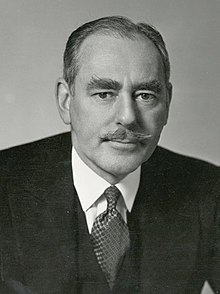
Dean Gooderham Acheson
Lawyer and former United States Secretary of StateWikipedia
44
MENTIONS
27
EPISODES
25
PODCASTS
Search complete. 44 mentions across 27 episodes found for "Dean Gooderham Acheson".
Nov 21, 2026

Joseph McBrideGUEST
that that would be a disastrous idea because people would smell a rat if Texas investigated the case.
Joseph McBrideGUEST
So he said, let's get this group of august citizens and Dean Acheson and William Bundy and other people were involved in coming up with this idea for a commission.
Joseph McBrideGUEST
So the whole apparatus of the establishment got involved.
Joseph McBrideGUEST
And so I was kind of agnostic on some of these issues until people proved to me that, yes, the body was altered, the film was altered.

Peter RobbinsGUEST
but follow this basic line.
Peter RobbinsGUEST
Early on the morning of Sunday, May 22nd, staff psychiatrist Commander R.R. Dean is asleep in the room next to Forrestal's.
Peter RobbinsGUEST
The secretary's regular attendant, for some reason, has not shown up for his shift, and hospital apprentice R.W. Harrison has been assigned to look in on Forrestal.
Peter RobbinsGUEST
I should also say that that particular Marine guard had developed not just a cordial relationship with the man on the 16th floor, One reads the accounts, and you get the sense that it was almost a father-son relationship.
Peter RobbinsGUEST
It just wouldn't happen.
Peter RobbinsGUEST
Harrison asks the secretary if he would like a sleeping pill, but it is declined.
Peter RobbinsGUEST
Now, allegedly at this point, Harrison forgets to lock the door of the secretary's room and goes to report on his condition to Dean, or by another account, to a hospital security station on another floor, but it's really immaterial.
Peter RobbinsGUEST
He updates the officer in any case.

Andrew KeenHOST
What about on Korea? Was he a supporter of the Korean War?
David M. SacksGUEST
He did not write as much about the Korean War, but he did endorse later Dean Acheson's defensive perimeter, which did not include Korea.
Andrew KeenHOST
How could he not write much about it? I mean, he was at his pump in the 1950s.
Andrew KeenHOST
This was a war that cost America hundreds of thousands of lives.

Todd M. SchoenbergerHOST
Well, first of all, why did you want to write this book? And more importantly, do you think that what is happening this week is starting to be the baseline of what you wrote in your book?
James CrabtreeGUEST
Well, so the book's called The Perimeter because in 1950, Dean Acheson, when he was Secretary of State, gave a famous speech called The Perimeter.
James CrabtreeGUEST
And it was about a thing called the first island chain, which is a chain of islands which goes down the Chinese coastline.
James CrabtreeGUEST
It includes Japan and Taiwan and the northern Philippines.

Daniel SargentGUEST
Unfortunately, The legendary narrative of the liberal world order leads to the practical implication, the operational conclusion, that American foreign policy to seek renewal should strive to replicate in the 2020s choices that were made in the late 1940s.
Daniel SargentGUEST
The argument that I arrive at in the paper is that Dean Acheson's foreign policy may have been a foreign policy well calibrated to the challenges of its own times, but it is not an appropriate template for American foreign policy in our times.
Daniel SargentGUEST
To construct a foreign policy for our circumstance, we need first, I conclude in the paper, to take stock of where we find ourselves today, to identify the challenges that are most urgent to confront, and importantly, the values that are most important to affirm and to promote in the world.
Daniel SargentGUEST
My axiomatic mode of reasoning, the Jeffersonian mode of reasoning that I identify in the first part of the paper, remains deeply relevant, I argue, to the definition and execution of American foreign policy.

Todd M. SchoenbergerHOST
Well, first of all, why did you want to write this book? And more importantly, do you think that what is happening this week is starting to be the baseline of what you wrote in your book?
James CrabtreeGUEST
Well, so the book's called The Perimeter because in 1950, Dean Acheson, when he was Secretary of State, gave a famous speech called The Perimeter.
James CrabtreeGUEST
And it was about a thing called the first island chain, which is a chain of islands which goes down the Chinese coastline.
James CrabtreeGUEST
It includes Japan and Taiwan and the northern Philippines.

Barbara J. KeysGUEST
And In a way, that's what interests me, is why do we attribute so much significance to Henry Kissinger? It's not that his policies were necessarily so much more remarkable than those of other secretaries of state.
Barbara J. KeysGUEST
If we compare what Nixon and Kissinger achieved to, you know, compare Kissinger to Dean Acheson or George Shultz or James Baker.
Barbara J. KeysGUEST
Acheson at the beginning of the Cold War, Shultz at the end of the Cold War, Baker ushering in the new Cold War order.
Barbara J. KeysGUEST
These are secretaries of state that also presided over moments of dramatic international change in ways that stabilized the international system and benefited American power.

Eric EdelmanHOST
And it... from all appearances, was incredibly successful, notwithstanding the opposition of key elements of the bureaucracy and ultimately the Secretary of State National Security Advisor.
Eric EdelmanHOST
And I don't think it's, as I might have said in an earlier phase of my career, I don't think it's an accident, comrade, that, you know, this is all leaked into the press and that Marco has appeared as the sort of, you know, The hero of the story, you know, as Dean Acheson said, no one ever came out second best in their own memorandum of conversation or in their own account to a journalist of how this all happened.
Eliot CohenHOST
Well, you have such a suspicious mind, Eric.
Eliot CohenHOST
Of course, you have.

Barbara J. KeysGUEST
And In a way, that's what interests me is why do we attribute so much significance to Henry Kissinger? It's not that his policies were necessarily so much more remarkable than those of other secretaries of state.
Barbara J. KeysGUEST
if we compare what Nixon and Kissinger achieved to, you know, compare Kissinger to Dean Acheson or George Shultz or James Baker.
Barbara J. KeysGUEST
Acheson at the beginning of the Cold War, Shultz at the end of the Cold War, Baker ushering in the new Cold War order.
Barbara J. KeysGUEST
These are secretaries of state that also presided over moments of dramatic international change in ways that stabilized the international system and benefited American power.

Scott AndersonGUEST
And the third bar, and this is what really comes in most importantly here, although it's kind of implied in that Libby opinion because it wasn't an issue there, but I think it's there and you can see it in other Office of Legal Counsel acknowledgments, that Congress can probably set some statutory limits on the president's authority.
Scott AndersonGUEST
There's a period for a while where Dean Acheson in the 1950 memo arguing that the Korean intervention, which was based purely on President Truman's authority, was lawful.
Scott AndersonGUEST
going all the way to the kind of the John Yoo memos that were released around the response to 9-11, which allowed, where he said, broad military action can be taken even without Congress's authorization.
Scott AndersonGUEST
There's an argument for a while that people said, oh, Congress can't really restrain presidential authority.
17 more episodes mention Dean Gooderham Acheson.
Create an account to see the whole feed, search across every transcript, and follow the entities you care about.