Aug 5, 2026 · 47 min · 10 segments
Abdulrahman Mohamed El-Sayed gains ground for the Democratic nomination for Senate in Michigan, and a migrant crisis breaks out in… Africa. Ashley Frawley and Geoff Shullenberger join Matthew Schmitz…
Geoff ShullenbergerPanelist
Ashley FrawleyPanelist
Matthew SchmitzHost
Two races of note in the Great Lakes region, Abdul El-Sayed is running in Michigan and in Wisconsin, there's Francesca Hong, both DSA aligned candidates, both controversial.

So my impression is that the Michigan primary has become largely about, at least in the national attention it's receiving, it's become largely about Israel-Palestine.

Arab-American candidate with a recognizably Arab name is going to bring that front and center.

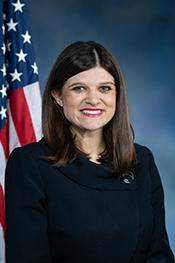
His opponent, Haley Stevens, is a more mainstream Democrat and also one who seems to have more standard views on traditionally standard sort of centrist Democrat views on continuing to support Israel.

And so that's sort of been the way that the debate has been framed nationally.

I'm curious, you know, not being in Michigan, to what extent that is the case locally.

In other words, that may be the sort of national news narrative, but within the state of Michigan, there may be different ways that it's being framed.

Overall, it seems to me Al-Sayed is... you know, a reasonably impressive candidate.

He seems he's, you know, well-spoken and I think has been able to allay some of the concerns about his supposed sort of extremism and, and, and things like that.

But and, and meanwhile, Stevens has sort of an odd affect, which I've seen a lot of attention to just like her voice and, and so on.

I don't have a hugely unique read on this except to say that I'm curious to what extent the way this is being framed in the national narrative in terms of a sort of Israel-Palestine conflict is really the thing at the front of voters' minds.

My guess is that it is not for many of them, but the caveat here would be that Michigan is a state with a very large Arab-American population.

This came up, interestingly, in the 2024 election when Trump, in perhaps some of the more cynical campaigning associated with his candidacy in 2024, he tried to sell himself as the peace candidate who would bring a solution to the Gaza war.

But he also, or at least some affiliated super PACs, really kind of pandered to, I'd say, quite hardline anti-Israel stances among Arab voters in Michigan, while at the same time you could find similar kind of pandering to hardline Israel-supporting voters happening at the same time.

So the way that he attempted to play both sides was kind of fascinating and was specifically heavily covered in relation to Michigan because it's a state that has this interesting characteristic of having a large Arab American population.

Famously, a number of imams of mosques in the Dearborn, I believe, is the main sort of one of the main hubs of the Arab American population.


So you see a little bit of that coming back in this primary because you have an Arab-American candidate.

And the other thing that's kind of interesting about Michigan is that it's a state that went for Trump twice after having been relatively solidly blue for a number of decades.

you know, robust labor union presence and activism while also being a sort of hub of, of the de-industrialized Rust Belt.

And so to that extent, it's, it's a state that, and, and this is true of Wisconsin as well, I think, um, manifest these kind of conflicting populist impulses of both right and left that Trump was able to capitalize on, but many people don't remember, that it was a very significant point in the 2016 Democratic primary that Bernie Sanders won Michigan.
The rest of this transcript — segmented and speaker-labeled, so you land on the exact moment something was said
Search every transcript — by keyword, by phrase, or by meaning, across every show Radar indexes
Trends — what is surging across podcasts, measured against its own baseline
Alerts — when a name you follow appears in a newly indexed episode
No account is needed to search Radar.