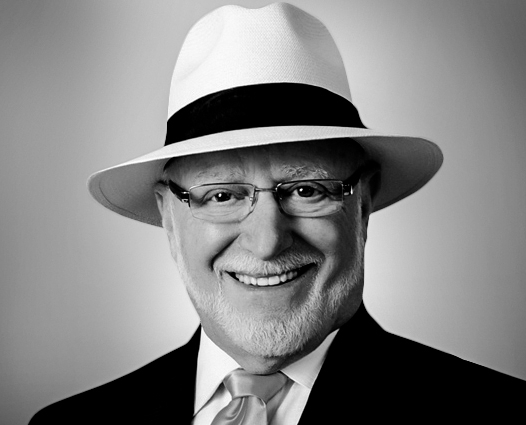
BCS 366 - Rethinking Business Growth: Lessons from Jobs, Musk, and Unusual Coaching Rules
Oct 2, 2026 · 49 min · 13 segments
**Episode Summary** In this episode of Business Coaching Secrets, Karl Bryan and co-host Road Dog deliver an energetic, honest deep-dive into core principles for coaching business success—from the…
**Episode Summary** In this episode of Business Coaching Secrets, Karl Bryan and co-host Road Dog deliver an energetic, honest deep-dive into core principles for coaching business success—from the real meaning of the 80/20 rule, the power (and pitfalls) of focus, and the truth about scaling and client retention, to addressing anxiety as the price of ambition. With playful banter and actionable wisdom, Karl busts common myths, unpacks the signal-to-noise concept with lessons from Steve Jobs and Elon Musk, and shares unique rules for coaches to build stronger, longer client relationships and higher-performing businesses. * * * ## **Key Topics Covered** **The Real 80/20 Principle in Business** - Karl Bryan explores how Steve Jobs' return to Apple and Nike's turnaround show 80/20 thinking in action—cutting unproductive offerings to amplify the best. - Examples span from Google, McDonald's, and clothing companies to coaching: focus on the assets and relationships that drive the bulk of your results (03:14–08:00). **Contrarian Takes on Coaching Advice** - Why "do what you love and money will follow" is overrated—do what you're good at, fall in love with sales, marketing, and solving problems (09:03). - Challenging the E-Myth idea of leaving a business for six months: rare in reality, context matters. - The myth of "multiple streams of income": not wise until your primary business is reliably selling at high volume for an extended period (13:09). **Signal vs. Noise: Working Smarter, Not Harder** - Inspired by Steve Jobs and Elon Musk, Karl Bryan discusses eliminating "busywork" and prioritizing the vital few actions that make the boat go faster (19:31). - How to apply signal-to-noise thinking in project planning, debates, and even national economic policy. **Unique, Underdiscussed Coaching Rules** - Nothing in life (or business) is a straight line—it's all about adapting to unpredictable curves. - The formula for failure: too much time and too many distractions. The formula for success: tight deadlines and single focus. - Networking and environment: strategically positioning yourself in high-value places accelerates opportunities (29:53). **Client Retention, Relationship Building, and Mindset** - Clients stay because they like you—make business relationships more personal and long-term. - Life needs to break you to wake you—how overcoming adversity can be a launching pad for bigger breakthroughs. - Addressing anxiety: the hidden currency of ambition, and why planning and taking action melts anxiety (41:14). * * * ## **Notable Quotes** > "Starve the trivial many so the vital few can do their magic and compound." > "Do what you're good at—that's how you make lots of money. Fall in love with selling, marketing, content creation, problem-solving… that's how you crush it." > "Put all your eggs in one basket, and watch that basket really, really, really carefully." > "Motion is noise; signal is the results. The ultimate measure of working smarter is a low signal-to-noise ratio." > "Your greatest successes will come through other people." > "Anxiety is the price of ambition… Successful people are worrying, anxious addicts." > "Remember: progress equals happiness." * * * ## **Actionable Takeaways** **1. Ruthlessly Identify & Double Down on Your 80/20** - Map out what drives the majority of your revenues, client results, and business growth. Focus there; cut or minimize the distracting rest. **2. Stop Chasing Every Trend—Master Your One Main Thing** - Until you have a $5M+ business (or stable, strong revenue), don't split your focus into multiple streams. Place all eggs in one basket, watch it obsessively. **3. Build Relationships for the Long Term** - Move beyond transactional coaching—clients stay (and refer) when they genuinely like you. Invest in those relationships (even outside the boardroom). **4. Remove "Busywork"—Prioritize Like Jobs/Musk** - Before acting, ask: will this move me measurably closer to my goal? If not, drop it. Efficient action beats constant activity. **5. Create Momentum by Changing Your Environment** - Network in higher-end venues, luxury lobbies, or wherever your ideal clients are. Uplevel conversations and connections. **6. Face Anxiety by Doing the Planning and the Work** - Document best/worst/probable scenarios. The act of planning, not the plan itself, reduces anxiety and increases confidence. **7. Serve and Connect—Fight the Epidemic of Loneliness** - Facilitate connection and belonging (like Swifties and Taylor Swift); people stay for how you make them feel. * * * ## **Resources Mentioned** **- Profit Acceleration Software™**: Developed by Karl Bryan, a tool for demonstrating and delivering breakthrough client value. **- Focused.com**: Daily coaching strategies and insights, plus Profit Acceleration Software™ demos. **- Networking and Environments**: Visit high-end hotel lobbies, luxury car dealerships—be where your ideal clients are found. **- Tony Robbins' Planning Frameworks**: Step-by-step, action-driven problem-solving (Dickens Process, business planning). **- Cody Sanchez's content on buying boring businesses**: (Referenced as a case-in-point for scrutinizing "guru" numbers and context.) **- Daily email subscription**: Get tactical coaching insights at Focused.com. * * * **Like this episode? Please subscribe and share with another coach. Leave a review to help us impact more business coaches worldwide.** For more resources on attracting small business owners and closing more high-end clients, visit Focused.com and get your demo of the Profit Acceleration Software™. 👇 **Get The Six-Figure Coach Magazine, free:** https://thesixfigurecoach.com/get-it 🔥 **Subscribe, rate, and share the show:** Apple Podcasts 🚀 **Karl Bryan helps business coaches get clients. Period.** Join the movement of growth-minded coaches making a bigger impact! * * * Ready to accelerate your success? Start implementing these insights today, and see you next week on Business Coaching Secrets with Karl Bryan and Road Dog!
**Episode Summary** In this episode of Business Coaching Secrets, Karl Bryan and co-host Road Dog deliver an energetic, honest deep-dive into core principles for coaching business success—from the…