Pareto principle
294
MENTIONS
181
EPISODES
160
PODCASTS
Search complete. 294 mentions across 181 episodes found for "Pareto principle".
Oct 27, 2026

Julie ConwayHOST
Yeah.
Zaid DahhajGUEST
So the 80-20 course is basically based off of the Pareto principle, which is the idea that if you look at certain things like the production of fruits from certain plants or how productivity works, most of the results come from only a handful of inputs.
Zaid DahhajGUEST
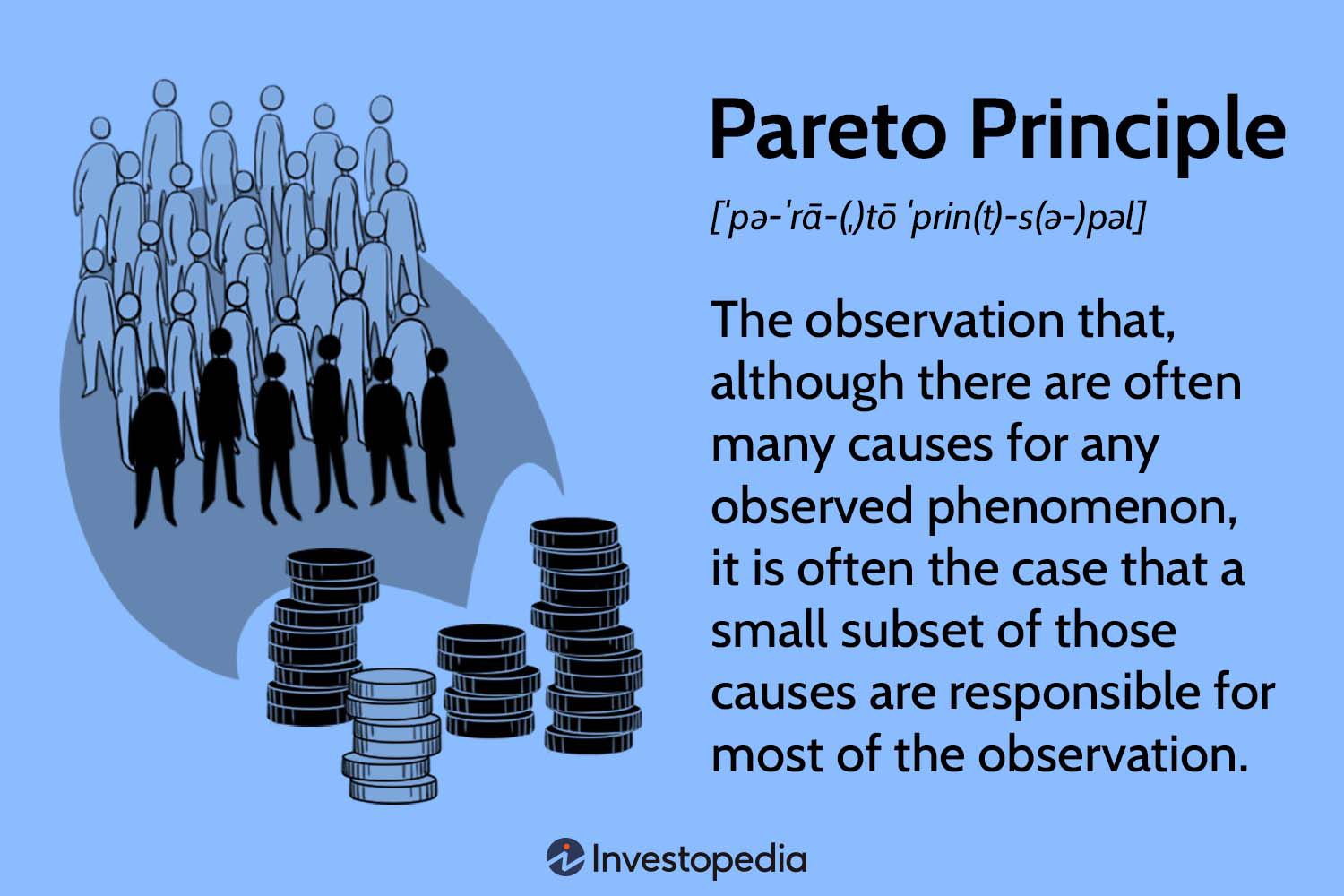
And so what they say commonly is that 80% of the results come from 20% of the effort.
Zaid DahhajGUEST
And so I'm basically applying that lens to the circadian perspective.

Ivor CumminsGUEST
So I'm going to wrap up now with striking at the root.
Ivor CumminsGUEST
I believe in the Pareto principle, that you focus on the 20% of the things that will give you 80% of the benefit.
Ivor CumminsGUEST
So what would I personally prioritize? Well, I drew this little tree.
Ivor CumminsGUEST
I'm not very artistic.

Courtney CecilHOST
And if this sounds familiar or you can tell where this is going, I won't be surprised.
Courtney CecilHOST
Like this is Pareto's principle perfectly in place.
Courtney CecilHOST
So Pareto's principle essentially suggests that 20% of what we do drives 80% of our results.
Courtney CecilHOST
Or said another way, like what small slice of what it is that you're doing is carrying the heaviest load relative to ROI and the things you need to get done.
Courtney CecilHOST
Then which big chunk is barely moving the needle for you? Like that's probably got to go.

Stephanie WestGUEST
maybe you can find out what do I need to do? What are the two or three things that we do need to do today and and move things forward? We make the most difference.
Anthony ChadwickHOST
And that's very much also a principle that I've always kind of followed, the Pareto principle, 80% of your revenue comes from 20% of your clients, 80% of your trouble comes from 20% of your clients, and all sorts of finance numbers that you could put around that as well.
Anthony ChadwickHOST
So it is about prioritising and saying, well, what will move the needle the most? Here we have five of our clients giving us most of our revenue.
Anthony ChadwickHOST
Let's make sure that we really stick close to them and look after them.
Anthony ChadwickHOST
Let's make sure that the people in the practice or the people in the business know what their names are, have developed a rapport with them.
Anthony ChadwickHOST
You know, beyond that person who might come in every three years for a vaccine or whatever.
Stephanie WestGUEST
That's funny that you would say that because I did mention the Pareto principle and one of the first places that I used that was in the feline practice for exactly what you said.
Stephanie WestGUEST
I was taking over the satellite clinic that was failing.

Michael RussinHOST
They show up and they do what they're supposed to do, when they're supposed to do it, how they're supposed to do it, regardless of how they feel, right? It's really that simple.
Michael RussinHOST
And what'll happen is, and this is what happens is, as a leader, it's called the Pareto principle.
Michael RussinHOST
20% of my organization is going to deliver 80% of the results, right? 20%, so if I have, let's just say 10 reps, Two of those reps, maybe three, but typically around two of those reps are going to deliver 80% of my results every week.
Michael RussinHOST
If I have 20 reps, four of them are going to deliver 80% of my results every single week.

BrianHOST
But there are shortcuts to figuring this out.
BrianHOST
And I always like to think of the 80-20 rule.
BrianHOST
And there was a famous Italian economist, Wilfred Prado.
BrianHOST
And back in 1896, he roughly figured out that about 80% of Italy's land was owned by about 20% of people.

Bret GregoryHOST
I love that.
Bret GregoryHOST
I mean, as you were talking, that made me think of the Pareto principle, the 80-20 rule, where 20% of what you do achieves 80% of the results.
Bret GregoryHOST
But if you actually keep going a little deeper, so you do 80-20 and then go down to 20% of the 20%.
Bret GregoryHOST
and then you do that one more time, what you find is there's 1% of what you do that achieves 50% of the results.

Paul WaddyHOST
And Shopify has a report for it.
Paul WaddyHOST
And it's based on the Pareto principle, which is that 80% of the outcome is by 20% of the effort.
Paul WaddyHOST
And it's remarkable how often it comes true.
Paul WaddyHOST
You can go into your Shopify, go into reports and look at your ABC analysis.

Stefan MolyneuxHOST
And of course, she would appeal to some of the boomer investors because boomers were kind of one-shotted with the Star Trek, everyone's the same kind of mentality.
Stefan MolyneuxHOST
ideology, and so they don't understand that the odds of there being a female on the Pareto principle right-hand of the bell curve are virtually zero, and they were really investing in their propaganda about men and women are the same and everyone is equal and so on.
Stefan MolyneuxHOST
So that's just a tax on...
Stefan MolyneuxHOST
At that point, certainly after the bell curve and things like that, the book by Charles Murray After that, I mean, it was really wild ignorance that kind of cast them.

Charlie ZlatkosGUEST
There's a principle that people maybe should study.
Charlie ZlatkosGUEST
It's called the Pareto principle.
Charlie ZlatkosGUEST
And it's the 80-20 rule or 20-80 rule.
Charlie ZlatkosGUEST
So you have to decide what you're good at and what you like to do and stick with that and then allow other people to do the rest 80%.
171 more episodes mention Pareto principle.
Create an account to see the whole feed, search across every transcript, and follow the entities you care about.