American Revolution | Part 6 | Mercy Otis Warren and the female politicians (with Rosemarie Zagarri)
Aug 8, 2026 · 50 min · 10 segments
Mercy Otis Warren was what the Revolution called a "female politician" – a woman who cared about and discussed politics, a wholly new archetype for American society then. Her poems, plays and…
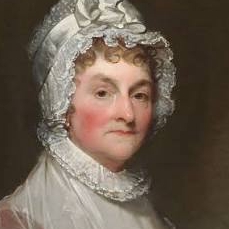
Mercy Otis Warren was what the Revolution called a "female politician" – a woman who cared about and discussed politics, a wholly new archetype for American society then. Her poems, plays and pamphlets – and ultimately her 3-volume history of the revolution – established her as a key political thinker of the movement for independence. But she walked a fine line: she never meant to "transgress the boundaries of (her) sex" and always thought of herself as a wife and mother first. To discuss her life and women's part in the political philosophy of the revolution, I'm joined by Mercy's biographer, Rosemarie Zagarri. **Read the books** 🇺🇸 Buy Rosemarie Zagarri's books in the US A Woman's Dilemma: Mercy Otis Warren and the American Revolution: https://bookshop.org/a/79408/9781118775011 Revolutionary Backlash: Women and Politics in the Early American Republic: https://bookshop.org/a/79408/9780812220735 🇬🇧 Buy Rosemarie Zagarri's books in the UK A Woman's Dilemma: Mercy Otis Warren and the American Revolution: https://uk.bookshop.org/a/9178/9781118775011 Revolutionary Backlash: Women and Politics in the Early American Republic: https://uk.bookshop.org/a/9178/9781666133929 (Affiliate bookshop.org links support Broad History and indie bookstores.) [**★ Support this podcast ★**](https://www.broadhistory.com/membership "★ Support this podcast ★") **On this episode:** - Isabelle Roughol - Host - Rosemarie Zagarri - Guest [Click here to watch on Youtube.](https://www.youtube.com/watch?v=zeQs4tZTG2k "Click here to watch on Youtube.") **Jump to:** - (00:00) - Intro - (01:33) - Start of interview - (02:00) - Mercy's unusual education - (05:25) - Coming of age in the anti-British resistance - (07:59) - A rare interest in politics - (09:15) - Men's encouragement - (12:09) - "A masculine genius" - (13:45) - Warning the colonists and encouraging sacrifice - (16:50) - The quintessential female politician - (19:06) - Defending natural rights - (21:35) - Embodying, not advocating women's rights - (27:13) - The first historian of the American Revolution - (29:25) - Why she opposed the Constitution - (33:12) - Falling out with John Adams - (39:04) - Women had the right to vote in 1776 in ONE state - (43:30) - The French Revolution and the short-lived radical transatlantic conversation about women's rights - (48:16) - Outro [Click here to view the episode transcript.](https://share.transistor.fm/s/0d164312/transcript "Click here to view the episode transcript.")
Mercy Otis Warren was what the Revolution called a "female politician" – a woman who cared about and discussed politics, a wholly new archetype for American society then. Her poems, plays and…