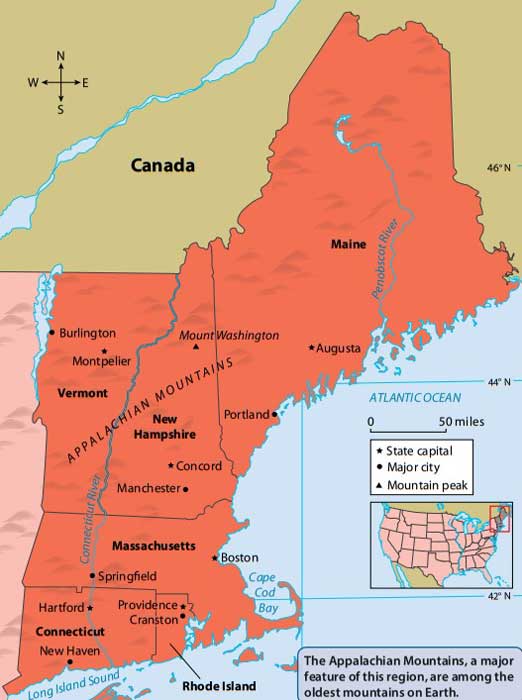
New England

New England

Region in the United States of AmericaWikipedia

Search complete. 14361 mentions across 4765 episodes found for "New England".

Sep 14, 2026

Steven RinellaHOST
35:57
Okay.
Metin ErenGUEST
35:58
This is one reason why to understand the mechanics of prehistoric colonization, North America's so valuable, right? And I think there's some regions in particular, like the Great Lakes and New England, that are really great, because you had glaciers covering the Great Lakes.
Steven RinellaHOST
36:12
Oh.
Metin ErenGUEST
36:13
And so when the glaciers recede, and we get the very-

1 HR 18 MINS LATER

Metin ErenGUEST
114:02
Um, we published that in the scientific literature.
Metin ErenGUEST
114:05
That's happened again now.
Metin ErenGUEST
114:06
Uh, Ben Galt in, in New England found a Clovis point or a fluted point from Nantucket Island, and he said, "Hey, like, I'm interested.
Metin ErenGUEST
114:14
Can you learn about anything?" And so he sent it to us, and we're doing all the analyses now, and-
Coleman HughesHOST
3:16
But first, I want, I wanna, I wanna know a little bit about your, your background.
Coleman HughesHOST
3:21
I mean, you've, you've told the story of, of, of growing up, uh, i- in Chicago and then moving to, um, um, moving to New England and being a Boy Scout and your first experience with racism, but it's such a compelling story.
Coleman HughesHOST
3:38
I think, you know, everyone should, should hear it, even if they've heard it before.
Coleman HughesHOST
3:41
So can you t- tell me that story and, and how it, how it framed your kind of second career after being a musician?
Daryl DavisGUEST
3:52
Sure, I'd be glad to.
Daryl DavisGUEST
3:53
Well, it wasn't quite a direct move from, from Chicago to New England, but, uh, I was born in Chicago.
Daryl DavisGUEST
3:59
My father, uh, my parents are from Virginia, and my father became one of the first Black Secret Service agents in this country.
Daryl DavisGUEST
4:07
He wanted to be an FBI agent, but, uh, J. Edgar Hoover, who was the head of the FBI, was a racist, a chauvinist, and many other things, and he had no Blacks and no women in the FBI and did not want any.
Gary ArndtHOST
8:58
The Pilgrims had landed in the wrong spot, but in the grand scheme of things, their access to the world's greatest fishery, just seven hundred and fifty nautical miles from the western edge of the Grand Banks, would more than make up for their mistake.
Gary ArndtHOST
9:11
To support the emerging industry, New England, much like the medieval Hanseatic League, built an extensive infrastructure that included timber and rope making.
Gary ArndtHOST
9:20
The cod fisheries became the first major industry in North America, producing a wealthy merchant class in New England cities such as Boston and Salem.
Gary ArndtHOST
9:28
The cod boom and the need to protect the wealth that it created from British interference helped facilitate the discontent that would explode into the American Revolution.
Gary ArndtHOST
9:38
The New England Historical Society notes the importance that the British acts like the Sugar Act had on the New England cod industry.
Gary ArndtHOST
9:45
They note, quote, "By seventeen sixty-four, the British planters convinced Parliament to pass the Sugar Act, which put a tariff on sugar and banned the import of non-British rum.
Gary ArndtHOST
9:56
Parliament did something else to harm New England fishing interests.
Gary ArndtHOST
10:00
It banned trade with the French in North America.
Sascha Clark DanylchukGUEST
47:18
So yeah, ended up spending, as I said, like, almost 10 years in The Bahamas, um, working on bonefish and a bunch of other, uh, fisheries down there.
Sascha Clark DanylchukGUEST
47:28
Yeah, and then moved, moved to New England.
Sascha Clark DanylchukGUEST
47:31
Didn't think I'd ever live in a place that was cold after, after The Bahamas, but, uh, yeah.
Sascha Clark DanylchukGUEST
47:37
[laughs]
Nate SloanGUEST
33:14
Interesting.
Charlie HardingGUEST
33:14
I recently on, switched on Pop called him the, uh, the Prince of New England.
Jeremy KirklandHOST
33:18
Yeah.
Charlie HardingGUEST
33:19
Uh, if you want to see him at Fenway, like, get in line for the next decade because he really has taken over being one of the most important cultural forces of New England, singing about, you know, his home state of Vermont.
Charlie HardingGUEST
33:29
And, you know, I remember when he-
Nate SloanGUEST
33:31
Hm
Charlie HardingGUEST
33:31
... put out, maybe was it for the Super Bowl or the Grammys, maybe there was a, a commercial that was actually his full music video.
Charlie HardingGUEST
33:38
I believe it was the Grammys.
Mary RileyGUEST
11:19
[laughs]
Mirav OzeriHOST
11:19
It's impossible to go with you anywhere in any state in New England without you running into people that you helped deliver.
Mary RileyGUEST
11:26
[laughs]
Mirav OzeriHOST
11:27
It's crazy.
SteveHOST
7:06
We had storm day, but then, uh, you know, a little bit of time off.
SteveHOST
7:09
But now the Pennsylvania and New England swing is, uh, upon us and, and one trip to Kentucky with Equip, and it's, uh, it's g- about to get to, to be a busy, uh, what, four weeks.
SteveHOST
7:19
So it's, uh-
Jeremy LindstromHOST
7:21
Yep
Cindy FranklinHOST
5:44
Elizabeth gave her soul to Lucifer, cursing the town and pledging to return as the instrument of his vengeance.
Chris FranklinHOST
5:51
This tale is related in the present day of 1960 by New England history professor Alan Driscoll.
Chris FranklinHOST
5:57
One particular student, Nan Barlow, is fascinated by the famous witch trials of New England and wants to write her senior term paper on the subject.
Chris FranklinHOST
6:04
Driscoll encourages her and even points her to the town of Whitewood he was just discussing.
Chris FranklinHOST
6:08
He gives her directions to the Raven's Inn there.
Chris FranklinHOST
7:02
He warns her to leave Whitewood, which he declares has fallen to the forces of evil.
Chris FranklinHOST
7:06
Nan enters the antique and bookstore next door and meets the Reverend's granddaughter, Patricia.
Chris FranklinHOST
7:11
Patricia loans Nan a book titled A Treatise on Devil Worship in New England.
R. Douglas HurtGUEST
7:56
This was a crop produced solely for commercial purposes primarily, and they had brought considerable money into farmhomes and planter homes for those who had the technical ability to produce it.
R. Douglas HurtGUEST
8:12
In other areas, for example, New England, the soil is very parsimonious.
R. Douglas HurtGUEST
8:17
The climate is colder throughout much of the year.
R. Douglas HurtGUEST
8:23
And it was primarily an agricultural economy that was not one which had a particular crop that was dominant for surplus production.

37 MINS LATER

R. Douglas HurtGUEST
45:14
The enlistment for the Continental Army required three years' commitment.
R. Douglas HurtGUEST
45:20
For the militia, militia came together and dispersed as the need required.
R. Douglas HurtGUEST
45:26
And some of the militias in the New England states, the Chesapeake area, even the South, might be organized for several months' time.
R. Douglas HurtGUEST
45:39
And this took a considerable amount of manpower away from farms, particularly at plowing time, but especially at harvest time for wheat and corn.
C. R. WileyHOST
34:05
And when it comes to...
C. R. WileyHOST
34:09
even places like, like new England where I remember when I was, um, you know, growing up, uh, in Western Pennsylvania, when I would imagine the East coast, it was just like Brooklyn forever.
C. R. WileyHOST
34:22
You know, I had this image of this sort of like unceasing urban sprawl, uh, you know, from Boston to Washington.
C. R. WileyHOST
34:30
And I didn't, I didn't have an ability to, to, to think otherwise.

4,755 more episodes mention New England.

Create an account to see the whole feed, search across every transcript, and follow the entities you care about.

We value your privacy

We use cookies to understand how you use our platform and to improve your experience. Click “Accept All” to consent, or “Decline non-essential” to opt out of non-essential cookies. Read our Privacy Policy.