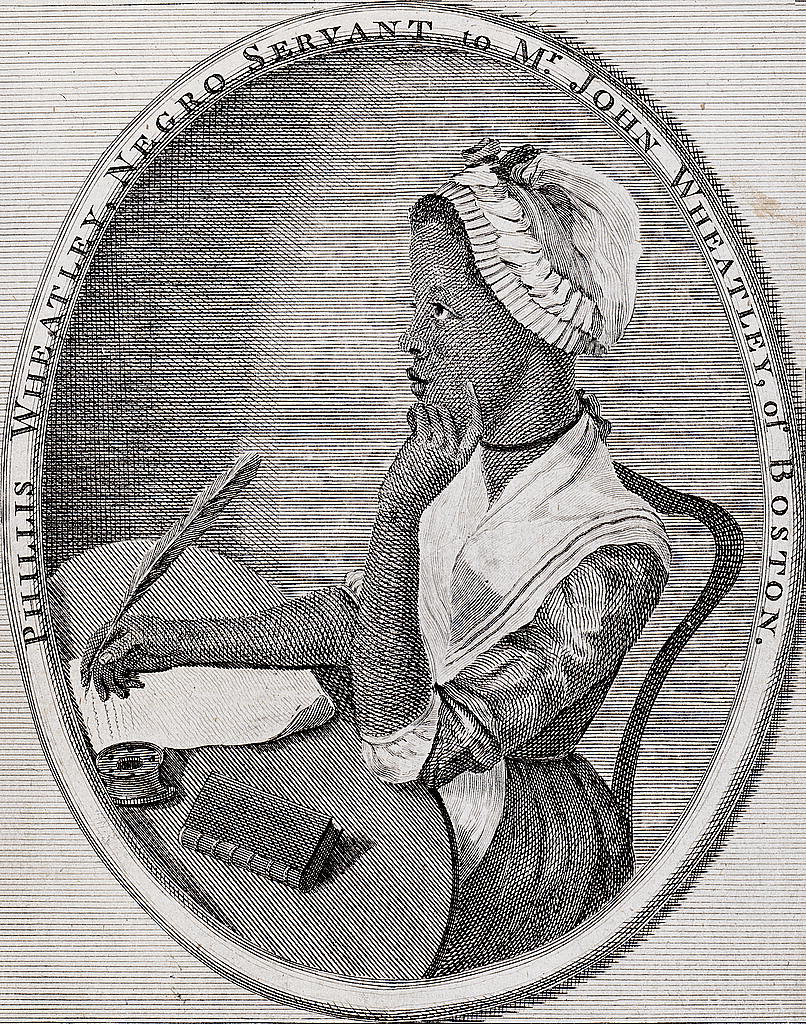
Phillis Wheatley
WriterWikipedia
86
MENTIONS
39
EPISODES
33
PODCASTS
Search complete. 86 mentions across 39 episodes found for "Phillis Wheatley".
Sep 11, 2026

Christopher FreeburgGUEST
I think there's, there's at least two versions of this, and I'll make sure I try to get to them both.
Christopher FreeburgGUEST
But one was the idea of the, the absence of community and having to create and speak and think community, and this is why I thought Phillis Wheatley was so important to have in this book.
Christopher FreeburgGUEST
Number one, because when you think about Black culture, people don't think of Phillis Wheatley.
Christopher FreeburgGUEST
They think, you know, they think of Phillis, or if they, they think of Phillis Wheatley often as someone sitting in a wealthy, their slave master's attic writing poetry.
Christopher FreeburgGUEST
They don't think of someone who could, who trafficked in other, with other free and unfree, free and enslaved Africans.
Christopher FreeburgGUEST
Um, someone who remembered or had remembered or at least could have remembered, um, stories from childhood.
Christopher FreeburgGUEST
It's, so what I loved about Jewel Thais-Williams's story of community is how generative, generative love and sacrifice can become, how once you begin to love and sacrifice for others, people see that as something that they can do for others.
Christopher FreeburgGUEST
And so it's not just the moment that you give up space or say, do something kind or give up your treasure for someone else.

Christopher FreeburgGUEST
But one was the idea of the absence of community and having to create and speak and think community.
Christopher FreeburgGUEST
And this is why I thought Phillis Wheatley was so important to have in this book.
Christopher FreeburgGUEST
Number one, because when you think about Black culture, people don't think of Phillis Wheatley.
Christopher FreeburgGUEST
They think of Phillis Wheatley often as someone sitting in their slave master's attic writing poetry.
Christopher FreeburgGUEST
They don't think of someone who trafficked with other free and enslaved Africans, someone who remembered or at least could have remembered stories from childhood.
Christopher FreeburgGUEST
But my main point about the community here is that the way that we understand, and it's impossible for us to unthink and unknow Black community hundreds and hundreds of years later, that she did not have that.

Christopher FreeburgGUEST
But one was the idea of the absence of community and having to create and speak and think community.
Christopher FreeburgGUEST
And this is why I thought Phillis Wheatley was so important to have in this book.
Christopher FreeburgGUEST
Number one, because when you think about Black culture, people don't think of Phillis Wheatley.
Christopher FreeburgGUEST
They think of Phillis Wheatley often as someone sitting in their slave master's attic writing poetry.
Christopher FreeburgGUEST
They don't think of someone who trafficked with other free and enslaved Africans, someone who remembered or had remembered or at least could have remembered stories from childhood.
Christopher FreeburgGUEST
But my main point about the community here is that the way that we understand, and it's impossible for us to unthink and unknow Black community hundreds and hundreds of years later, that she did not have that.

Christopher FreeburgGUEST
But one was the idea of the absence of community and having to create and speak and think community.
Christopher FreeburgGUEST
And this is why I thought Phillis Wheatley was so important to have in this book.
Christopher FreeburgGUEST
Number one, because when you think about Black culture, people don't think of Phillis Wheatley.
Christopher FreeburgGUEST
They think of Phillis Wheatley often as someone sitting in their slave master's attic writing poetry.
Christopher FreeburgGUEST
They don't think of someone who trafficked with other free and enslaved Africans, someone who remembered or had remembered or at least could have remembered um stories from childhood but my main point about the community here is that the way that we understand and it's impossible for us to unthink and unknow black community hundreds and hundreds of years later that she did not have that doesn't mean that they were not enslaved africans around her free africans around her she had some you know her close friends that were that were slaves that they were that she wrote to now get my facts wrong on that but the idea of a black community or communities of color and variously defined that was something that she began in her poems to speak into existence that's why that chapter is called revelations like the revelation of the communities that she thought of and wanted to speak to and seized and belonged to so that was so So I thought that was an important part of the book, the idea of what communities that you can speak to, think of, and claim for yourself, even if they don't claim you.
Christopher FreeburgGUEST
So I thought that was super important.

Mabel O. WilsonGUEST
So I'm very interested in that in many ways, I think, as a critique of modernity, which is what I think Black Studies really is.
Mabel O. WilsonGUEST
You just go back to Phyllis Wheatley.
Mabel O. WilsonGUEST
And, you know, I've been writing about Phyllis Wheatley in relationship to Thomas Jefferson because I'm still obsessed with Thomas Jefferson.
Mabel O. WilsonGUEST
Because I went to UVA.
Mabel O. WilsonGUEST
You know, it's a robust countercritique of the ideas of subjecthood, of democracy, of liberalism, you know, and a debate that has been ongoing for hundreds of years.

Jennifer LondonHOST
I hope my listeners will check that out.
Janine TurnerGUEST
Yes, and we had Phyllis Wheatley there as one of our last ones.
Janine TurnerGUEST
Do you know about Phyllis Wheatley?
Jennifer LondonHOST
Yes, yes.
Janine TurnerGUEST
Yeah, yes.

Christina GesslerHOST
We are talking about a piece included from...
Christina GesslerHOST
The piece right in front of it in the way the chronology of the anthology is laid out is Phyllis Wheatley's thoughts on the work of Providence.
Christina GesslerHOST
And the piece that proceeds that is Thomas Jefferson letter to the Danbury Baptist Association.
Christina GesslerHOST
So in laying out an anthology, as you said, there are so many choices to make, there's so much thought to do, and by putting three people together in conversation who would not have met or interacted, you're inviting the readers into some difficult work of considering what it really means that Americans across ideologies, regions, and identities have all grappled with the divine.

Christina GesslerHOST
We are talking about a piece included from...
Christina GesslerHOST
The piece right in front of it in the way the chronology of the anthology is laid out is Phyllis Wheatley's thoughts on the work of Providence.
Christina GesslerHOST
And the piece that proceeds that is Thomas Jefferson letter to the Danbury Baptist Association.
Christina GesslerHOST
So in laying out an anthology, as you said, there are so many choices to make, there's so much thought to do, and by putting three people together in conversation who would not have met or interacted, you're inviting the readers into some difficult work of considering what it really means that Americans across ideologies, regions, and identities have all grappled with the divine.
Christina GesslerHOST
We are talking about a piece included from...
Christina GesslerHOST
The piece right in front of it in the way the chronology of the anthology is laid out is Phyllis Wheatley's thoughts on the work of Providence.
Christina GesslerHOST
And the piece that proceeds that is Thomas Jefferson letter to the Danbury Baptist Association.
Christina GesslerHOST
So in laying out an anthology, as you said, there are so many choices to make, there's so much thought to do, and by putting three people together in conversation who would not have met or interacted, you're inviting the readers into some difficult work of considering what it really means that Americans across ideologies, regions, and identities have all grappled with the divine.

Christina GesslerHOST
We are talking about a piece included from...
Christina GesslerHOST
The piece right in front of it in the way the chronology of the anthology is laid out is Phyllis Wheatley's thoughts on the work of Providence.
Christina GesslerHOST
And the piece that proceeds that is Thomas Jefferson letter to the Danbury Baptist Association.
Christina GesslerHOST
So in laying out an anthology, as you said, there are so many choices to make, there's so much thought to do, and by putting three people together in conversation who would not have met or interacted, you're inviting the readers into some difficult work of considering what it really means that Americans across ideologies, regions, and identities have all grappled with the divine.
29 more episodes mention Phillis Wheatley.
Create an account to see the whole feed, search across every transcript, and follow the entities you care about.