Margarita PopovaHost
Anna SavinaHost
yes you it is required that you're an early bird because the drive takes about two hours and i think the tour starts at 9 30 so me and anna We're a little bit late maybe and missed some parts of the introduction, but we still got to learn a lot about Marguerite and really a magnificent life that she lived.

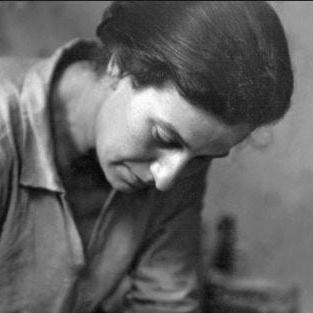
So she, like you've mentioned, she was born in France, I believe, and just at the turn of the century, 1896.

And as our guide pointed out, she wasn't just any ordinary child like at that time a French girl would be expected just to do a little embroidery, maybe play a little piano, but she was a real rule breaker and a tomboy and she would be like climbing trees and she would be arguing with your teachers.

Now I remember that the teachers were German and that she was really standing up for justice in her class and really talking back to them, which eventually resulted in her receiving an education in England.

I mean, she was very extraordinary from the very beginning, but what's fascinating and what we will see is that she kept reinventing herself until all throughout her life.

So it's also, I think it's an interesting story about... how a certain environment can really influence your creativity and shape your creativity.

But it's also, for me, it felt like a very inspiring story about woman clearly ahead of her time but also just reinventing like it it was never too late for her she never felt um constrained by you know being older or being an immigrant or anything like that

yeah i think even in the beginning of her artistic journey i think at first she was interested in being a doctor because she was interested in human form and in anatomy But then she realized that she wasn't interested in it in a medical perspective.

And I think then she tried her hand at sculpture and checked it out, saw if she liked it, which was another step closer to her final form and the art in which she truly shined, which is ceramics.

And then a big... fateful event happened I think during a hike or something which again like amazing that it's early 20th century she's hiking in some woods and then she stumbles upon an etching or like an engraving that was maybe a poster maybe a poster yeah something like that sorry I'm now it's I was too way too sleepy for this part of the tour so please correct me but I think yeah somehow she encountered Bauhaus and pretty much she was like okay this is where I need to go

But I think what's really important is that she discovered Bauhaus and she really felt compelled to join the school.

And Bauhaus was this kind of amazing avant-garde school of German and European artists.

And I think the main thesis was they were rethinking what is art and what is craftsmanship in the world of you know, in the world where technology is becoming this kind of driving force of the economy of everyday life.

And Bauhaus essentially invented modernism and a lot of people would argue they invented like industrial design as it exists today.

And the point was about Making sure that you're creating artistic products through craftsmanship and really rigorous work.

But at the same time, the goal was to create an aesthetic that would be appealing to modern people.

So it was really applied to all these everyday objects and Bauhaus founders, they really viewed all these everyday objects as an opportunity to create something very beautiful and highly practical.

So, yeah, and she basically got super lucky because she was joining this pottery workshop led by Max Krahan, who was a German master potter.

yes you it is required that you're an early bird because the drive takes about two hours and i think the tour starts at 9 30 so me and anna We're a little bit late maybe and missed some parts of the introduction, but we still got to learn a lot about Marguerite and really a magnificent life that she lived.

So she, like you've mentioned, she was born in France, I believe, and just at the turn of the century, 1896.

And as our guide pointed out, she wasn't just any ordinary child like at that time a French girl would be expected just to do a little embroidery, maybe play a little piano, but she was a real rule breaker and a tomboy and she would be like climbing trees and she would be arguing with your teachers.

Now I remember that the teachers were German and that she was really standing up for justice in her class and really talking back to them, which eventually resulted in her receiving an education in England.

I mean, she was very extraordinary from the very beginning, but what's fascinating and what we will see is that she kept reinventing herself until all throughout her life.

So it's also, I think it's an interesting story about... how a certain environment can really influence your creativity and shape your creativity.

But it's also, for me, it felt like a very inspiring story about woman clearly ahead of her time but also just reinventing like it it was never too late for her she never felt um constrained by you know being older or being an immigrant or anything like that

yeah i think even in the beginning of her artistic journey i think at first she was interested in being a doctor because she was interested in human form and in anatomy But then she realized that she wasn't interested in it in a medical perspective.

And I think then she tried her hand at sculpture and checked it out, saw if she liked it, which was another step closer to her final form and the art in which she truly shined, which is ceramics.

And then a big... fateful event happened I think during a hike or something which again like amazing that it's early 20th century she's hiking in some woods and then she stumbles upon an etching or like an engraving that was maybe a poster maybe a poster yeah something like that sorry I'm now it's I was too way too sleepy for this part of the tour so please correct me but I think yeah somehow she encountered Bauhaus and pretty much she was like okay this is where I need to go

But I think what's really important is that she discovered Bauhaus and she really felt compelled to join the school.

And Bauhaus was this kind of amazing avant-garde school of German and European artists.

And I think the main thesis was they were rethinking what is art and what is craftsmanship in the world of you know, in the world where technology is becoming this kind of driving force of the economy of everyday life.

And Bauhaus essentially invented modernism and a lot of people would argue they invented like industrial design as it exists today.

And the point was about Making sure that you're creating artistic products through craftsmanship and really rigorous work.

But at the same time, the goal was to create an aesthetic that would be appealing to modern people.

So it was really applied to all these everyday objects and Bauhaus founders, they really viewed all these everyday objects as an opportunity to create something very beautiful and highly practical.

So, yeah, and she basically got super lucky because she was joining this pottery workshop led by Max Krahan, who was a German master potter.
The rest of this transcript — segmented and speaker-labeled, so you land on the exact moment something was said
Search every transcript — by keyword, by phrase, or by meaning, across every show Radar indexes
Trends — what is surging across podcasts, measured against its own baseline
Alerts — when a name you follow appears in a newly indexed episode
No account is needed to search Radar.