How Zero-Knowledge Proofs Were Invented (ft. Co-Inventor and Turing Award Winner Shafi Goldwasser)
Aug 10, 2026 · 57 min · 13 segments
How can you prove that something is true without revealing why it is true? That question gave rise to zero-knowledge proofs, one of the most important breakthroughs in modern cryptography. What…
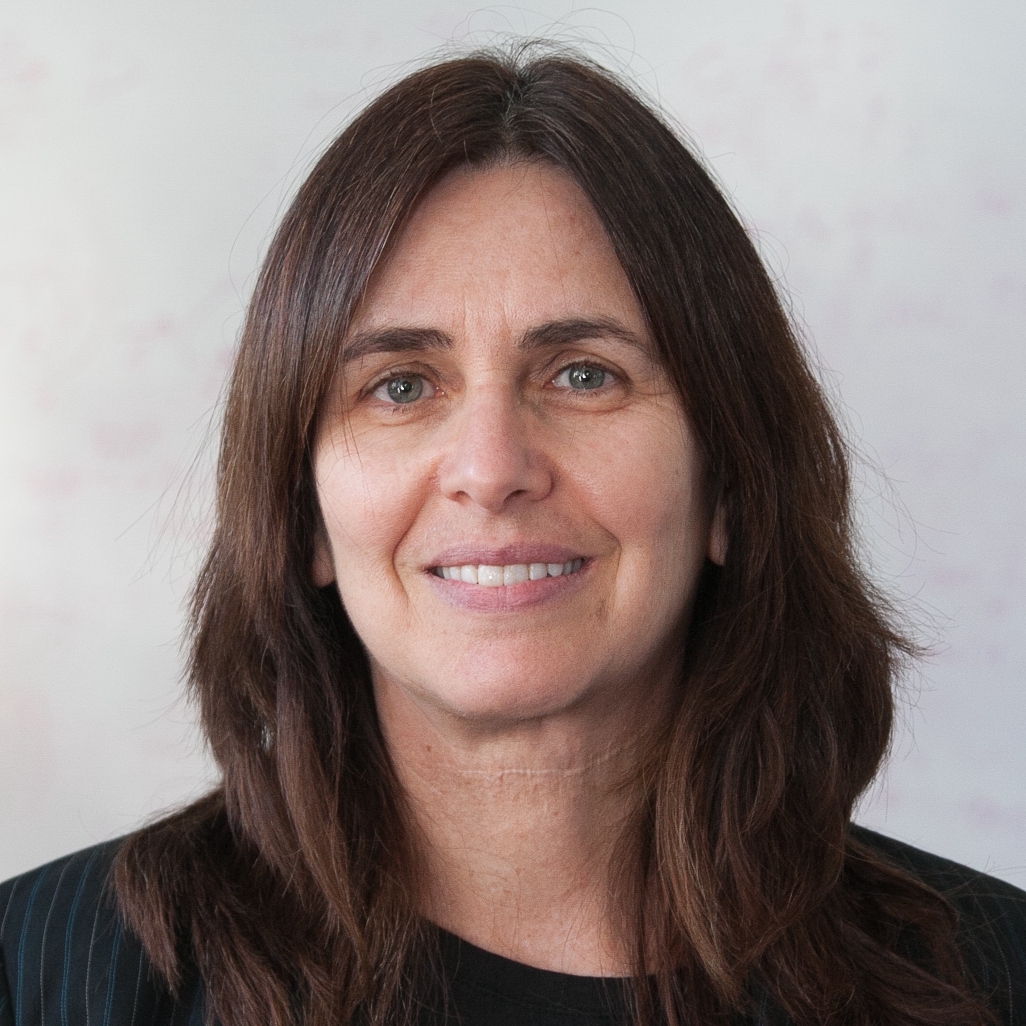
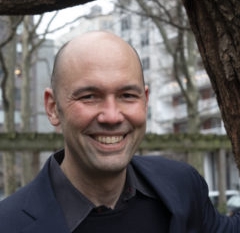
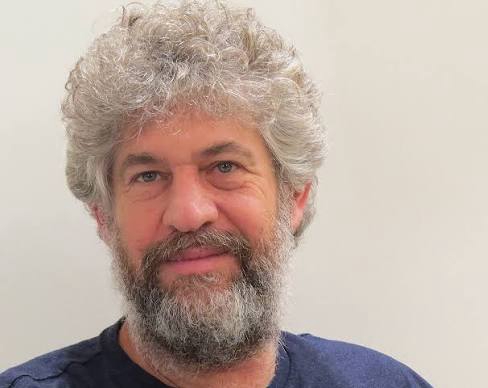
How can you prove that something is true without revealing why it is true? That question gave rise to zero-knowledge proofs, one of the most important breakthroughs in modern cryptography. What began as an attempt to solve a seemingly playful problem — playing poker securely over the telephone — ultimately changed how computer scientists think about proofs, privacy, and verification. In this episode of First Principles, Turing Award–winning cryptographer Shafi Goldwasser joins a16z crypto Head of Research Tim Roughgarden and Research Partner Justin Thaler to tell the origin story of zero-knowledge proofs and interactive proof systems. Goldwasser recounts how she, Silvio Micali, and Charles Rackoff developed a new kind of proof involving interaction, randomness, and a small probability of error. Their work introduced the idea that a prover could convince a verifier that a statement is true while revealing no additional information. The conversation follows those ideas through some of theoretical computer science’s deepest results, including interactive proofs, IP = PSPACE, probabilistically checkable proofs, the sum-check protocol, and SNARKs. These concepts now power blockchain rollups, privacy-preserving applications, and systems for verifying computation without repeating all the work. They also explore why breakthrough ideas are often initially rejected, how toy problems can lead to foundational theories, why abstraction and narrative matter in scientific research, and whether AI systems should be required to prove their answers. Highlights 0:00 — Intro 3:36 — How mental poker inspired zero-knowledge proofs: Proving that something is true without revealing the underlying information 6:30 — The simulation paradigm and the meaning of “zero knowledge” 8:33 — Why the original paper was repeatedly rejected 10:33 — How interactive proofs became more powerful than conventional proofs 13:36 — The road to modern SNARKs 19:02 — Why the sum-check protocol is so useful for verifiable computation 25:31 — Why many so-called “zk proofs” are not actually zero knowledge 34:06 — Why toy examples, playfulness, and narratives can produce deep theory 37:23 — The role of rigor and computational assumptions in cryptography 42:44 — Applying zero-knowledge proofs to law, evidence, and secret software 45:23 — Training AI systems to provide proofs alongside their answers 54:27 — Why genuinely new ideas are often difficult for experts to recognize About First Principles First Principles is a special limited series from a16z crypto about the scientific roots of modern computing — especially blockchains — told through rare conversations with the pioneers who helped shape the foundational ideas behind distributed systems, consensus protocols, economics, mechanism design, cryptography, zero knowledge, and more. People often tell the story of the Bitcoin whitepaper as if it appeared out of nowhere. But the ideas behind Bitcoin — and blockchains more broadly — come from decades of computer science, economics, mathematics, and cryptography. First Principles is a guide to that lineage, as told by the people who helped build it. Links Shafi Goldwasser MIT CSAIL: http://people.csail.mit.edu/shafi/ Simons Institute: https://simons.berkeley.edu/people/shafi-goldwasser Tim Roughgarden a16z crypto: https://a16zcrypto.com/team/tim-roughgarden/ Website: https://timroughgarden.org/ "X: https://x.com/Tim\_Roughgarden Justin Thaler a16z crypto: https://a16zcrypto.com/team/justin-thaler/ Website: https://people.cs.georgetown.edu/jthaler/ X: https://x.com/SuccinctJT a16z crypto Subscribe: https://www.youtube.com/@a16zcrypto Website: https://a16zcrypto.com/ X: https://twitter.com/a16zcrypto Newsletter: https://a16zcrypto.substack.com/ Hosted by Simplecast, an AdsWizz company. See pcm.adswizz.com for information about our collection and use of personal data for advertising.
How can you prove that something is true without revealing why it is true? That question gave rise to zero-knowledge proofs, one of the most important breakthroughs in modern cryptography. What…